~oOo~

2013-02-12

to want them, to be them, or both? [perspectives in porn]

So last week I reviewed an anthology of essays on pornography, and kind of in passing I asked why we generally assume that people watch porn because they want to fantasize about having sex with the people the camera's gaze is trained on. That is, in porn marketed to men who like having sex with women, female actors take center stage and male performers are assumed to be exchangeable stand-ins for the Everyman Viewer. Women are cast with an eye toward what body types producers imagine their Everymen want to fantasize about exchanging bodily fluids with.

I don't understand where this narrative assumption comes from.

Is that actually how the majority of people watch porn?

Because that's certainly one perspective to take when consuming erotic material: the "would I wantonly ravish this person?" perspective. However the viewer/reader assesses the sexual attractiveness of a given performer/character (visual presentation, sexual style, aspects of character, voice, etc.), that question certainly informs how you enter into the fantasy of the pornographic scenario. If the answer to the above question is yes! it becomes easier to understand the motivations of the ravishers as depicted in said piece of smut. It's easier to get drawn into the story, just as it's easier to get drawn into any work of fiction when you care about the character's well-being, or want to know what happens next.

I get that. There's a reason I'm drawn to some relationships in fan fiction and not others; some character dynamics just don't do it for me. Others do.

But I find this an unsatisfying and incomplete assessment of how people (read: "men" in most discussions about pornographic film) interact with porn. Why? Because it's not the only way I -- as a consumer/creator -- interact with sexually-explicit material. And it's not the only way people interact with fiction generally. We know this. And yet, somehow, when the question of sexually-explicit material is on the table all of our wisdom about the viewer/reader and their complex interactions with what they watch and read flies right out the window.

To whit, when it comes to porn, despite the fact I'm a voyeur by definition (reading/watching the characters/performers interact in sexual ways without literally being involved with them) my pleasure is often less contingent on the question "would I wantonly ravish this person?" than it is on the question "if someone ravished me in this fashion, how might it feel?" Or, "is this dynamic between them an arousing one? how is it making the actors/characters feel? why is it making them feel that way? The sexual activity depicted doesn't have to be something I'd definitely find pleasurable in real life, but a successful pornographic or erotic narrative will encourage an imaginative connection, prompting me to explore how such an activity could be pleasurable to the performers/characters in question.

Like any good work of fiction, pornography and erotica asks us to put ourselves in someone else's shoes (or, you know, lacey knickers). And learn something meaningful or moving while we're there.

So all of this leads me back to the question: Rather than assuming people sexually objectify the performers in porn, why don't we wonder to what extent they're identifying with them? After all, we're human beings watching (or reading about) human bodies experiencing sexual pleasure. Doesn't it make sense that we'd -- at least to some extent -- imagine ourselves into their situation as much as we might imagine being the person sexually stimulating them?

I look at this image and I feel the water washing across my skin (via)
I haven't watched much moving-image porn, so perhaps the descriptions I've read of pornographic films are giving me the wrong impression here? But when I read synopses of films, I'm definitely aroused most often by imagining myself in the role of the performers whose pleasure is visible on screen. Like, if the film is going to show me a woman giving a man (or woman) a blow job, and it's the giver's body and facial expressions and responses we're seeing, isn't that the person we'd be likely to identify with -- not the disembodied dick (or clit) that appears as a prop on the screen?

And no, I don't think the answer can be as simple as "but dudes can't/won't imagine themselves into the position of a female performer because their bodies are different!" because I read plenty of erotic material in which the only bodies involved are male bodies and I definitely successfully identify with those characters. So I think we're too quick to assume that anatomical body difference is a barrier to imaginative involvement.

Maybe it's partly a (socialized or innate) gender thing? Recent studies have suggested that men and women generally interact with porn in different ways, with men being less flexible in what types of erotic imagery arouse them (women appear to be catholic in their tastes: it doesn't generally matter whose bodies are depicted, or even that they be human bodies -- if sexytimes be happening, our pleasure centers light up). But I'm tired of the simplistic assumption, without research to back it up, that men only interact with porn in a way that interprets the (female) actors depicted on screen as objects rather than subjects. At the very least, I'd imagine it's likely viewers of pornography -- just like readers of fiction or viewers of any other genre of film -- switch imaginative perspectives, so that response to a question about who is being observed and who is being identified with would change over the course of the viewing/reading experience in complicated, unstable ways.

I'm continuing to think about this question while reading Laura Kipnis' Bound and Gagged (1997) and Linda Williams Hard Core (1989) this month. They're both fascinating studies which have much to recommended them, though some of the debates they engage with are certainly dated. Still, on the watch for questions of perspective both authors seem only to nod in passing to the idea that male viewers might be watching the bodies in screen in less-than-straightforward ways. Williams, for example, seems to assume that heterosexual male arousal in reaction to viewing an aroused male body would be an experience of homosexual desire, rather than, you know, a response to the arousal of a body the viewer could imagine being. So it's clear that even the leading thinkers in this field have taken this question somewhat as read.

What are your experiences with sexually-explicit material? To what extent do you find yourself wanting to be and/or wanting to have the individuals depicted or described? How does the voyeurism of engaging with other peoples' (fictional or performed) sexual intimacy pull you in as an observer-participant? Do you tend to identify with all of the characters in a scene, or specific characters? To what extent does body type and physical sex contribute to your choice of character with whom to identify?

I'd love to hear your thoughts; if you want to share anonymously the form should allow for that -- and I'll try to monitor the thread carefully so that anon comments don't end up in the trash if they are actually legitimate contributions (95% of my "anon" comments are just straightforward spam).

2013-02-10

from the neighborhood: sledding & sunshine [blizzard of 2013]

It's sunny this morning in Boston, a brief respite before tomorrow's predicted rain. Teazle is excitedly (and vocally) watching birds fluffed along the branches of the trees outside, and Hanna and I are sitting on the couch reading and writing and listening to the BBC classical music stream while watching cars get stuck in the snowdrifts on our corner.

Yesterday, the hill outside our living room window was turned into a sledding hill until the travel ban was lifted at 4pm.


And a couple of still photos by Hanna ... 


This morning, the sun was out but the snow remains.


Some streets are clear, but the sidewalks are piled high with snow that has nowhere else to go.


Gerry and Teazle are finding all of the excitement outside quite entertaining as "kitty TV."


Stay warm, everyone, and wish us luck as we slog to work in the rain tomorrow!

2013-02-09

from the neighborhood: blizzard of 2013

I promised photos to several people yesterday from the "snow emergency" here in Boston, so this morning while Hanna did yoga in the living room I tumbled into my boots and winter gear and re-learned how to hike through knee-high drifts in order to bring you some pictures from our snowy neighborhood.

As a baseline, here's what the view from our window was like around two o'clock yesterday afternoon:


Shortly after I took this picture, the poor red car had it's rear bumper sheared off by a neighbor's car that skidded through the intersection.


Thankfully, no one was hurt!


By the time we went to bed around 9pm, this was the view out that same window (note the red car, sans bumper, now half buried in snow).


Waking up this morning, it was difficult to see outside, so I decided to venture out.


You can see I was perhaps the second person to leave the building on foot this morning; with the snow still falling and blowing, and a travel ban in effect state-wide, few people are bothering to dig out.


We have no sidewalk currently!


And these cars aren't going anywhere soon...


Above, wind whips snow across a nearly-deserted Commonwealth Avenue (this was taken about 7:30 this morning).


Snowplows were out in full force on the main roads, trying to stay on top of clearing the fallen snow.


But most apartment buildings showed little signs of activity.


I saw a few people out on foot who weren't municipal workers, but the lack of traffic was eerie, particularly at usually-busy intersections (below is Harvard Avenue looking south from Commonwealth).


Side streets had higher drifts, and as I made my way back home through Brookline's residential neighborhoods, I saw a few people out trying to clear snow from their sidewalks and cars.


These cars aren't going anywhere soon!


The playground was deserted.


I was the first pair of feet to walk up our cul-de-sac on my return journey.


... and then I had to climb over this to get to the back door!

Now we're enjoying breakfast and planning to nap the day away inside. Stay warm and safe everyone!

2013-02-07

comment post: unfinished thoughts on non-consensual sexualization

Regular readers of this blog may remember that over the past year or so I've been haunting the conservative Family Scholars Blog hosted by the Institute for American Values (IAV) think tank founded by David Blankenhorn, sometime high-profile opponent of same-sex marriage. In part, I follow the blog because my smart and funny friend Fannie is one of their guest bloggers. I am also deeply interested in the worldview of people whose understanding of how the world works, and what values will increase the well-being of humanity, are so different from my own.

Last week, I found myself sucked into a comment thread at the FSB wrestling with the subject of what I'll call "non-consensual sexualization." My working definition of non-consensual sexualization is public expressions which frame another person's appearance, presence, or actions in a sexual light without their participation or consent. You might also call this plain old "sexual objectification." I'm using my phrase here because I think it's important to highlight the non-consensual part of what's going on here.

(because I won't post naked pictures of myself online*,
have this lovely view from Montague Book Mill instead)
I've been thinking about non-consensual sexualization a lot recently due to feminist discussions of the internet phenomenon of revenge porn and also because of the question I got on Twitter about the ethics of real-person fan fiction (RPF), particularly RPF that is sexually-explicit (see my extended response at the end of this post). Both of these situations -- revenge porn and RPF -- involve taking people the creators know in real life (either in person or through media of some sort) and sexualizing those individuals. With revenge porn the intent is malicious and generally misogynist: to humiliate the subject by way of sexually-explicit images or sexually-explicit chatter. With RPF the intent is usually enthusiastic on the part of the creator: they're engaged in the act of fantasizing about the individuals (usually celebrities of some sort or another) engaged in generally positive sexual situations and relationships.

At the level of private thoughts, sexualization of others is something that many of us engage in every day when we take note of another person's gorgeous hands or sexy ass. When we enjoy the chemistry between actors in a television show, or admire the outfit of a passerby on the street. When we harbor a crush on our political science professor in college or wake up from a really hot dream about this kid we sat behind in first period English (or watched shyly across the room in Sunday school). I think of sexualization as the mental-emotional process of considering another individual in a sexual light. This can be actively desiring (if we imagine that person as someone we'd like to be sexually intimate with) or passively admiring (if they're either out of reach -- your favorite actress --or not someone you'd actually want to have a sexual relationship with, say someone not the gender of person you are oriented toward). This type of sexualization seems, to me, no-one elses' business. Our own interiority is a private sandbox for self- and world-exploration, the ultimate safe space.

However. Once we make private thoughts public, social responsibility comes into play. Which is where the FSB comment thread re-enters the discussion. Barry, the author of the original post, recounted an incident in which a (male) classmate at a swimming class commented to Barry in an aside on the (female) instructor's body as it appeared in a swimsuit. Barry was uncomfortable about the comment and later mentioned his discomfort to his classmate, who apologized for his remark. The point of Barry's original post was that speaking up about a comment you find troubling can sometimes be less dramatic than you fear.

Many women, myself included, thanked Barry for speaking up in this instance and holding another man accountable for the way he was sexualizing the female instructor of the class without her consent, creating a situation where the man's classmates (and potentially the instructor, if she had heard) would feel uncomfortable.

Yet several frequent (male) FSB commenters insisted that Barry -- and by extension those of us supporting him -- were basically taking all the fun out of (hetero)sexual flirtation and OMG thought police!! For example, Kevin offered:
Barry’s heart, as always, is in the right place: a public place, safe and welcoming for anyone who wants to be a part of it. And having the courage to object to someone’s unseemly behavior. But this sexy gal is also in a position of power, itself a safe space: presumably she can kick anybody out of the class she wants.
While Hector has other concerns:
If men refrained from admiring good looking women, I wonder how you think people would ever date or marry each other.
When a number of us pushed back against this reading, suggesting that there was a difference between thinking someone is sexy and saying someone is sexy in an non-appropriate context, these commenters dug in even harder, again refusing to understand the distinction between thinking and speaking:
So he’s not even allowed to THINK something about this instructor?? I’m glad the thought police have arrived! “That way” was compliment, by the way. ... Elsewhere in the pool, a woman whispered to another, “OK, I get it, this instructor chick is a babe. So she has to wear the skimpiest bathing suit around, in case we didn’t notice?!” ... Is that comment ok, or should the other woman voice her objection. ...This is hilarious! 
 Note how Kevin (above) assumes that I (the person he is responding to here) will not object to the two women sniping about the instructor's "skimpy" bathing suit, when in fact I would suggest that such body snarking is in the same class of inappropriate behavior as the presumed "compliment" of the man at the center of this discussion. Both types of speech create a social climate within the class whereby the instructor's physical appearance and bodily presence are seen as relevant to the teaching of swimming technique. Both comments sexualize and objectify the instructor in a situation where she is not authorizing that way of interacting with her.

As I said in the comment thread, we're not talking here about a request that the teacher move to a new location where all of the students can see her demonstrate a movement. That would be a comment relevant to the activity of the class. The teacher's perceived level of hotness is not relevant to her ability to teach her students how to swim. And to bring that evaluation into the class is rude. It's an example of non-consensual sexualization, and something which women and sexual minorities in particular experience every day.

While I was putting this post together, this TEDx talk on the gendered nature of sexual objectification came across my dash that explores the broader political implications of widespread, non-consensual sexual objectification:


(Yes: While it happens less frequently, straight cis white guys can also be non-consensually sexualized. For example, exhibit A: Romney/Ryan slash from the 2012 election cycle YES IT EXISTS.)

I don't have a major conclusion to this post, so I'm gonna throw it out to y'all: What are your thoughts on the ethics of sexualizing others? What does it look like to recognize our sexual interest in other people without treating them like sex objects? And -- perhaps most importantly -- how to we model a culture of sexual subjectivity and mutually-consensual pleasure for all in ways that encourage men like Kevin and Hector to re-think their notions of what constitutes wanted, sexualized attention?**

I look forward to your thoughts!


*I have some lovely photographs of my naked self which I've taken over the years in celebration of my bodily presence in the world. I've often thought of sharing them online, but I won't because of the way women who share visual images of their nakedness are punished socially and professionally for that level of self-disclosure. That self-censorship is one example of the pervasive sexual policing women (more acutely than men) face for publicly acknowledging their unapologetic corporeality.

**I mean, I managed to successfully express my sexual interest in the subject of my affection and panty-dampening desire without treating her like a hot commodity that I'm entitled to consume publicly without her active enjoyment and participation. So I'm totally a believer in the "it's possible" but I'm not sure how to help the unbelievers see the light here.

2013-02-05

booknotes: histories and cultures of sexuality

As promised, here is my round-up of recently-read titles having to do with various aspects of human sexuality, politics and culture.


Men in Eden: William Drummond Stewart and Same-Sex Desire in the Rocky Mountain Fur Trade by William Benemann (University of Nebraska Press, 2012). Let's begin with the book Hanna referred to as the book about "mountain men humping!" Benemann takes as his subject a 19th century Scottish aristocrat, William Drummond Stuart, and through Stuart's colorful life explores the contours of same-sex desire on the borderlands of "civilized" society. Stewart, a younger son who later in life inherited the family title from his older brother, came of age during the Napoleonic wars and served in the 15th King's Hussars where he rose to the rank of Captain. After retiring from the army, Stewart traveled widely in the Middle East and North America -- and in North America found the homosociality of the American West particularly amenable. Throughout his life, Stewart's most enduring relationships were with men, including one French-Cree trader who he traveled extensively with and even took with him back to Scotland after assuming responsibility for the family's estate; the couple lived for a time in one of the secluded lodges on the land, where Stewart kept all the material evidence of his travels abroad. According to Benemann, previous treatments of Stewart have gone out of their way to ignore the evidence of same-sex relationships in the Scotsman's life. Benemann's work is a thoughtful and nuanced challenge to this previous "closeting" of Stewart's sexual self, taking those same-sex relationships for granted as a meaningful part of Stewart's experience. Anyone with an interest in nineteenth-century Anglo-American sexuality and gender should definitely add this one to their reading list.


Documenting Intimate Matters: Primary Sources for a History of Sexuality in America edited by Thomas A. Foster (University of Chicago Press, 2013). Published as a companion volume to John D'Emilio and Estelle Freedman's seminal Intimate Matters (1988), this new primary source reader offers a thoughtful compilation of lightly annotated documents related to various aspects of sexuality in American culture from the colonial era to the present. A brief 225 pages, featuring selections from about seventy sources, this reader is best seen as a jumping-off point for further discussion and exploration rather than a source for full-text transcriptions. Each of the five chronologically-arranged sections are introduced with a brief preface on the sexual issues of the period in question, and each document likewise features a thoughtful introduction. While necessarily incomplete, given its length, Documenting Intimate Matters is admirably diverse in its socio-cultural and geographic scope as well as the genres of (textual) documents found therein. Some of my favorite include newspaper announcements from the 1780s-90s placed by men whose wives had deserted them to inform creditors the husbands would no longer take responsibility for their (ex?) wives debts; the angry diary entries of Frederick Ryman (1884)*, whose sentiments about women would not be out of place on anti-feminist blogs of today; and Susan Fitzmaurice's 2002 reflections on the struggles of raising a child with Downs Syndrome in away that prepares them for a sexually active, sexually pleasurable, and sexually responsible adulthood. An excellent anthology for use in introductory classes.
*Full disclosure: Ryman's diaries reside at the Massachusetts Historical Society.

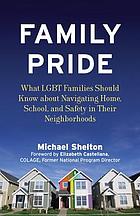
Family Pride: What LGBT Families Should Know about Navigating Home, School, and Safety in Their Neighborhood by Michael Shelton (Beacon Press, 2013). The latest addition to Beacon Press's "queer ideas/queer actions" series, Shelton's Family Pride is an accessible and nuanced snapshot of life in America for queer parents with children as we enter the 2010s. Centering the lived experiences of both LGBT parents and their children -- through in-depth interviews Shelton conducted, as well as the growing body of relevant research literature -- Shelton's book should be on the bookshelf of every "family values" advocate (members of the Institute for American Values I'm looking at you!) as well as in the library of every queer activist and/or LGBT organization. While the title makes it sound like Family Pride is a handbook for queer families, in reality the volume is more of a status-quo assessment with some recommendations (from Shelton's perspective as a therapist who has worked with queer families) for what queer families need in order to thrive. He does an excellent job of incorporating (I'd even argue prioritizing) the experiences of families who don't often make "gay family" headlines: queer parents in straight marriages, parents who are in the closet, non-white families, families living with financial insecurity, families with uncertain immigration status, parents in prison or with a history of interaction with the law that makes calling the police for help an unthinkable solution to anti-gay speech or acts. My only quibble with Shelton's framing is that he never explicitly defines an "LGBT family" as a unit made up of parents-plus-children in which at least one parent is queer -- yet that is clearly his operational definition. I would have appreciated either a more explicit acknowledgement that this book focuses on parenting-while-gay OR an effort to include the voices of queer families that do not include children. We are, most assuredly, families too.

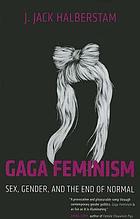
Gaga Feminism: Sex, Gender, and the End of Normal by J. Jack Halberstam (Beacon Press, 2012). While in Austin, I snagged a copy of yet another volume in the "queer actions/queer ideas" series -- Halberstam's meditation on the playful, anarchic queer feminism burbling up through the actions and expressions within youth culture. Taking pop culture references from Sponge Bob to Lady Gaga, Halberstam argues for the liberatory playfulness of more fluid sex and gender identities that -- rather than requiring taxonomical fixity -- provide a sandbox full of tools and opportunities for self-expression. I'm an easy sell on this score: while I am at times skeptical about the power of pop culture expression to effect political change, neither am I threatened by sex and gender anarchy. I am comfortable in my own gender (fairly conventional, by 21st century standards -- though I'd likely have been a shockingly difficult daughter in many an earlier time and/or place) and sexuality (fluidly bisexual, married, monogamous). And I see no reason not to afford others the opportunity

Hard to Swallow: Hard Core Pornography on Screen edited by Claire Hines and Darren Kerr (Columbia University/Wallflower Press, 2012). This excellent anthology explores the pornographic genre of "hard core" films from a variety of perspectives: through the lens of history, film studies, sexual politics, and more. The majority of contributions focus on the United States and Britain (the editors are lecturers at Southampton Solent University, UK), and despite the negative connotations of "hard to swallow" virtually all of the authors take for granted that pornographic film as a genre deserves serious consideration. Pornography, it is assumed throughout, is simply explicit representation of human sexual activities; the messages of that representation can be positive or negative, depending upon execution and interpretation. My favorite pieces include: Linda Williams'  '"White Slavery,' Or the Ethnography of 'Sexworkers': Women in Stag Films in the Kinsey Archive"; "The Progressive Potential of Behind the Green Door" by Darren Kerr; "Reel Intercourse: Doing Sex on Camera" by Clarissa Smith," and "Interrogating Lesbian Pornography: Gender, Sexual Iconography, and Spectatoring," by Rebecca Beirne. At their best, these essays go beyond commonplace assumptions about pornography as inherently degrading, as without cultural merit, as a male-only pursuit. Williams' piece examines the subjectivity of women in early twentieth century stag films, wondering what light surviving films might shed on performers' agency. Kerr, in "The Progressive Potential..." revisits a film that has been understood as misogynist and asks us to think, again, about the centrality of female sexual pleasure in the narrative. Clarissa Smith pushes back against the notion that performers in porn "just have sex on camera," suggesting that engaging an audience in erotic fantasy is, in fact, a difficult role for which real skills are required (can we all say "duh?"). And finally, Beirne's contribution explores the nuances of voyeurism, performance, and sexual subjectivity in the work of lesbian pornographers.

The entire anthology was absolutely worth reading, though I had quibbles with various assumptions along the way: one author, for example, claimed in passing that "the consumption of pornography ... is an essentially private past time, indulged in as an accompaniment or prelude to masturbation." Yes ... but also, no. Reading/viewing erotica can happen in many contexts, only some of which are solitary, and doesn't necessarily lead to masturbation for all consumers, every time. Likewise, the uncomplicated statement that pornography "began as a male-only pursuit," even if the author acknowledges that "that male-ness has been diluted in recent years," is to ignore the long history of female pornographers and women who have enjoyed erotic material. Women + sexual agency is not, contrary to popular opinion, a twenty-first century phenomenon.

I continue to be fascinated, too, by the assumption (apparently played out in the majority of pornographic film) that straight men don't like to see male bodies centered in porn: from the descriptions of works and from the analysis of the authors it certainly sounds like in mainstream "hard core" (explicit) pornography, it's women's bodies on display for a presumed male audience. Granted I'm queer, so. But in general, what I find visually arousing is the depiction of people having sex. People having sex in ways I can then fantasize about enjoying like they're enjoying it. Watching a woman orgasm on screen is hot (to me) because ohgodohgod I know what that feels like, and if I were in her situation I'd be coming too. So I'm curious what's happening for men who watch porn in which the role of the male actor is basically a two-step process. Step one: Get it up. Step two: Ejaculate on screen. Like, isn't that kinda disappointingly ... thin on material that encourages imaginative projection of yourself into the scene? It's just this thing I keep thinking about, as I'm reading these pieces that assume because women's bodies are the bodies depicted, therefore the audience is supposed to imagine having sex with them (therefore be someone who likes having sex with women) rather than imagine being them (a person, male or female, experiencing sexual pleasure). How would we analyze pornography differently if we assumed the viewer's involvement with those on-screen was a process of empathetic identification rather than (positive or negative) objectification?

Lots to think about ... and I'm footnote mining Hard to Swallow for oft-cited authors and works so I've already got several other books on pornography on order at the library and look forward to reviewing them here!

2013-02-04

you know you're a giant nerd when ...

... your NPR membership card arrives in the mail and you're super excited to a) feel like a grown up again 'cause you can afford to be a member of NPR for the first time since starting graduate school, and b) because WBUR is awesome enough that they actually had a way for us to join as a family and the membership card features both our names.


Um, yeah. That's it for now. 

2013-02-03

recipes: root vegetable, pear and ginger bake

(via)
This weekend, I finally got around to cooking with some of the root vegetables that came with our January CSA share from Still Life Farm. The little newsletter that comes with every share included a recipe for smashed rutabagas with ginger-roasted pears (yum!). Taking that recipe as a starting point, I created the following vegetable and fruit roast, which has been lovely hot (topped with a little grated toscano cheese) and cold as well. The measurements are approximate, so this is definitely one of those recipes where you start with what you have and go from there. I used:
2 medium turnips, peeled and chopped
1 large rutabaga, peeled and chopped
3 medium onions, chopped
1 package extra firm tofu, chopped
4 firm pears, chopped
1/2 cup crystallized, sweetened ginger, chopped as desired
2 Tbl olive oil
1-2 tsp thyme (fresh or dried)
1-2 tsp coarsely ground salt (we used Trader Joe's lemon, thyme & bay sea salt)
DIRECTIONS:

1. Pre-heat oven to 400 degrees Fahrenheit 

2. Oil a 9 x 12 glass or ceramic baking dish with the 2 Tbl olive oil.

3. Chop turnips, rutabaga, onions, and tofu directly into the baking pan and toss lightly with a wooden spoon to coat with oil. Add thyme and salt to taste and put in oven to bake uncovered for about 30 minutes, stirring occasionally.

4. Meanwhile, chop pears and ginger and set aside.

5. When the turnips and rutabaga have started to soften, add pears and ginger to the bake. Stir until well-mixed and return to oven. Bake another 20-35 minutes until pears are heated through and as soft as you desire.

6. Serve hot with toscano or gruyere cheese grated over the top.