~oOo~
Showing posts with label subject verdict. Show all posts

2013-08-21

subject/verdict: stuff I've been reading in two-sentence reviews [no. 3]

Life has been busy for me since June and I haven't made much progress on my reading goals for the year. GoodReads is now yelling at me about how I'm ten books (more than a month!) behind schedule. But despite that, I have actually been reading (and writing). So here are a few brief notes to that effect.

For this edition of subject/verdict, I'll review in reverse chronological order (most recent read book first). Just for kicks.

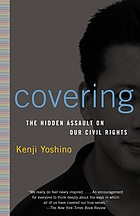
Yoshino, Kenji. Covering: The Hidden Assault on American Civil Rights (Random House, 2006). Part memoir, part legal treatise, Covering explores the nuances of discrimination through the demand that non-normative people "mute" the aspects of themselves deemed socially unacceptable -- and the willingness of our court system to give such discrimination (for example employers demanding women wear make-up or firing a woman for "flaunting" her lesbian relationship) a pass. I read this book for the first time in 2006 and it holds up incredibly well seven years later.

Jordan, Mark D. The Ethics of Sex (New dimensions in religious ethics; Blackwell, 2002). A thoughtful historian of Christianity and sexuality, Jordan explores how Christians have spoken about sexual ethics from the earliest days of the church to the present day. The takeaway from this slim little tome is the diversity and historical specificity of Christian teachings on sexuality (that and the fact that masturbation was once considered the gravest form of incest).

Japinga, Lynn. Loyalty and Loss: The Reformed Church in America, 1945-1994 (Historical series of the Reformed Church in America; W.B. Eerdman's, 2013). Denominational historian (and a former professor turned friend) Lynn Japinga traces out the tensions within and trajectory of the RCA from the postwar era through the turbulent Sixties and Seventies, into the 1990s. Since this was an era that involved much debate over the ordination of women as well as the denominational stance on homosexuality, I obviously found much of interest.

Christiansen, Erik. Channeling the Past: Politicizing History in Postwar America (Studies in American thought and culture; Univ. of Wisconsin Press, 2013). Through a series of case studies, including the History Book Club, television shows Cavalcade of America and You are There, the Freedom Train traveling exhibition, and the Smithsonian Museum of American History re-design, Christiansen explores the way Americans in the 1950s produced and consumed narratives of their past. This is a thoroughly researched and entertaining account of a particular era of American popular history that I highly recommend to fellow history nerds.

Root, Elihu. Insuring the City: The Prudential Center and the Postwar Urban Landscape (Yale Univ. Press, 2012). I've been trying to read up on twentieth-century Boston history this year, and Root's fascinating account of the politics surrounding what is now an iconic Boston landmark -- the Prudential Center -- was a swift and pleasurable read. I particularly enjoyed the many photographs included that visually document how the neighborhood where I work every day has changed so dramatically in the past seventy years.

Evans, Sara M., editor. Journeys That Opened Up the World: Women, Student Christian Movements, and Social Justice, 1955-1975 (Rutgers Univ. Press, 2003). A book I picked up for my new research project on motive magazine, this is an anthology of personal essays by women who came to social justice activism through the mid-century student Christian movements on college and university campuses. I really appreciate the way this book centers the experience of women and explores how their faith inspired them to engage in progressive social change work and also made that work materially accessible by offering educational and vocational opportunities to aspiring women leaders.

Spirn, Anne Whiston. The Granite Garden: Urban Nature and Human Design (Basic Books, 1984). This was a $1 cart find that meshed well with my self-assigned goal of learning more about Boston and urban history/politics/culture. While it feels a bit dated in some of its examples, I actually found myself feeling slightly nostalgic for a period of time when environmental activism was treated with more serious urgency and hope for meaningful change than it generally is today.

Fine, Michelle and Lois Weis. The Unknown City: Lives of Poor and Working Class Young Adults (Beacon Press, 1998). Based on extensive qualitative interviews with working-poor young adults from Generation X, sociologissts Fine and Weis use their informants voices to explore the gritty realities of gender, race, and poverty in America's eroding working class economy. One of the most striking observations they make is their white male interviewees resistance to systemic analysis (they preferred to blame women and people of color for their economic woes) -- a demographic trend that we have made little headway on in the fifteen years since publication.

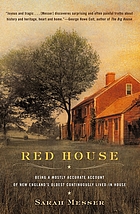
Messer, Sarah. Red House: Being a Mostly-Accurate Account of New England's Oldest Continuously Lived-in House (Viking, 2004). An historically-minded memoir, what at my college would have been termed "creative nonfiction," Messer's memoir tells the story of a house on Cape Cod her father and mother purchased and obsessed over -- and which became a family member in its own right, despite the lingering sense that the Messers were wrongful inhabitants, having purchased the property away from the descendants of the 17th-century man who first constructed the home. I particularly enjoyed the personal perspective Messer provides on the mid-20th century's revived interest in historic properties and public history.

Katz, Jonathan Ned. The Invention of Heterosexuality (Plume, 1996). Historian of gay and lesbian life, Katz turns his thoughtful eye on a sexuality we all assume is known but in fact is very rarely studied, or even defined: heterosexuality. Katz was one of the first scholars to point out that the "heterosexual" individual is a fairly recent historical invention, and his mid-90s discussion of the subject is still relevant todBuay.

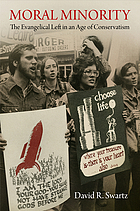
Swartz, David R. Moral Minority: The Evangelical Left in an Age of Conservatism (Politics and Culture in Modern America; University of Pennsylvania Press, 2012). First in what surely will be a long line of books to end up on my "If only this had come out before I finished my thesis...", Swartz's excellent study explores the lives and work of left-leaning Evangelicals during the mid-twentieth century and asks why their early agitation and political influence was ultimately overshadowed by the rise of the religious right. My only critique was its focus on male leadership and only passing discussions of feminism or sexuality -- but that just leaves work for the rest of us, right?

Bussel, Rachel Kramer. Best Sex Writing 2013: The State of Today's Sexual Culture (Cleis Press, 2013). Over the past half-dozen years, I've become a big fan of the Best Sex Writing series -- even more so than the myriad best erotica collections that come out every year: I like thoughtful sex journalism, which combines thinking (a turn on for me) with sex (also a turn on). What more could a sex nerd desire? Bonus third sentence: you can read my favorite piece from this year's anthology for free at The Rumpus!

This has been the third edition of subject/verdict. I hope you enjoyed it; I'm sure there will be more bookish things to come during the forth quarter of the year.

2013-06-14

subject/verdict: stuff I've been reading in two-sentence reviews [no. 2]

In which I use my forehead to hold my place while typing.
Like you do.
Here's another installment of subject/verdict, wherein I discipline myself to be concise in my literary commentary. Since the beginning of April I've read the following books.

Briggs, Patricia. Frost Burned (Ace Books, 2013). Mercy Thompson Series, #7. The continuing adventures of shapeshifter Mercy Thompson, now married to werewolf Adam Hauptman, as a group of mercenaries kidnap her pack on Thanksgiving Day and Mercy has to call in the assistance of all her human and supernatural allies to get them back. Those of you (like me) who worried the series might grind to a halt with the success of the marriage plot, worry no more -- and go enjoy the ever-expanding boundaries of this alternate universe.

Carriger, Gail. The Parasol Protectorate series, #1-5 (Orbit Books, 2009-2012). A delicious steampunk universe of vampires, werewolves, and soulless preternaturals delicately co-existing in Victorian London while soulless spinster Alexia Terribotti juggles social engagements, the attentions of an amorous (or possibly hostile) werewolf, and the friendship of effete vampire -- not to mention attempts on her life! These were a rip-roaring read for early summer, and I'm looking forward to picking up the first in her new series, Etiquette & Espionage.

Dyhouse, Carol. Girl Trouble: Panic and Progress in the History of Young Women (Zed Books, 2013). English historian of young women's lives Carol Dyhouse (Univ. of Sussex) seeks to synthesize over thirty years of research in this brisk survey history, beginning with the moral panic over the mythical "white slave" trade (late 19th-early 20th century) and ending with turn-of-the-twenty-first-century anxieties about the sexualization of young girls. Dyhouse's aim is breadth (within a British context) rather than depth, and historians of the subject might well bypass this text in favor of Dyhouse's scholarly work on women, education, and feminism -- still, Girl Trouble is an enjoyable read with a useful-looking bibliography. [Received as part of the LibraryThing Early Reviewers giveaway.]

Holiday, Ellen. Small Miracles (Dreamspinners, 2012). A writer friend of ours, whose pen name is Ellen Holiday, has written this charming Cinderella-style piece of m/m erotica novella in which a down-and-out young man runs into a handsome prince at a bar and has to decide whether to let their one-night stand turn into something more lasting -- and figure out how to do so on equal terms.


McGuire, Seanan. Midnight Blue-Light Special (Daw, 2013). InCryptids #3. New York's cryptid population is under threat from zealous ... As you've figured out by now, I'm back on something of a genre fiction kick, and was delighted to see that Seanan McGuire had a new installment of her InCryptids series out this spring -- Midnight did not disappoint!

(Since doing the screencap above, I've also been catching up on Seanan McGuire's short fiction, much of which is available for free download at her website. Definitely worth checking out!)

Passett, Joanne. Sex Variant Woman: The Life of Jeanne Howard Foster (Da Capo, 2008). Jeanne Howard Foster was the first librarian at the Kinsey Institute and author of the first known bibliography of literature featuring themes of passion between women: Sex Variant Women in Literature, first self-published 1956, then re-discovered by the emerging lesbian-feminist movement of the 1970s. This excellent biography is attuned to the incredible revolutions in gender and sexual history which Foster lived through, born in 1895 and living to age eighty-five -- she came of age in the era of passionate female friendship, experienced the pathologizing of lesbianism during the interwar years, and in retirement found herself the heroine of a new generation of dykes.

Riley, Naomi Schaefer. 'Til Faith Do Us Part: How Interfaith Marriage is Transforming America (Oxford University Press, 2013). Though prompted by personal experience within a Jewish-Christian marriage, Riley's exploration of interfaith marriages is grounded in a nationwide survey she conducted of over two thousand interfaith couples and several hundred in-depth interviews. Overall, I was impressed by her thoughtful analysis and believe the study is a solid contribution to the field, though I was struck by her pessimism and sense of struggle: her overall fear that interfaith marriage will dilute religious traditions and lead to greater unhappiness for couples and less religious identity and grounding for their children. [Received as part of the LibraryThing Early Reviewers giveaway.]

Taormino, Tristan, Celine ParreƱas Shimizu, Constance Penley, and Mireille Miller-Youn, editors. The Feminist Porn Book: The Politics of Producing Pleasure (The Feminist Press, 2013). Touted in many reviews as something new in the feminist discourse around moving-image pornography, The Feminist Porn Book actually builds on (and explicitly acknowledges) decades of pro-sexual-explicit-imagery feminist scholarship, activism, and performance. I particularly enjoyed the contributions by Clarissa Smith and Feona Attwood, Sinnamon Love, Dylan Ryan, Ingrid Ryberg, and Tobi Hill-Meyer ... though really there wasn't a weak piece among them (and how often can you say that about anthologies?).

Next up: to finish Best Sex Writing 2013, Born Losers: A History of Failure in America, Journeys that Opened Up the World: Women, Student Christian Movements and Social Justice, 1955-1975 and Moral Minority: The Evangelical Left in the Age of Conservatism. Catch up with my reviews in the next edition of subject/verdict!

2013-04-04

subject/verdict: stuff I've been reading in two-sentence reviews

Teazle likes to help me with my book reviews.
Despite the fact that my GoodReads reading goal is judging me fiercely (I'm a woeful books behind so far this year!), I have read a fair number of titles since January 1st that I simply haven't had the chance to blog about. And those books, too, are judging me for the lack of reviews. Because time is short, here are my two-line summaries of the stuff I've been reading -- one sentence for content, the other for my "verdict." I hope those thoughts spur some of you to add a title or two to your "to read" list!

A couple of titles will get actual honest-to-god reviews in the fullness of time, and I've noted which ones those be.

Bell, Leslie C. Hard to Get: Twenty-Something Women and the Paradox of Sexual Freedom (University of California Press, 2013). Sociologist and psychotherapist Bell explores contemporary sex and relationship patterns among a group of young women in the Bay Area as a way of identifying larger themes of change and struggle in our half-finished revolution in gender role expectations and sexual mores. While necessarily limited in its scope, Hard to Get is refreshingly non-judgy about young women's sexual practices and while Bell doesn't articulate her findings in quite this way, I would argue that her subjects' relationship success is strongly correlated with the degree of gender independence they and their sexual-romantic partners enjoy. [Review to come.]


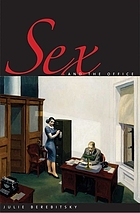
Berebitsky, Julie. Sex in the Office: A History of Gender, Power, and Desire (Yale University Press, 2012). Historian Berebitsky has written an insightful and entertaining history of wanted and unwanted (hetero)sexual expression in white collar settings, 1860s to the present. Beginning with the entrance of women into office work, Berebitsky explores how the newly-heterosocial white collar workspace led to a reconceptualizing of the office as a space for flirtation, romance, and exploitation, as well as attempts to police heterosexual interaction in complex and evolving ways.

Boylan, Jennifer Finney. Stuck in the Middle With You: A Memoir of Parenting in Three Genders (Crown, 2013). A raw feeling memoir about parenting as a transgender person, Stuck in the Middle combines first-person narrative with transcripts of interviews Boylan conducted with friends and acquaintances about fatherhood, motherhood, and parent-child relationships. While I felt it could have used a stronger editorial hand and guiding purpose, I particularly appreciated the interview sections. [Reviewed in slightly more depth at LibraryThing.]

Brownson, James V. Bible, Gender, Sexuality: Reframing the Church's Debate on Same-Sex Relationships (W. B. Eerdman's, 2013). Brownson, a New Testament theologian, grounds his case for the inclusion of same-sex sexuality within the realm of Christian sexual ethics in a close reading of the Biblical texts from a historically-minded, broad-themes perspective. While he often concedes too much to anti-gay conservatives, in my opinion, and draws too little on the work of queer and feminist theologians who have gone before him, hopefully his skillful and compassionate hermeneutics will encourage some to rethink their faith-based condemnation of homosexuality. [Full disclosure: Jim is the father of a good friend of mine, and holds a faculty position at Western Theological Seminary named for my late grandfather James I. Cook, who I feel confident would approve of this book.]

Corvino, John. What's Wrong With Homosexuality? (Oxford University Press, 2013). Corvino's apologetic on the subject of homosexuality is at once personal, grounded in his own experience as a gay man, and theoretical, drawing on his training as a professor of philosophy and ethics. I appreciated that Corvino thoughtfully acknowledged his focus on gay male sexuality, and while I doubt his arguments will convince anyone with an emotional-personal stake in animosity toward queer folks it is enjoyable to have someone so articulate on our side. [To be reviewed.]

Grogan, Jennifer. Encountering America: Humanistic Psychology, Sixties Culture, and the Shaping of the Modern Self (New York: Harper Perennial, 2013). In a book I devoutly wish I could have read while crafting my thesis, cultural historian Jennifer Grogan explores the origins, insights, and effects of one of the partial revolutions of mid-twentieth-century America: the humanist psychologists' campaign to re-form the practice of psychology and the modern concept of the human Self. Grogan is a skillful historian and writer who manages to write with deep sympathy for her subject without glossing over the limitations of her subjects' vision and practice.

Kipnis, Laura. Bound and Gagged: Pornography and the Politics of Fantasy in America (Grover Press, 1996). In the wake of the "porn wars" of the 1980s and the resurgence of moral panic around sexual expression, Kipnis, a professor of media studies, pushed back against the conflation of fiction and reality in Bound and Gagged: how acceptable or tenable is it to police peoples' fantasies, and to what extent is it fair to assume that peoples' fantasies translate into real-world desires? In case-study fashion, Kipnis points to the way America in the mid-90s was (and still is) appallingly comfortable policing the imagination, particularly where sex is concerned.

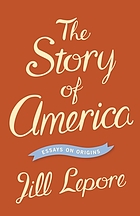
Lepore, Jill. The Story of America: Essays on Origins (Princeton University Press, 2013). Historian and masterful essayist Jill Lepore offers, in her latest book, a series of essays that first appeared in the New Yorker on various topics on American history. All revolving in some way around the printed word and the narratives we tell to make meaning of our lives, The Story of America explores how we have made sense of being American during the first 24 decades of our nation's youthful existance.

Pleck, Elizabeth M. Not Just Roommates: Cohabitation after the Sexual Revolution (University of Chicago, 2012). Historian of human development Elizabeth Pleck explores an under-studied aspect of the mid-twentieth-century's "sexual revolution": the rise in cohabitation by sexually-intimate yet unmarried partners, and the continued discrimination unmarried couples face in our marriage promotion-happy nation. Roughly chronological in its organization, Not Just Roommates begins with the persecution of cohabiting interracial couples in the early 1960s and ends with activism around domestic partnership registration as a marriage alternative -- laying out a convincing case for discrimination against the unmarried as pervasive and harmful in the lives of many. [Review to come.]

Speck, Jeff. Walkable City: How Downtown Can Save America, One Step at a Time (Farrar, Straus & Giroux, 2012). Urban planner Jeff Speck offers lessons from several decades of experience redesigning urban core areas on how to make our major metropolitan areas more environmentally sustainable and conducive to human well-being. While I quibble with some of his minor points (for example he finds extensive green spaces boring), his overall vision of a "walkable" urban environment is one I can get behind, and reading this book has prompted me to be more mindful of my own built environment -- and proud of how walkable our Allston-Brighton-Brookline-Back Bay area of Boston truly is!


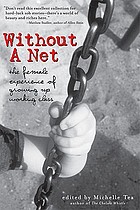
Tea, Michelle, ed. Without a Net: The Female Experience of Growing Up Working Class (Seal Press,  2003). This powerful anthology offers up diverse voices of women who experienced a working class, and sometimes destitute, childhood. Contributors' stories range from stomach-turning accounts of abuse and neglect at the hands of healthcare providers to lighthearted tales bordering on the "we were poor but never knew it" to deeply thoughtful reflections on what it means to escape poverty even as you watch your parents continue to struggle: highly recommended.

Williams, Linda. Hard Core: Power, Pleasure, and the "Frenzy of the Visible" (University of California Press, 1989). Pioneering scholar in the field of pornography studies, film studies professor Linda Williams explores "hard core" moving image pornography through the lens of film conventions, asking how it might be understood as a genre in its own right (my favorite chapter was the one that explored pornographic film as a sister-genre to the movie musical, a bare-bones narrative punctuated by sexual "numbers"). While some of her observations feel outdated in this age of the Internet, and I'd argue she concedes too much to the anti-porn feminists, Williams' work is still key in the field and offers much food for thought.