~oOo~
Showing posts with label comment post. Show all posts

2014-07-18

"which materials in [your] collections support gendered stereotypes?" [comment post]

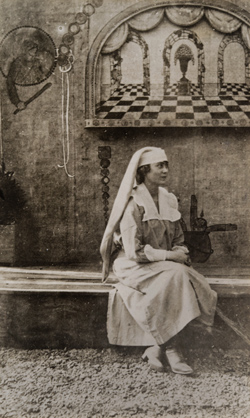
Mildred Mitchell
sitting under a frescoed wall (1918).
Massachusetts Historical Society
This week, I was contacted by a PhD candidate doing research on "archives and the construction of female identity." I had much to say about a couple of the questions, which I thought might be of more general interest to readers of this blog. So here is what I wrote!

4. Which materials in [your] collections support gendered stereotypes? Are there any examples materials which subvert these stereotypes? 

I find the framing of this question strange and confusing, perhaps because I am trained first and foremost as a historian. As a historian, I approach all collection materials as sources which can be understood in many ways. Most cultural artifacts do not in and of themselves support or subvert limited or fixed stereotypes or agendas; these artifacts are what we (the researchers) and any other individuals who interact with them (from creation to destruction) make of them. Rather than asking whether any particular item in our collections supports or subverts a particular understanding of gender (or sexuality or race or etc. etc. etc.), I would ask what the item might be able to tell us about how its creators and contemporaries understood gender (or etc.) in a multivalent sense. How did human beings make meaning using this item? What can this item tell us about the time and place in which it was created and used?

To use an example from the MHS collections which I, personally, have incorporated into my work as a historian, there is a deposition in the Godfrey Cabot Lowell Papers taken in 1914. It is the deposition, by a male member of the legal-judicial system, of a female office/retail worker about her experience of sexual-medical impropriety at the hands of a male doctor treating her for gynecological ailments. The deposition, as far as I have been able to piece together, is part of a larger case being assembled against the doctor for his activities, medical and personal. You can read the conference paper I wrote about the document here.

If we were to ask your question(s) of this item: does it support or subvert gender stereotypes, what would a meaningful answer be? One could argue the deposition was constructed in a context over-determined by a number of gender-based narratives: the female office worker, the sexually-naive spinster, the predatory male gynecologist, the hard-boiled private detective, the patriarchal morality police, the sexually immoral widow/madame with whom the doctor is living and working. The deposition and associated detective’s reports draw on all of these. Yet the deposition also offers up gender surprises, given its historical context. How did Nellie Keefe, the deposed woman, decide to speak out against the treatment that made her feel uncomfortable? How should we think about the persecution of a doctor for living with a woman (and perhaps enjoying a consensual sexual relationship with her) while unmarried? What bearing does that have on his medical practice? How are the women patients understood within the context of the case as gendered subjects? How does their agency in speaking out against the treatment they were uncomfortable with play into the “long game” persecution of the doctor for his domestic arrangements? Was the doctor acting inappropriately, based on the standard medical training of the day, in giving the treatment he did? To what extent are both women and men in this narrative leveraging and falling victim to narratives of gender salient in their specific time and place. Most historical texts (like our lived experiences!) are complex, multi-layered things which work within and against dominant narratives simultaneously.

As a reference librarian who works with researchers doing scholarship in the areas of women, gender, and sexuality -- along with other intersecting aspects of subjectivity and identity -- I see my job as helping a researcher to ask new questions of materials; to complicate our reading of what might at first glance seem self-evident as a source. I spend time brainstorming with researchers about where they might find documents or artifacts that speak in some way to their questions about gender and sexuality -- and the work they do with those items is quite often fresh and unique, challenging us to see particular moments in history and culture in new ways.

5. Should women’s collections, both those created by women and those about women’s activities, be kept in separate repositories or locations? Why? 

I believe in the organizational power (in a positive sense) of designated spaces and groups whose mandate is specifically to collect, preserve, and make accessible the documentary record of historically marginalized populations. The genesis of many special collections repositories for under-represented groups (people of color, religious minorities, women, LGBTQ folks, etc.) has often been within those communities themselves through grassroots organizing -- e.g. the Lesbian Herstory Archive. I believe those community-based archives have done (and continue to do) important work. I am also glad to see more conventional archives beginning to collect materials that more fully document all aspects of our culture and society. It is my hope that we will continue to have both types of archival repositories into the future, since I believe the “activist archive” and the institutional archive both serve important purposes within the ecosystem of the library/information professions.

Historically, the physical location of an archive or a collection has had significant bearing on who is able to access the materials the archive holds. Hence, it has often made sense for similar / like materials to be gathered in a specific location so that researchers can access them for a topical research project: e.g. lesbian pulp novels. Collecting policies often reflect this -- we don’t just take every collection we are offered, but rather consider whether it complements the other collections we have, or the goals of our repository in documenting certain aspects of history and culture: here at the MHS environmental history, for example, and Massachusetts family papers of the 18th and 19th centuries. My wife works at a repository that collects materials related to the history of medicine, so they collect physicians’ and medical researchers’ papers as well as print materials. As we are able to make collections more accessible through digitization, such geographical proximity can matter less (but still matter today, and will continue to matter for decades to come).

As an “activist archivist,” what I care about is that someone, somewhere, is collecting the materials related to histories of a wide range of people and groups. I want the employees at the institutions that care for these collections to believe in their worth and the necessity of their preservation. I’m pretty impartial as to whether those materials are held in an identity-based archive (e.g. a “women’s collection”) or whether they are held at a more eclectic institution. What I care about is that they are findable and accessible to whomever wishes to use them to further our knowledge of peoples and pasts. I would further complicate the issue of “women’s collections, both those created by women and those about women’s activities” by pointing out that each of us exists in the world with multiple facets of identity, and that making a present-day argument for the creation of women-focused collections (as opposed to historically women-centered collections) raises questions about how we would formulate a collecting policy for such an institution, and what such a policy implies or outright states about the notion of “women” as a discrete category of being.

Say you have a collection of personal and professional papers of a woman with both African (recent immigrant) and Euro-American ethnic and racialized heritage; she attended a historically-black college as an undergraduate, and then went on to seminary for an M.Div. Following several years as minister in the Reformed Church of America she left the ministry in order to openly marry her partner. She decides to pursue midwifery training so that she and her wife (a primary care physician) can set up a practice working with bisexual, lesbian, and trans* female couples around pregnancy, childbirth, and post-partum care. They become central movers and shakers in the women of color-led reproductive justice grassroots movement. The woman grew up in Georgia, attended graduate school in Michigan, then settled in Chicago with her wife whose family has roots in upstate New York and Western Massachusetts. After a long career in urban community-based women’s health activism, they retire to the Minneapolis/St. Paul (to be near the wife’s brother and his family). So, what’s the best place for these personal-professional records? In an archive that specializes in records of African-Americans? Women? Queer folks? People in the health sciences? Ordained individuals? Social justice activism? Should the records stay local to the Chicago area? Should they go to the HBCU institutional repository as an alumna collection?

I’m a cisgendered woman, but my womanhood is only SOMETIMES the most salient aspect of my identity (like when the Supreme Court decides because I’m a person with a uterus my workplace could pass judgement on my healthcare decisions). I’m also a librarian, a historian, a writer, a Euro-American with strong Scottish heritage, a bisexual lesbian -- where do my papers “best” belong, thirty years from now? It’s an imperfect science at best.

Any additional comments? 

In reflecting on your questions, I will say that it seems important to note that as a graduate student in library science / archives, with a background in women’s studies and history, I would have said my “ideal” job would be to work at a place like the Lesbian Herstory Archives, the Schlesinger Library, the Sophia Smith Collection -- somewhere that specializes in the historical subjects I find most interesting as a scholar. However, the job I found was here at the MHS, a repository that does not focus intentionally on any of my subjects of interest (history of sexuality, history of women and gender, history of social justice activism, history of religion, history of education, all emphasizing twentieth century American contexts…). Over time, I have grown to appreciate the important role I can play as a reference librarian in a more “generalist” research library in suggesting entry points into our collections that get at some of these subcultural and/or marginalized histories. Because of course even when we aren’t visible in the mainstream narratives, we have always been there -- to take queer sexuality as an example, it’s not like women sexually desiring women, and building relationships with them, is an invention of the twentieth century (though “Lesbian” as an identity construct, like “Straight” or “Cis” or “Trans*,” arguably is). So it’s important to remind researchers that they don’t have to go to “women’s collections” or “lesbian archives” to find stories that include queer folk. Which is not to say that finding us (people similar to us) isn’t harder in mainstream repositories, where finding guides and catalog records don’t necessarily indicate those aspects of an individual’s identity … to the extent that those aspects of identity are knowable.

2013-10-28

comment post: erotic expression and vulnerability

You may have heard about the teaching assistant who recently accidentally sent a nude photograph of herself to her students in lieu of the attachment she meant to send.

I'll let you all cringe in sympathy for a minute, because let's admit we've all been there -- maybe not in the nude photo sense, but in the "impolitic electronic communication" sense.

Done? Okay, good. Now the larger conversation in this instance is what lesson we might take away from these types of mistakes. That's what Claire Potter of the Tenured Radical and I have been discussing in comments over the past few days. My original comment was prompted by this passage in Claire's piece:
Herein lies a lesson for all of us: accidents happen to the best of people, so caution in the matter of nude selfies is advised. Things like this, and revenge porn, wouldn’t happen if people didn’t take nude pictures of themselves, and either give them away to boyfriends who they think are going to love them forever, or keep them on their computers. 
In response, I wrote:
I get where you're coming from on the "don't take nude pictures" line. However, I think a better approach would be to recommend more exacting privacy practices when it comes to erotic images and text you wish to keep between yourself and your intimate partners. Good practice: Not keeping nude photographs of yourself on your workplace computer. (Unless your work involves creating/disseminating nude photographs of yourself, obviously.) Bad practice: Keeping your naked photos in the same "Downloads" folder as the cat pictures you want to send to mom (and not labeling each set clearly, and double-checking all attachments before hitting "send").

Sure, the accidental sending off of the wrong photograph was inappropriate. Probably the TA's supervisor needs to have a conversation with her about working in less haste and keeping her private images private. But the real problems here in my opinion are a) a culture that shames women who leave evidence of their erotic lives that others accidentally or purposefully discover, and b) the students and administrators who see the sexual content of the accidental file transfer as grounds to blow this incident out of proportion.
Claire pushed back, writing in part:
But like the rule on secrets (information is no longer secret when two people know it), it is really unwise to give a photograph of yourself to *any*one that will shame you if it exceeds its intended audience. One person's erotic gift is another person's har-de-har-har or porn/revenge fantasy.
 To which I responded:
Thanks for the response. Again, I take your point in that caution is generally good advice.

I think where we (might?) differ in weighing the tricky balance is that I believe it is misplaced to offer advice like " it is really unwise to give a photograph of yourself to *any*one that will shame you if it exceeds its intended audience." We aren't prescient beings. We can't read the future. Sometimes we date asses who don't overtly advertise themselves as such. Sometimes a breakup is unintentionally messy and in a moment of pique the angry ex posts something they shouldn't.

I would argue that, as a society, we should not then turn around and blame the person who shared the image in a moment of private pleasure in the first place. We should blame the individual who shared that image of their ex without that person's consent.

In the balance, I think pushing individuals to err on the side of super-uber-never-share caution when it comes to erotic expression ends up reinforcing a culture of silence around pleasure. I can see it reinforcing women's sense that their sexual expressions and pleasures are invalid, shameful, and something not to share -- even with those whom they are sexually intimate with! That seems like a recipe for sexual mis-communication, as it fosters a climate of self-censorship rather than self-expression of desire.

Again, I realize you are NOT advocating for women (particularly) to stop speaking, writing, or enacting sex across the board. I think what I am observing is that such advice as you give above might unintentionally contribute to a culture-wide, persistent shaming of individual people daring to claim a sexuality that is personal and authentic to themselves through creating (among other things) images that speak of that desire, and sharing them with the people they wish to communicate that desire to.
Claire was gracious enough to continue the conversation, writing among other points:
I honestly don't think we are helping women by either saying they don't have to think about this, or that they should not distrust the capacity of other people to do them harm. It's not a moral issue from my perspective: it's a question of maintaining control if and when that is important to a person. I'm also a little curious about how it is that sharing a nude selfie is authentic and desiring in a different way than showing up in person and removing one's clothes, but that's another conversation, and this may be a generational distinction more than anything else.
To which I responded:
Thanks again for your thoughts.

I think to the extent we disagree it's a matter of emphasis rather than a more substantial philosophical divide. Like you, I would certainly counsel mindfulness about how, where, when, and with whom we share our most intimate selves. At the same time, none of us are omniscient and none of us are responsible (or can control) the actions of people who mishandle those parts of ourselves. If we withhold those parts of ourselves out of fear that we will get hurt ... chances are we won't get hurt, but we also won't have had that chance to share either.

Re: "I'm also a little curious about how it is that sharing a nude selfie is authentic and desiring in a different way than showing up in person and removing one's clothes, but that's another conversation, and this may be a generational distinction more than anything else."

I hesitate to attribute things too reflexively to a generational divide. There are likely people in your age cohort who have (or will) share erotic images of themselves; there are likely many my age (mid-30s) and younger who would recoil from that impulse.

I didn't mean to make it sound like the "nude selfie" is somehow a sacrosanct category of erotic expression -- but I think historically speaking we could probably find the rough equivalent of "the nude selfie" in virtually any generation. In the 1920s perhaps you and I would have been discussing the advisability of college girls going to dance halls, in the 1890s perhaps the advisability of girls sending erotically-charged letters to their beaus for fear they would fall into the wrong hands. I think that erotic self-expression is often a razor-thin balancing act of (on the one hand) sharing one's self with enough vulnerability with one's lovers for a successful, mutual relationship and (on the other hand) policing the boundaries of that intimacy against unwanted intrusion.

So yeah, I think we could haggle endlessly in this situation (or any other situation X) whether in the balance responsibility for breaching those boundaries falls more heavily with the individual or society (and what the consequences of that breach should be). But I don't think our readings are wholly incommensurate.
Any thoughts, readers?

2013-03-26

comment post: friendships, "crushes," and heteronormativity

About a year ago, I had the pleasure of being interviewed by London-based journalist Rachel Hills for her forthcoming book, The Sex Myth (Simon & Schuster, 2014). Last week, she was in touch with some of us to ask a follow-up question about "boy talk." For those of us who grew into our sexuality desiring women, or who didn't identify as female, Rachel wanted to know what such "boy talk" girl bonding rituals felt like to us.

Here are the thoughts I sent in response.

when you do a Google image search for "sleepover"
you get a bajillion images like this (via)
What an interesting question you pose, Rachel!

I have several distinct-yet-inter-related thoughts and memories:

First, I did not attend gradeschool (I homeschooled until college). Because of this, I don't recall a lot of intense pressure to perform gender in the "boyfriend"/"crush" way in my pre-adolescent years. I remember pressure from my childhood friends to pick a "best friend" among them, and feeling confused about how to handle that without hurt feelings. I remember lots of gender play in terms of dressing up and playing princess and "runaway princess" (which usually involved setting up house together, as sister-princesses, in the "woods").

It's true that, apart from my younger brother and his little group of male friends, I didn't have male friends who survived much into gradeschool. When I was very young, I remember playing with the children in my mother's circle of friends irrespective of gender, but when those children started attending school the boys were definitely under pressure NOT to be friends with girls (and vice versa, I imagine), so we drifted apart. The boys I knew in the neighborhood were more casual acquaintances, and even then they tended to be identified as my brother's friends, even if we all played together outside.

Second, I remember being intensely embarrassed and upset when older people (babysitters, adult friends of the family) framed my relationships, celebrity interests, etc., as (sexualized) "crushes." I vividly remember in the 9-10-11-year-old period specific instances of being teased -- I'm sure in a well-meaning way! -- about my passion for the tennis player Andre Agassi whom I idolized when, for a brief while, I was into tennis. Perhaps some of the intensity I felt about him WAS pre-pubescent romantic interest, but I really hated the teasing because I was confused by my own feelings, didn't identify them as romantic or sexual, and didn't like the feeling that other people were assigning terms to my feelings that I didn't agree to. It also felt like very private feelings were then being hauled into public in ways that were potentially embarrassing.

So during that period, the framework of "the crush" actually served the opposite purpose from bonding with my peers or same-gender compatriots: it made me feel uncomfortably singled out and limited in my passions. It served to make it clear that I needed to police my feelings (and the expression of those feelings), particularly about boys and men, if I didn't want to come under unwanted scrutiny.

As I'm typing this, I'm thinking about the way in which my passions for same-gender friendships were NOT similarly sexualized or policed by others, and the freedom that allowed me to develop emotional intimacy with my close female friends during pre- and early adolescence.

Third, I definitely remember the way in which my teenage friendships with other girls organized themselves around "boy talk." Our "boy talk" manifested in two distinct ways (as I recall), one of which I felt comfortable engaging in and the other of which I didn't. I do remember enjoying "boy talk" that circled around fictional characters in films and books. My girlfriends and I would read novels and portion out who had the "rights" to certain dashing heroes (or anti-heroes). We gossiped about what was happening between our favorite (hetero) couples in these fictional narratives and celebrated the successful marriage plots for the characters we felt were deserving and well-suited to one another. All of this I very much enjoyed.

What I felt more uncomfortable about, and artificially performative of, as time went on, was the more personal boy-crazy talk about crushes within my friendship circle. It felt awkwardly forced -- particularly for the friends (and we were a shy group of girls) who never acted on their supposed crushes by initiating a relationship with the person in question. It very much felt like an activity engaged in to earn points with other girls. You talked about who you had a crush on because it was what everyone was supposed to do.
I remember really hating the awkwardness of this period (adolescence), and the way in which girls and boys were relentlessly sorted into same-gender groups, and their mixed interactions chaperoned with the expectation on all sides that such mixed-gender interactions (whether single-y or in groups) were going to be fraught with sexual tension. I didn't like the way you suddenly were supposed to be aware of your bodily boundaries, who was touching whom, and how things that seemed nice (and possibly proto-sexual) were suddenly inappropriate. Like, I remember once being on a camping trip and helping a boy wash his hair in the river. We were both wearing bathing suits and I didn't touch anything other than his head, to help with the shampoo, and it was really nice to be enjoying ourselves. But afterwards, there was this clear message from some of the camp counselors (and later, parents) that this interaction was somehow fraught and potentially worrisome in a way that it would never have worried anyone if I'd helped a same-gender friend wash her hair.

Thoughout my adolescence, I kept asking people what was difference about sexual attraction versus intense, passionate friendship and they kept telling me that I'd understand when I had the experience. What I eventually figured out (embarrassingly enough, not until my mid-twenties!) was that the reason I couldn't decipher the difference was that I in fact had the potential for sexual desire for both men and women. My attraction to women had been burbling along all throughout my childhood and adolescence and had simply been allowed to run its course through passionate friendships -- without all of the constraints imposed upon interactions with boys.

The one passionately intimate friendship I developed with a boy in my adolescence was with a young man who eventually came out as gay. We're still very close friends, but it's definitely illustrative to look at the way he and I navigated our friendship in the context of heteronormative culture. While my passionate same-gender friendships were just as intense and intimate as my relationship with this boy (part of the patchwork of clues that finally led me to understand my bisexuality / sexual fluidity), those girls and I never problematized our relationship -- and neither did our families or wider circle of friends. In contrast, this male friend and I were both very aware of the emotional intensity of our relationship, and about the expectation that we needed to police the boundaries of that passionate relationship in order to respect one anothers' (emerging) sexual identities and to manage the expectations of our respective social circles. Our letters (for much of our relationship during that period we were long-distance correspondents) are full of discussion about the nature of our relationship, whether or not we felt a sexual relationship was in the cards, why or why not, how we might piece together a continued friendship even if one of us was sexually attracted to the other and the other did not reciprocate. We looked for models in history and literature for passionate, non-sexually-active, cross-gender relationships like ours. All of this activity was never explicitly prompted by our peers or the adults around us, but was definitely something we felt we needed to do. While no analogous process ever took place between me and the young women I was close to, despite the fact that I would (looking back now) argue the emotional intensity of female-female relationships were commensurate to what I felt with this male friend.

My point in recounting this story is that as a woman who grew up queer in heteronormative culture, I still felt pressure to sexualize cross-gender relationships and the absence of pressure to sexualize same-gender relationships. This meant that I was often bewildered and frustrated by the way cross-gender relationships that did NOT feel particularly sexual to me were nonetheless inscribed with those feelings from the outside, and simultaneously it delayed my recognition of the sexual potential within same-gender relationships because no one in the culture around me was encouraging me to think in those terms. While I'm glad for the protected, private space that gave me to explore my same-sex desires without the social scrutiny I would have endured for cross-gender desires (if/when they became socially visible), heteronormativity also meant I had a lack of language to speak about those desires even when I had begun to acknowledge them.

Whew! More thoughts than I anticipated when I started this reply ... I'll leave it there. Good luck with the final week of revisions, and thank you so much for staying in touch! I'm looking forward to reading and reviewing the final work.

Best,
Anna

2013-03-19

comment post: shipping as ... creativity [survey]

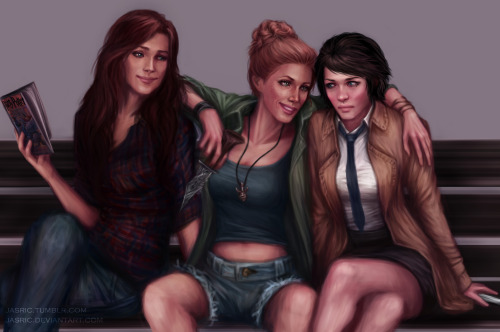
Sam, Dean and Cas ... re-imagined (by jasric)
Our friend tiptoe39 has been authoring a series of posts on "shipping" and fan works over at SpoilerTV, and for the last few posts she's created surveys to help her generate content. Here are my responses to her survey on "shipping as...creativity":

How does shipping enhance your creativity? 

I think shipping kicks my creativity into gear in part because it pushes my political buttons as a bisexual woman and as a feminist: I experience shipping as a direct intervention in mainstream narratives. It is a form of critically interacting with books, movies, television series that depict human sexuality and human relationships in certain ways, challenging the stereotypes, assumptions, or erasures I see there and re-working the source within the fanwork to tell a different version of events.

This is going to sound like a weird comparison, but I once attended a talk by Jane Yolan on faith and writing, in which she talked about how some people viewed writing from a Christian perspective as a negative constraint on creativity -- but instead she saw it as a limitation that fueled creativity because it gave you a framework that you had to work with ... creatively.

I think fan fiction can work in a similar way to writing "Christian fiction" ... in that you have a starting set of assumptions (the canon work) that's sort of there as a de facto set of prompts. And then whatever inspiration you have for your work, you'll have to be clever enough to put those two things together. Fitting form (the original material) with function (your particular vision in this instance). It's a challenge that I think can actually amp up someone's creative juices, because you can't afford to be lazy about it. (If nothing else, your fellow fans will call you on it!)

How does viewing fanworks by others enhance your creativity?

God, I love the creativity of my fellow fan creators. I'm constantly awed by the dedication with which so many of us write/draw/paint/edit/enact/etc. It's wonderful to take in so many visions of the same core material; to see how many ways the same narrative(s) can be improvised upon when humans put their minds to it. I definitely feel that my exposure to fanworks and the people who created them has taught me to look at the world in a more multi-faceted way. I see everything through "slash goggles" now, a perspective that necessarily involves holding more than one understanding of a work in mind (and heart) simultaneously.

Fellow writers have also taught me a LOT about the construction of effective erotica; I do believe I have a strong original voice in that regard, but I'm not going to kid myself into thinking I spontaneously learned how to write smut well. I learned it from my fellow fic-writers (thank you!).

What are you able to do creatively with shipping and fanworks that you cannot do with "original" creative works?

I've always been a person who thinks best "aloud," in dialogue with others. With shipping (and fan fiction writing) that conversation is a built-in feature of the activity from the start: you're in dialogue with the original work that inspired the fan work! I get incredible satisfaction out of participating in that conversation; it generally brings me into a much closer and more positive relationship with the original work (even when I'm highly critical of it) than I would be as a more passive consumer of the original work. I have very little experience with non-transformative fictional work (my non-transformative writing has been in the genres of academic/scholarly papers and creative nonfiction essays / blogging -- also forms of conversation in their own right!). But I have tried my hand, occasionally, at non-transformative fiction and I often run out of steam at some point, I don't have the social accountability to finish the story that the fandom provides. I think I also felt less of a sense of purpose with non-transformative work (it feels less politicized, less like an intervention, which are key kicks-in-the-ass for me as a writer).

What is your response to the idea that those with creative inclinations should work from their own characters and worlds rather than appropriating another's?


I understand the concern of creators who feel threatened by fan works. At first blush, fan works can look like an authorial power-grab, like plagiarism. However, I'd encourage people who are framing fan creations as plagiarism to reconsider that assumption. Instead, I'd argue that fan works are a form of reader/viewer response to the original piece. Like literary or film criticism, they are responsive to the original work, cannot exist (are often meaningless) without that original work with which they are interacting -- usually with a mix of praise and critique.

As long as the pieces are clearly framed as such (transformative works by fans), and the creators are not making money from their creations or passing their work off as actually by the original creator(s), I would argue that original creators can only benefit from the fan community getting excited about their creation enough to generate those responses. That responsive interaction will likely translate into investment in your original creation, which -- if you're a professional of any kind -- is going to translate into a larger audience, higher profile, more income. As a fan creator myself, I'll be honest and say that at least half of the original creations I create for I would not be reading or watching if I were not invested in creating fan works from them. The fan creation IS my investment in the work, my conversation with it.

Finally, as an historian I would point to the fact that fan works have a long history, as does the tradition of artistic inspiration, musical "quotation," fashion trends, and other conventions of one original work informing another very directly. While the Internet and other technologies have made this type of interaction more visible, I would argue it has long been a part of the equation in creative economies. This does not mean that creative rights concerns are invalid -- in fact, they are crucial to continue defining and advocating for -- but it does mean that there is precedent for original works and transformative works living side-by-side in mutual benefit.

Is there anything about shipping, or the shipping community, that limits you as an artist, creator, or consumer?

Well, I don't think this is exactly the kind of "limit" you're looking for, but I have sometimes found myself as frustrated by the tropes of certain fandoms, and the imbalance of having an endless supply of fic along certain themes, for certain fandoms, and then radio silence along other lines, in other fandoms. Obviously people are inspired to write what they're inspired to write. But fan works, like original works, are not created in a vacuum. So I think it's legitimate to note that there are relatively few sexually explicit fan works featuring female couples (compared with the huge pool of m/m slash out there). This can be a self-perpetuating cycle as fan communities reinforce excitement over certain pairings and fans who create in collaboration or through inspiration from one another gather around certain fandoms or pairings and not others.

I will include myself in this indictment: I write both female and male pairings, but in latter days I've been working on male pairings in part because that's where the community reinforcement comes from. My two Supernatural fics have far and away the most views, kudos, and comments on AO3 of all my fic. The next-highest story in terms of exposure and praise is a female pairing for Downton Abbey that's been up for almost two years, and is still only half the views as the Supernatural piece that's been up for five months.

So I think that even though the fan community often pushes back against canon, and the limitations of mainstream media in terms of human sexual diversity and other types of diversity, they are still often constrained by the "givens" of particular fandoms, and by the pressures of "the market" -- even though it's not a financial economy, but more of a social economy.

And, you know, we're human. So to the extent the culture we are steeped in perpetuates racism, sexism, classism, abelism, ageism, etc., etc., etc., as creators/consumers we're going to fall into those limiting traps as well, from time to time.

How would you characterize the community surrounding fanworks? (If you have also created non-fan creative works, can you compare the two communities? Those who read/consume are also welcome to compare the two communities.)


Overall, incredibly positive. These are people who take pleasure in what they do, and who generally engage in the activity as a leisure-time activity, as something fun and joyful. I really appreciate that fan creators are amateurs ("lovers") of their craft.

For myself, the pleasure I get from participation in the fanwork community is enhanced by the fact that my creative expression here is option, is non-professional, is what I do for pleasure rather than for work. I am also creative (even writing-creative!) in my professional life, and that feels more deadline driven and like it has a higher risk level to it than in the fanwork community. I feel more alone and (potentially) judged, like there is a much narrower margin for error in that context.

My fan creations are lower risk because they can be revised and updated as want them to be, and I find my audience to be incredibly supportive and forgiving. Fans are pretty good with the constructive part of constructive criticism -- they WANT your work to succeed, and get better, at what it's trying to do. It's rather like blogging, in that respect, only with no trolls! Which is lovely.

And I don't want it to sound like I haven't had incredibly warm and supportive feedback from my mentors in the professional settings I move in, either -- they've been unbeatable! But the stakes there just feel bigger in terms of being taken seriously as a ______. Fans will pretty much take you seriously as a fan as long as you're enjoying yourself and the object of your fannish love.

I would say particular fandoms strike me (in my early 30s) as "young" by comparison ... but that varies really a lot by fandom, so it's not a generalization.

Fan fiction authors also seem to be majority women, but again that would be a gross a generalization in terms of fan participation in responsive mediums.

What are the major problems you see within and surrounding shipping and fanworks?

I don't know if I'd characterize any of these as "major problems" but I do see them as ... problematic? issues that fans as a community might do well to have conversations about.

1) RPF. Real-person fic is something I have major reservations about, as it feels non-consensual and intrusive to me. There's a difference between someone choosing to portray themselves (or consenting to have themselves portrayed) in a sexual way, publicly, and to have other people create sexually explicit material about them -- even with positive, fannish intent! -- and make that public. It feels stalkery and, like I said, majorly non-consensual. I think it's a kissing cousin of "revenge porn" -- where sexually explicit pictures of videos (real or faked) of a person is released to the public as a form of character defamation.

2) Over-identification and emotional investment. This is something I tred carefully on because obviously fans have a long history of being characterized as hysterical, too passionate, etc. (what is too passionate, even, right??). But I have definitely come across people who use fandoms to validate their own identities (like, a character HAS to be gay or they can't deal, or -- conversely -- the idea that a character could be read as lesbian freaks them out and pushes them into defensiveness). And I've also seen people using fanwork to manage their own trauma or mental health which is totally appropriate alongside getting other forms of help, but I sometimes feel like fanwork is not a replacement for therapy, medication, a social support network, [insert need here].

3) Territorialness. So one of the great things about fans can be our generosity and collaborative spirit. ... and one of the worst things about fans can be our sense of ownership of a particular interpretation of a canon piece. To the extent that people sometimes abuse the folks who support "rival" interpretations, and even abuse original creators whose vision differs from their own. It's one thing to critique a creator's vision (the direction a series is going, something they do to a character, etc.) ... but I also think it's important to remember that just as WE (the fans) have a right to our vision of the story or character, so do other fans and the original creator.

Anything else you would like to add about shipping as creativity?

Whew! I think this form has me beat, so I'm going to leave it at that :) ... looking forward to the post!


2013-02-07

comment post: unfinished thoughts on non-consensual sexualization

Regular readers of this blog may remember that over the past year or so I've been haunting the conservative Family Scholars Blog hosted by the Institute for American Values (IAV) think tank founded by David Blankenhorn, sometime high-profile opponent of same-sex marriage. In part, I follow the blog because my smart and funny friend Fannie is one of their guest bloggers. I am also deeply interested in the worldview of people whose understanding of how the world works, and what values will increase the well-being of humanity, are so different from my own.

Last week, I found myself sucked into a comment thread at the FSB wrestling with the subject of what I'll call "non-consensual sexualization." My working definition of non-consensual sexualization is public expressions which frame another person's appearance, presence, or actions in a sexual light without their participation or consent. You might also call this plain old "sexual objectification." I'm using my phrase here because I think it's important to highlight the non-consensual part of what's going on here.

(because I won't post naked pictures of myself online*,
have this lovely view from Montague Book Mill instead)
I've been thinking about non-consensual sexualization a lot recently due to feminist discussions of the internet phenomenon of revenge porn and also because of the question I got on Twitter about the ethics of real-person fan fiction (RPF), particularly RPF that is sexually-explicit (see my extended response at the end of this post). Both of these situations -- revenge porn and RPF -- involve taking people the creators know in real life (either in person or through media of some sort) and sexualizing those individuals. With revenge porn the intent is malicious and generally misogynist: to humiliate the subject by way of sexually-explicit images or sexually-explicit chatter. With RPF the intent is usually enthusiastic on the part of the creator: they're engaged in the act of fantasizing about the individuals (usually celebrities of some sort or another) engaged in generally positive sexual situations and relationships.

At the level of private thoughts, sexualization of others is something that many of us engage in every day when we take note of another person's gorgeous hands or sexy ass. When we enjoy the chemistry between actors in a television show, or admire the outfit of a passerby on the street. When we harbor a crush on our political science professor in college or wake up from a really hot dream about this kid we sat behind in first period English (or watched shyly across the room in Sunday school). I think of sexualization as the mental-emotional process of considering another individual in a sexual light. This can be actively desiring (if we imagine that person as someone we'd like to be sexually intimate with) or passively admiring (if they're either out of reach -- your favorite actress --or not someone you'd actually want to have a sexual relationship with, say someone not the gender of person you are oriented toward). This type of sexualization seems, to me, no-one elses' business. Our own interiority is a private sandbox for self- and world-exploration, the ultimate safe space.

However. Once we make private thoughts public, social responsibility comes into play. Which is where the FSB comment thread re-enters the discussion. Barry, the author of the original post, recounted an incident in which a (male) classmate at a swimming class commented to Barry in an aside on the (female) instructor's body as it appeared in a swimsuit. Barry was uncomfortable about the comment and later mentioned his discomfort to his classmate, who apologized for his remark. The point of Barry's original post was that speaking up about a comment you find troubling can sometimes be less dramatic than you fear.

Many women, myself included, thanked Barry for speaking up in this instance and holding another man accountable for the way he was sexualizing the female instructor of the class without her consent, creating a situation where the man's classmates (and potentially the instructor, if she had heard) would feel uncomfortable.

Yet several frequent (male) FSB commenters insisted that Barry -- and by extension those of us supporting him -- were basically taking all the fun out of (hetero)sexual flirtation and OMG thought police!! For example, Kevin offered:
Barry’s heart, as always, is in the right place: a public place, safe and welcoming for anyone who wants to be a part of it. And having the courage to object to someone’s unseemly behavior. But this sexy gal is also in a position of power, itself a safe space: presumably she can kick anybody out of the class she wants.
While Hector has other concerns:
If men refrained from admiring good looking women, I wonder how you think people would ever date or marry each other.
When a number of us pushed back against this reading, suggesting that there was a difference between thinking someone is sexy and saying someone is sexy in an non-appropriate context, these commenters dug in even harder, again refusing to understand the distinction between thinking and speaking:
So he’s not even allowed to THINK something about this instructor?? I’m glad the thought police have arrived! “That way” was compliment, by the way. ... Elsewhere in the pool, a woman whispered to another, “OK, I get it, this instructor chick is a babe. So she has to wear the skimpiest bathing suit around, in case we didn’t notice?!” ... Is that comment ok, or should the other woman voice her objection. ...This is hilarious! 
 Note how Kevin (above) assumes that I (the person he is responding to here) will not object to the two women sniping about the instructor's "skimpy" bathing suit, when in fact I would suggest that such body snarking is in the same class of inappropriate behavior as the presumed "compliment" of the man at the center of this discussion. Both types of speech create a social climate within the class whereby the instructor's physical appearance and bodily presence are seen as relevant to the teaching of swimming technique. Both comments sexualize and objectify the instructor in a situation where she is not authorizing that way of interacting with her.

As I said in the comment thread, we're not talking here about a request that the teacher move to a new location where all of the students can see her demonstrate a movement. That would be a comment relevant to the activity of the class. The teacher's perceived level of hotness is not relevant to her ability to teach her students how to swim. And to bring that evaluation into the class is rude. It's an example of non-consensual sexualization, and something which women and sexual minorities in particular experience every day.

While I was putting this post together, this TEDx talk on the gendered nature of sexual objectification came across my dash that explores the broader political implications of widespread, non-consensual sexual objectification:


(Yes: While it happens less frequently, straight cis white guys can also be non-consensually sexualized. For example, exhibit A: Romney/Ryan slash from the 2012 election cycle YES IT EXISTS.)

I don't have a major conclusion to this post, so I'm gonna throw it out to y'all: What are your thoughts on the ethics of sexualizing others? What does it look like to recognize our sexual interest in other people without treating them like sex objects? And -- perhaps most importantly -- how to we model a culture of sexual subjectivity and mutually-consensual pleasure for all in ways that encourage men like Kevin and Hector to re-think their notions of what constitutes wanted, sexualized attention?**

I look forward to your thoughts!


*I have some lovely photographs of my naked self which I've taken over the years in celebration of my bodily presence in the world. I've often thought of sharing them online, but I won't because of the way women who share visual images of their nakedness are punished socially and professionally for that level of self-disclosure. That self-censorship is one example of the pervasive sexual policing women (more acutely than men) face for publicly acknowledging their unapologetic corporeality.

**I mean, I managed to successfully express my sexual interest in the subject of my affection and panty-dampening desire without treating her like a hot commodity that I'm entitled to consume publicly without her active enjoyment and participation. So I'm totally a believer in the "it's possible" but I'm not sure how to help the unbelievers see the light here.

2013-01-31

comment post: pressure to self-disclose in the classroom

unidentified classroom, possibly in Georgia (Library of Congress)
I subscribe to a number of listservs through H-Net, an online hub for humanities scholars. This past week, on  H-HistSex, the list for History of Sexuality, there's been a discussion about class exercises for the first day of class in a gender/sexuality course. I can't link to the conversation "thread" as a stable link, but you can find all of the relevant emails in the January 2013 log with the subject heading Re: Exercise for first day of class in gender/sex course. The resulting conversation was one that I thought some people who read this blog might be interested in. So I'm sharing a few excerpts here (all publicly accessible through the message log above) and wrapping up the post with my own comment which I sent out this afternoon to the group.

Several faculty contributed ideas about "getting to know you" activities that included some sort of topical self-disclosure and/or exercise designed to prompt personal reflection about sexuality and gender. For example:
I teach an introductory class ... and it's often fun to make them stand up and ask them to sit if the statement you make applies to them . . . to see who is the last one standing. You can use all kinds of "gender" statements like "I've dressed as the 'opposite' sex" or "I've seen a drag show." They seem to like this exercise.
And:
I have found that simple writing a three paragraph first person narrative as an opposite gender as useful exercises. Students have responded initially as very difficult to do. But in the end they find it increased awareness of gender issues.
Or:
Think of a pivotal experience that made you aware of the construction of gender in your own life.  Use details to describe a specific incident or two.  It could be either a positive (empowering) incident, or negative (discriminatory, hurtful) incident...Not only does it get them thinking of the issues we'll be covering, but it has turned out to be a wonderful "getting to know you" kind of exercise.
To which some people pushed back, suggesting that such activities can be experienced as threatening or alienating to some students:
You don't want to instantly lose shy, introverted students who have not faced explicit or alternate understandings of sex and gender. Some students do NOT want to talk in front of large groups.  Further, there might be students from very conservative backgrounds who will be lost if they are pushed too quickly.
Or, as another contributor pointed out:
We might want to reconsider activities that require students to self-expose by standing or moving or agreeing/admitting to statements. This can be very problematic for any students who are/identify/gravitate toward the non-normative (i.e., trans- and genderqueer students, students who may be questioning their gender and/or sexual orientations, as well as for students who are disabled). There requires a lot of imposed confession of students. Ditto the activity that requires students to write as the "opposite" gender -- what do I write about if I am identifying as trans or gender queer?
What I think is most interesting is the resistance that these cautions provoked among some other contributors. One person wrote:
If students aren't exposed to this theorization of the personal and personal theorization in our classrooms with forthcoming discussion leaders that role model critical thinking then where exactly will they be exposed to it? A puritanical fear of sharing about gender and sex and sexuality seems to me counter-productive to the very purpose of feminism and women's/gender/sexuality studies.
That was the contribution that finally prompted me to enter into the discussion myself, from the perspective of someone who has been in the study, not instructor position, as well as someone who has thought deeply and observed closely the power dynamics in the classroom. Here is my full comment [with a few clarifications added in brackets]:
In response to the observation "A puritanical fear of sharing about gender and sex and sexuality seems to me counter-productive to the very purpose of feminism and women's/gender/sexuality studies," I would just like to offer a couple of thoughts.

I am a former women's studies student (B.A., self-designed major) and have experience in graduate school in gender studies classrooms as well, although my advanced degrees are in History and Archives Management. I believe in the power of self-disclosure in the classroom, but I also think that it is important that student[s] feel INVITED rather than REQUIRED to share aspects of their life story, particularly in a classroom setting where there is a power dynamic (all classroom settings) and before trust between students and between each student and the faculty member has been established (e.g. on the first day of class). I have been in situations where there was pressure to share aspects of my life story that I didn't feel comfortable sharing, and later felt a (low-grade, admittedly) kind of violation [as a result]. I have also been in class with students who do NOT experience schools as safe spaces, OR who experience schools as safe spaces precisely because they don't require that level of self-disclosure (which the students associate with bullying, etc.).

So while sharing personal experience can be very powerful in the right setting, it can also feel violating and can cause students to turn away from the very type of gender theorizing we hope to encourage them to pursue. Perhaps if such exercises are done early on in class (or, indeed, at any point during the semester), the sharing of reflections by the student could be optional? (And I mean truly optional, with no pressure from the professor to disclose what they don't feel comfortable disclosing.) Obviously, the professor can do everything possible to model an open and non-judgmental space, but it is impossible to know what baggage every student may carry into the classroom -- particularly around experiences of sex and gender which are so deeply personal (and often private, even if not shameful) experiences.

I think the success of such sharing turns on consent. Think, for example, of the psychological difference between choosing to self-disclose one's sexual orientation or gender identity and being "outed" by someone when you weren't ready or didn't feel safe doing so.

I am all for open discussion about gender and sexuality, but I think every student is in a different place in terms of their willingness and ability to speak in deeply personal terms about what those things mean to them. The option for speaking about those ideas with a little more distance and self-protection, particularly at first, seems respectful of that variation among learners.
I had at least one participant email me off-list to thank me for speaking up. I think the entire exchange is a really important example of how mindful we all need to be about the situation nature of self-disclosure and the way that power dynamics can make something that sounds liberating (and might even be liberating for some people in the space) coercive, an abuse of professorial power.

Yes, as the faculty member responsible for teaching the class, you can ask your students to do difficult intellectual and even emotionally-stretching tasks. In a class on sexuality and gender a responsible professor will likely push most of their students to the edge (or beyond) of their comfort zone at some point during the semester. However, there is a difference between requiring students to think critically about gender and sexuality and demand that they share aspects of their identity or experiences in a room full of quasi-strangers, at least some of whom are likely to hold negative beliefs -- or at least misconceptions about -- those qualities. I would not have felt safe, for example, speaking about my emerging bisexual desires in the women'e studies classes I took as an undergraduate because of remarks other students had made about bisexual promiscuity. I would have not felt safe talking about my interest in pornography or BDSM role-play around some of my women's studies faculty. In graduate school, I had a trans friend who came out (voice shaking) in order to combat some of the stereotypes being tossed around in class, and felt conflicted about that self-disclosure after the fact. I had friends from working-class backgrounds who struggled with feelings of difference; simply saying as an introductory exercise that they came from a household below the poverty line wouldn't have made them feel any more like they belonged in the classroom space.

There are ways to allow for self-disclosure without demanding it -- mostly by modeling acceptance as a mentor and encouraging students to examine their pre-conceptions about others. When you speak up as a faculty member and challenge a student's sloppy thinking you're sending a message to that quiet student in the back room that they can also raise challenges to similar statements, without prefacing those arguments with a litany of self-identity qualifications. And I'd argue that this ultimately makes the classroom a safer space for everyone within it to listen, to speak, and stand a chance of being heard.