~oOo~
Showing posts with label british isles. Show all posts

2011-09-11

live-blogging 'inspector lewis': wild justice (5.2)

James Hathaway (Laurence Fox)
Welcome to another installment of live-blogging Masterpiece with Minerva, Hanna and Anna, at the particular request of our friend Lola who joins us today via Skype. Today's Masterpiece is an episode from season five "Inspector Lewis": "Wild Justice" (5.2).

Stay tuned for updates beginning at 9pm this evening.


Mmm. Okay. Last minute change of plans as WGBH has revised their schedule at the 11th hour and we aren't getting "Lewis" tonight! Check back in next Sunday and we'll try once again.

2011-09-09

articlenote: setting the record straight

Thanks to a recent issue of Education Revolution E-News, I was alerted to the existence of the Journal of Unschooling and Alternative Learning, a free online resource for scholars in the field and interested others. Yay! More stuff to read! The journal has been going since 2007 and all five of the annual volumes to-date are available in HTML and PDF form. Yes: I'll be working my way through the back catalog.

But today, I want to highlight an article from the current issue: "Setting the Record Straight: Interviews With a Hundred British Home Educating Families," by Paula Rothermel (JUAL 5, 2011: 20-57). I was super excited when I saw this article because it sounded very much like the type of research I thought about doing back in 2006, when I applied for a Marshall scholarship to do an independent research project in England under the supervision of Professor Clive Harber. The scholarship didn't come through (obviously), but I've remained interested in research on home education and Rothermel's comprehensive study of the styles and outcomes of home-based education does keep cropping up. On my reading list is her recently-available e-book Home Education: Rationales, Practices, and Outcomes (Thesis UK, 2011), which is an in-depth exploration of home educated based on interviews done with one hundred British families who had chosen to homeschool in some way, shape, or form. "Setting the Record Straight" (html, PDF) is a summary of the findings from that project, and Rothermel makes a few really interesting initial observations.

1) I was impressed with the explicit mention of non-heteronormative families in her study sample (about 20% of the total group, including single-parent households as well as same-sex couples) and her emphasis on the broad range of parental background and occupational/class status. She points out that despite the widespread stereotype of homeschoolers as white and middle-class, the one hundred families in her sample traversed socioeconomic strata from travellers to families who could have afforded elite private schooling, from parents who were miners and shop assistants to vicars, teachers, and biologists.

2) Rothermel emphasizes the way in which the decision to homeschool, for many families, was "emergent, the result of a string of seemingly insignificant events that made the choise to home-educate appear natural for the family when the time came to take decisive action" (30). In the UK, I gather, much discussion among school authorities has focused on the "push" factors that drive families away from government schools toward home education. "The idea is that if we know the reasons [for homeschooling], we can address them and (re)integrate children into school" (52). Rothermel suggests that this emphasis misses the point that families often choose to home educate for reasons that have nothing to do with specific school options.

3) She made some intriguing, and all-too-brief, suggestions that parents who home educate migrate from center-to-margin in terms of not only their educational philosophy but also their whole life philosophy. "Most families underwent a transformation proportional to the length of time involved with home-education, becoming increasingly radical in relation to their starting point ... questioning everything" (39). This included non-normative gender roles for some parents, women particularly, who found that their family life choices freed them from other cultural expectations. "Counter-intuitively, perhaps, it appeared as if home-education actually liberated families, women particularly, of social norms, whereby, once they had 'stepped' outside the 'doors' of institutionalism they were free to 'do it their way' " (41). Rothermel makes passing mention of families that had taken steps to form co-housing communities with other alternative educators, an experiment I hope she explores in more depth in her book.

In sum, a really interesting introduction to Rothermel's research to-date. If this is the sort of stuff that gets your intellectual juices flowing, head on over to JUAL to check it out, 'cause after all it's free!

2011-07-17

by special request from the birthday boy

Dad suggested I share these pictures from a bike ride we took together around Loch Katrine in The Trossachs, Scotland on May 2004. It was at the tail end of a trip during which we had gorgeous weather. I'm not complaining about that, since it allowed us to complete the West Highland Way on foot without getting drenched. But the rain caught up with us on this particular day.

Loch Katrine is a water source for the city of Glasgow, so the only
boat allowed on the lake is the Sir Walter Scott steam launch.
It's eerily quiet, whether you are riding it or watching from the shore.
You rent cycles and can ride the ferry across the loch,
then cycle back to where you started.
This is where the rain caught up with us.
You can see, if you look closely, the raindrops on the surface of the loch.
We made it back in time for afternoon tea,
and to watch the launch return!
And a lovely couple who worked at the site gave us a ride back to Stirling, saving us the cost of a cab fare.

2011-03-01

ficnotes: my phone's on vibrate for you


Last week, I offered up one of my favorite one-shots by Miss Lucy Jane. This week, we're returning to Miss Lucy Jane for a five-part work in progress that starts out as a lark and ends up ... a bit more serious.
Title: My Phone's On Vibrate For You
Author: Miss Lucy Jane
Pairing: John/Sherlock
Rating: NC-17
Length: currently five parts, work-in-progress
Available At:
MissLucyJane.com: Part 1, Part 2, Part 3, Part 4, Part 5 (navigation links on the right-hand side of each page).
Playing with Sherlock's penchant for texting John instructions, this fic begins with flirtation via phone. Sherlock texts John all the time, for all sorts of reasons ... which is why John isn't quite sure what to make of the text that reads: "When you get home I want to blow you against the front door. SH." Or the following one that reads: "And then I want you to fuck me on the stairs. I can’t wait long enough to get you into bed. SH.”

The relationship begins as a "fuck buddies" sort of arrangement, but it isn't long before both men realize that it means a bit more than that.

(I don't know what it says about me that I'm writing this fic up while listening to Martin Sheen giving John Spencer a history lesson about Galileo in West Wing 2.9. I'm torn between a) assuming that I've finally learned how to multi-task and b) that I find slash fic and American politics equally sexy. Feel free to weigh in.)

2011-02-23

ficnotes: kissing john watson

by daisukikawaii 
As predicted, things are a bit scattered this week and blogging time is thin on the ground. But somehow conversation at our apartment wound its way around to the joys of kissing yesterday evening, and that made me think of this little gem of a fic from the superlative Miss Lucy Jane.

Title: Kissing John Watson
Author: Miss Lucy Jane
Pairing: John/Sherlock
Rating: PG
Length: 1900 words (one chapter)
Available At:
MissLucyJane.com
Fic authors playing with the BBC Sherlock universe tackle Sherlock's sexual history and inclinations in a number of different ways, each of which presents its own charms and dilemmas for a writer of smut. One of the most charming iterations is a Sherlock who has just discovered, through his relationship with John Watson, a whole new realm of sensual experience that provides him with an explosion of data. Sometimes this Sherlock is overwhelmed by the flood of new information, and sometimes -- as in this fic -- he embraces it with the enthusiasm of a child in a chocolate shop.

2011-01-31

live-blogging "downton abbey" (episode no. 4)


So here we are at the last live-blog for "Downton Abbey," Season One. You can read the snark (you know you want to!) in full over at ...fly over me, evil angel....

9.16: [Sybil] A: Someone's got something up her sleeve! M: Someone's not going to a charity. [Lady and Maggie Smith] M: This is that scene! A: The voice cracks... [as Maggie Smith rationalizes house geography] H: It's the delivery... M: It's fantastic... A: I could watch that scene over and over for hours. M: She's all about practicalities. A: Well, it's about image, right? Whatever you do is okay so long as society doesn't find out. M: I wonder if Grandma's going to back Mary so much now.

9.18: [Anna and Bates, 'I'm not sure the world is listening.'] A: Good point. [William and Daisy] A: That's...a stunned look. M: I'm surprised people can't read Daisy like a book!
I have to say I'm sort of ... disappointed in the series as a whole, although invite me back for the visual pleasure any time! And the acting is solid-to-stunning throughout the cast. No; my disappointment comes from what they didn't do with the script. At least in this first season. At its heart, "Downton Abbey" seems to be really invested in the Edwardian aristocrac, and portraying the intact stratified class system as ultimately a good thing. People within the story flirt with challenging it, but they're always won over in the end to this way of life: the lord, the estate, the upstairs/downstairs social organization. None of the women seem to see how to break free of the life-paths they've been set. Very few servants are asking if that's the life they want ... and when they do, they're inevitably brought back into the fold.

It's not that I expected this film to be about socialist revolutionaries. But given that there were radicals in England at the time -- often asking very trenchant questions about the "common sense" assumptions concerning class and gender -- it rings a little false to have those social critiques all but absent in the world of DA. Particularly since it's a show that keeps hammering home in the introductions that it's all about "change."

I'll be interested to see what they do with Season 2.

2011-01-27

booknotes: the sixties

Jenny Diski's slim contribution to the series BIG IDEAS // small books (Macmillan Press) is a historically-minded memoir of The Sixties, that period of social foment between, as she dates it, the mid-1960s and mid-1970s. Between "the rise of popular culture" and "all the open-ended possibilities ... began to narrow" (3). Diski is English, so her Sixties were the British Sixties, kicking off with the Beatles and the fashions of Swinging Sixties London (picture Emma Peel in the Avengers) and ending with the rise of Tory, Thatcher-ite politics. In six brief chapters, she surveys consumer culture, drug culture, sexual liberation, and movements for social change: principally the feminist movement and the free school movement.

I'm not particularly sure what Diski was going for in this book. Granted I read it very quickly in a single sitting one night when I couldn't fall asleep. But still. On the one hand, it attempts to survey cultural trends in an overview sort of fashion, to speak for more than just herself -- she uses "we" throughout to speak of her cohort of youthful enthusiasts. Yet at the same time, Diski's experience is a very personal one. An unhappy adolescent, she was kicked out of school for using ether in her early teens and soon thereafter left her parents' care for good. She was heavily involved in the drug scene in London, checked herself in and out of mental health institutions throughout the 60s and 70s, had a lot of very unhappy sex, was involved in starting an alternative school, went back to rehab ... despite the way her words cue nostalgia and a continued commitement to the values of her youth, the book manages to convey very little sense constructive joy.

Diski seems to have settled on wistful nostalgia lost opportunity -- though opportunity for what exactly remains fairly nebulous -- woven together a rather pessimistic interpretation of these countercultures as ultimately paving the way for the conservative revolution. Rather than interpreting the rise of neoliberal conservatism (Reagan on this side of the pond, Thatcher on that) as a backlash against the chaos of the Sixties, Diski sees it as a natural outgrowth: hard-right concepts of privitization and individualism dovetailing neatly with left-wing desires for decentralization and exploration of the self. "I'd resist the claim that the Sixties generation were responsible for the Tatcher years, as I would resist the notion that the Jewish community in Germany were responsible for the advent of the Nazis," she writes (should her argument automatically lose according to Godwin's law?). "But sometimes I can't help but see how unwittingly we might have been sweeping the path in readiness for the radical Right, preparing, with the best of good intentions, the road to hell for paving" (110).

While as an historian of this period I am inclined to agree that the argument has merit -- the radical Right employed and benefited from the theoretical frameworks developed on the radical Left much more than either side likely wants to admit -- I am unsure what Diski wants us to do with this observation. She implies, though never develops the argument fully, that the desire for democratization, decentralization, diversity, and exploration of the self-in-relation-to-others somehow fits in with the far Right agenda. And that therefore the very foundations of the Sixties counterculture are suspect, tainted.

I'd argue this is a confusion of external appearances with deeper values. It is akin, in my book, to arguing that because the Religious Right has utilized Christian scriptures for power-hungry, poisonous ends, that the Bible is worthless as a spiritual text, and all Christians are somehow in (perhaps unwitting, yet still substantive) collusion with those forces inimical to life. I realize there are a lot of folks -- particularly on the secular left these days -- who do indeed argue the very perspective. Perhaps Diski is one of them, although I know nothing about her personal religious values. I find such wholesale dismissal of complex philosophies and traditions to be disheartening; imaginative "third way" options are often sacrificed as a result.

Which is kind of what I felt when I read Diski's chapter on free schools. She focuses specifically -- aside from recounting her own experience helping to found and run an experimental community school -- on the pedagogical writings of Ivan Illich. Illich is known best for his influential critique of institutional schools, Deschooling Society (1971), which argued that institutional schools -- designed to support the modern corporate and state interests -- are antithetical to authentic learning. Illich argued that a much more human-centered, constructive approach to teaching and learning would be to establish community-based learning centers that would serve as a general clearing house for those with skills willing to teach and those with the desire to learn. As the title of his book indicates, Illich was interested in a whole-sale revisioning of society, as a re-tooling of learning would entail a re-tooling of the rest of the economic and socio-political culture in order to accommodate peoples' freedom as individuals to learn according to their own design. Diski classifies him as a libertarian, which is perhaps fair, but also suggests that he would have found a home in Margaret Thatcher's government, as one of her "theoretical advisors" (110).  While I don't know enough about Illich's overall political views to argue what he would or would not have done if given the chance.  However, as a radical Catholic priest who -- as far as I've been given to understand -- was deeply suspicious of institutions across the board -- it is difficult to see him participating at such a high level in government. Let alone a government that was so heavily invested in maintaining the power of big business, the military, and so forth.

As Diski herself writes, the point was "to dispense completely with structure, to undercut the authority of hierarchy and the hierarchy of authority" (110). This, for some reason, appears to have surprised Diski when she revisited Illich in preparation for writing this book. She is appalled at the idea that no centralized system would be in place to advocate for certain bodies of knowledge, and sees in such a centralized, non-authoritarian vision the spectre of violent anarchy and increasing inequality. Of privatized interests and a voracious economic dominance. In short, Diski is conflating a vision of human liberation from cultural conformity, institutional tyranny, and systems of oppression, with a right-wing political liberatarianism that ignores (of, often, actively supports) the way in which power is used and abused by human beings to marginalize and control the vulnerable. She does not acknowledge the sister-discourse within the educational alternatives movement concerning common responsibility, reciprocity, social justice, and peace.

Which is, in the end, where I feel her analysis of "the Sixties" as a period of cultural and political foment falters. To say that the upheaval of the postwar era lay the foundations for the rise of conservatism in the late 1970s is a valid argument, but her failure to explore fully the way in which left-leaning calls for personal liberation were twinned (in both philosophy and practice) with collective responsibility for the well-being of humanity and the planet as an ecological whole. It is also to ignore the individuals and groups that have continued to advocate this vision, even as the conservative agenda has come do dominate mainstream discourse. Perhaps in a lengthier work Diski could have convinced me, but given that she offered her thesis with such brevity, I found myself still unconvinced.

2011-01-24

live-blogging "downton abbey" (episode no. 3)


It's a busy day at work today, folks, and I don't have time for an elaborate introduction / cross-post. Though I will say two things: 1) every line out of Maggie Smith's mouth continues to be pure gold and 2) if Bates the valet and Anna the housemaid fail to have some sexytimes -- or at least implied sexytimes -- by the end of the series, there will be serious dedespondency in our household. You can read our third live-blog of "Downton Abbey" over at ...fly over me, evil angel... and catch up with installments one and two there as well. Spoilers after the jump. You have been warned.

2011-01-20

booknotes: the perfect summer

The Perfect Summer: England 1911, Just Before the Storm, by Juliet Nicolson (New York: Grove, 2006) reads like a cross between a gossip column and a cache of family letters -- with a dash of historical analysis thrown in here and there. Nicolson has chosen as her subject the Season (May to September) of 1911, the summer before the Titanic would sink and three years before the conflagration that came to be known as The Great War ("the storm" of the title) would engulf Europe. Drawing on memoirs from multiple social strata (a butler's tell-all narratives; a débutante's diaries) Nicolson manages to piece together a remarkably non-hagiographic portrait of a summer, despite the fact that Perfect Summer reads like one long anecdote pieced together out of a series of little gem-like stories.

For example, we learn that Lady Diana Manners, who "came out" into society in the summer of 1911, was not as alarmed as her peers about the prospect of mixed-sex socializing, since she had an older brother and also because "her elder sister Marjorie had held hair-brushing sessions during her first season to which Diana and the young men who admired Marjorie were invited."

Hair-brushing sessions? Does anyone else's mind go to places you have the feeling it should not go with that phrase?

Okay. Just checking.

But we also get stories about the heat-wave and drought that enveloped England during much of the late summer, causing so many heat-related deaths that the newspapers stopped reporting them (they ceased being "news") and crops failed. Industrial workers and schoolchildren went on strike (for better wages and better meals, respectively) and nation-wide people hotly debated the merits of a proposed National Insurance Act. In other words, the "perfect summer" may not have been so perfect after all.

On the one hand, there are certainly more comprehensive scholarly analyses of the era available, as well as texts that focus more specifically on particular aspects (the suffrage movement barely gets a look-in!). Still, the book is a quick read and a nice companion history to Masterpiece Theater's current costume drama "Downton Abbey" -- which opens with the sinking of the Titanic and will (I anticipate) close with the outbreak of the war. And Nicolson has followed the book up with a history of Britain between the wars, The Great Silence (2009) that I'm looking forward to picking up.

2011-01-17

live-blogging "downton abbey" (episode no. 2)

Lady Mary prepares to be unwise in her flirtations.

Following up last week's live-blog of the first episode of Masterpiece Theater's "Downton Abbey,"
Hanna and I, along with our friend Minerva, gave a repeat performance last night for the second episode (we're halfway through the series, people! can you stand the drama?!)  You can read the whole blog post over at ...fly over me, evil angel....

Obviously Spoiler Warning: Downton Abbey, Episodes One and Two. Return after you've seen it if you don't want any plot points to be given away.

A few tantalizing tidbits ...
9.23: [as Bates and Anna giggle] M: Kiss. Each. Other. Please, honey! Make him drop the cane! I'm sorry; I need some smexy times! A: Yeah, he needs to grab her ass... M: There's a table right behind you!

9.24: [Harriet shows up] H: Go, Harriet! M: Oh, I like you!

9.25: [as Maggie shows up] M: Oh, Maggie -- I don't like you now! M: [as wife defends procedure] Oh, good for you! A: She [Maggie Smith] is so good at that "What? People are contradicting me?"-look.

9.26: [as procedure continues] M: Whoa -- that so ain't right! H&A: Hush!
And predictions for the second half ...
Halfway through the show! Guesses all 'round...

A: So the little redhaired girl is going to go off to be a secretary.

M: Bates and whatsherface need to come to some kind of agreement. Understanding.

A: Yeah.

H: Thomas needs...a shagging or a comeuppance...

M: Thomas is going to blackmail his way out of that house.

A: He's going to use that information to get himself leverage somewhere, somehow.

M: I do think it will backfire.

A: Yeah, he's going to try. I don't know what O'Brien wants...but she's going to be there with him.

M: Her motivation, other than being spiteful, is...

A: If she was acting as if the family was under threat...but she hates everyone!

M: I think she just wants to see people ruined.

A: It's a very malicious sort of...youngest daughter needs to find some sort of voice.

M: She's gettin' close. Middle daughter -- all middle daughter is going to end up a little shafted in this story.

A: Which is sad. But yeah. I want to see Maggie Smith and Harriet Jones...

H: Go at it. Oh, god, yes.

M: ...preferably in that little cottage parlor. Epic.

[General agreement and headnodding]
Head on over to Hanna's blog for the full post.

2011-01-10

"live-blogging" downton abbey

Hanna and I, along with our friend Minerva, watched the first episode of Masterpiece Theater's "Downton Abbey" last night and live-blogged it for a post that Hanna put up this morning over at ...fly over me, evil angel....

Obviously Spoiler Warning: Downton Abbey, Episode One. Return after you've seen it if you don't want any plot points to be given away.

Because who doesn't want to see Maggie Smith
play Dowager Lady Crawley?

Rather than post the whole thing here, I'm sending the blog traffic her way. But here's a taste of the wit you have in store:
9.20: [Dowager Lady and Lady plotting to save money and estate] M: Granny is manipulative and awesome. A: Yeah, it would be a little frightening to be on her side -- but it would be frightening to be on the side that wasn't her!

9.21: [Daisy mooning over sulky footman] M: Daisy is going to end up in the family way... A: And not quite understand how it happened. H: Does she only have one dress? M: Yeah. She's so going to end up pregnant.

9.22: [lawyer and Lord discussing new heir] Oh god, not Manchester! A: The midlands! "There are worse professions." ".....Yes." M: Oh -- snap!

. . .

9.57: [Duke: "You might tell that footman I've gone up."] H: Well, you're not the game there, honey! M: God, how did women survive this time? H: Vibrators. A: I don't know if vibrators would solve their financial problems...

9.58: [Thomas kneels in front of Duke] Moment of stunned silence. A: This is like slash that gives you the 'no feeling.' M: ...this is still a little hot. This is like Upstairs, Downstairs with a gay twist! H: They're...quite sweet? M: Oh -- not sweet. H: Nope, not sweet. [as threats pass between footman, Duke] M: Oh, wait -- I feel some angry sex coming on...maybe not...maybe...awwww...no slashiness. A: Well, he was being a bit of a bastard. H: Yeah...Maurice without the nice ending. M: Wow... [as footman tries to master his emotions.] H: Yeah...kind of touching.
Read the rest over at ...fly over me, evil angel... and watch for the second installment next Monday.

2011-01-06

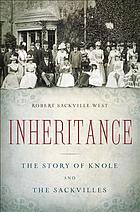
$1 reviews: inheritance

I picked up an advance review copy of Robert Sackville-West's family history Inheritance: The Story of Knole and the Sackvilles (New York: Walker & Co., 2010) at Brattle last week. While I'm not particularly up on the history of the British aristocracy, I do have some background on Knole (the family home) and the Sackville-Wests having read Portrait of a Marriage and two fictional odes to Knole in the form of Vita Sackville-West's The Edwardians and Virginia Woolf's Orlando (a trippy love letter to both Vita and her ancestral home).

Inheritance is a quick read, each chapter chronicling the tenants of Knole from Thomas Sackville, 1st Earl of Dorset (who lived in Knole from 1604 to his death in 1608) to the National Trust, who bought the home from the family in 1946. Robert Sackville-West, the current custodian of the family's interest in the home -- and resident, along with his family, in the private quarters on the estate -- draws on substantial family papers and documents of record as well as family memory to provide a light-hearted romp through history. Some of the best bits of the story are told in the words of the author's ancestors who were thoughtful enough to leave behind diaries, daybooks, ledgers, and correspondence for future generations. Robert does not seem particularly anxious about protecting the family propriety in sharing anecdotes -- if anything, he seems to enjoy highlighting the angst and drama of Knole's inhabitants.  In the chapter on Richard Sackville, 5th Earl of Dorset, he writes
There is ... a strange agreement countersigned by the countess on 30 July 1674 -- although, beside her signature, she has crossed out the words "by my husband's Command." The document is titled an "Engagement from my Wife to me upon the dismissing of a servant of mine named Thomas Jones at her desire," and relates how a certain Lady Charnoche had (or so Frances [the countess] had been "credibly informed") wagered that Frances would die within the year. When a new servant previously employed by Lady Charnoche arrived at Knole, Frances was terrified that he would 'in all lyklyhood have some Instructions" to poison or shoot her "upon this surmise." In return for her husband dismissing this servant, Frances promised that she would never trouble him with such a request in the future. But his conditions went further: she would 'never molestt disquiet or disturbe him again in this or in any other thing namely in medling with any business of his"; she would not hinder him from going or being where and "in whatt Company he pleases, without my running clamouring or hunting after him"; and she would not stir from Knole without his consent. (74)
Particularly charming are the documents which chronicle the family's sexual history in surprisingly frank terms. In 1754, for example, Lionel Sackville (1st Lord of Dorset) received a letter from his good friend Robert Cunningham congratulating him on the event of his marriage. "Before you receive this Letter I do suppose your Nuptials are consummated ... We [Cunningham and his wife] can both easily imagine how you will be employed next Tuesday night, and shall certainly do what we can to imitate your example. I shall persuade Betty that what you have in size I have in vigour, that our wives, when they meet, may not dispute who are best served" (121).  We can only hope a good time was had by all!

As with Victoria Sackville-West's diaries, written during her early marriage, in which she provides "a sexual tour of the house, of where and how often the young couple made love" (181). Including, Robert conveys, such sites as the lawn, under a big tree, on a sofa in Victoria's sitting room, in the library, in bed, in the bath, and so forth -- up to four times a day such as on the 18th of September when Victoria notes "Stallion" approvingly.

I don't really have more to say about this title, although it does provide (reading somewhat between the lines, although Robert does note the inequalities of gender when it comes to inheritance) a peep into a number of unhappy domestic scenes, suggesting far beyond the scope of the book the tensions of social expectations on private lives and sexual inclinations.

2010-12-03

saturday smut: missing Aberdeen (and winter snow)


As I'm writing this it's Friday night of a really long, long week ... the penultimate week of my semester in which all my projects were wrapping up and life just generally felt like one damn thing after another.

And then I found these lovely photographs made available online at The Scotsman (Edinburgh), snapshots taken by Scots from around the country documenting the wild winter weather they've been having in Britain this week. Since it's December 3rd here in Boston and we've yet to see a single flake of snow (though the forecasters promise some Monday), I'm going to indulge in a little winter weather photo porn.

Enjoy!

Kildrummy, Aberdeenshire (by Darren)
Balerno (by Alan Macmillan)
Christmas Fair, Princes Street Gardens, Edinburgh (by Sarah McPhee)
Newtongrange (by S. Robert)
Sheep in the Borders (John Peters)
Click through to see all the rest in four parts at The Scotsman's website.