~oOo~
Showing posts with label history. Show all posts

2014-07-18

"which materials in [your] collections support gendered stereotypes?" [comment post]

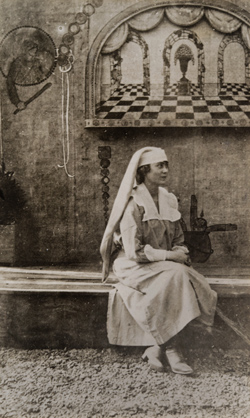
Mildred Mitchell
sitting under a frescoed wall (1918).
Massachusetts Historical Society
This week, I was contacted by a PhD candidate doing research on "archives and the construction of female identity." I had much to say about a couple of the questions, which I thought might be of more general interest to readers of this blog. So here is what I wrote!

4. Which materials in [your] collections support gendered stereotypes? Are there any examples materials which subvert these stereotypes? 

I find the framing of this question strange and confusing, perhaps because I am trained first and foremost as a historian. As a historian, I approach all collection materials as sources which can be understood in many ways. Most cultural artifacts do not in and of themselves support or subvert limited or fixed stereotypes or agendas; these artifacts are what we (the researchers) and any other individuals who interact with them (from creation to destruction) make of them. Rather than asking whether any particular item in our collections supports or subverts a particular understanding of gender (or sexuality or race or etc. etc. etc.), I would ask what the item might be able to tell us about how its creators and contemporaries understood gender (or etc.) in a multivalent sense. How did human beings make meaning using this item? What can this item tell us about the time and place in which it was created and used?

To use an example from the MHS collections which I, personally, have incorporated into my work as a historian, there is a deposition in the Godfrey Cabot Lowell Papers taken in 1914. It is the deposition, by a male member of the legal-judicial system, of a female office/retail worker about her experience of sexual-medical impropriety at the hands of a male doctor treating her for gynecological ailments. The deposition, as far as I have been able to piece together, is part of a larger case being assembled against the doctor for his activities, medical and personal. You can read the conference paper I wrote about the document here.

If we were to ask your question(s) of this item: does it support or subvert gender stereotypes, what would a meaningful answer be? One could argue the deposition was constructed in a context over-determined by a number of gender-based narratives: the female office worker, the sexually-naive spinster, the predatory male gynecologist, the hard-boiled private detective, the patriarchal morality police, the sexually immoral widow/madame with whom the doctor is living and working. The deposition and associated detective’s reports draw on all of these. Yet the deposition also offers up gender surprises, given its historical context. How did Nellie Keefe, the deposed woman, decide to speak out against the treatment that made her feel uncomfortable? How should we think about the persecution of a doctor for living with a woman (and perhaps enjoying a consensual sexual relationship with her) while unmarried? What bearing does that have on his medical practice? How are the women patients understood within the context of the case as gendered subjects? How does their agency in speaking out against the treatment they were uncomfortable with play into the “long game” persecution of the doctor for his domestic arrangements? Was the doctor acting inappropriately, based on the standard medical training of the day, in giving the treatment he did? To what extent are both women and men in this narrative leveraging and falling victim to narratives of gender salient in their specific time and place. Most historical texts (like our lived experiences!) are complex, multi-layered things which work within and against dominant narratives simultaneously.

As a reference librarian who works with researchers doing scholarship in the areas of women, gender, and sexuality -- along with other intersecting aspects of subjectivity and identity -- I see my job as helping a researcher to ask new questions of materials; to complicate our reading of what might at first glance seem self-evident as a source. I spend time brainstorming with researchers about where they might find documents or artifacts that speak in some way to their questions about gender and sexuality -- and the work they do with those items is quite often fresh and unique, challenging us to see particular moments in history and culture in new ways.

5. Should women’s collections, both those created by women and those about women’s activities, be kept in separate repositories or locations? Why? 

I believe in the organizational power (in a positive sense) of designated spaces and groups whose mandate is specifically to collect, preserve, and make accessible the documentary record of historically marginalized populations. The genesis of many special collections repositories for under-represented groups (people of color, religious minorities, women, LGBTQ folks, etc.) has often been within those communities themselves through grassroots organizing -- e.g. the Lesbian Herstory Archive. I believe those community-based archives have done (and continue to do) important work. I am also glad to see more conventional archives beginning to collect materials that more fully document all aspects of our culture and society. It is my hope that we will continue to have both types of archival repositories into the future, since I believe the “activist archive” and the institutional archive both serve important purposes within the ecosystem of the library/information professions.

Historically, the physical location of an archive or a collection has had significant bearing on who is able to access the materials the archive holds. Hence, it has often made sense for similar / like materials to be gathered in a specific location so that researchers can access them for a topical research project: e.g. lesbian pulp novels. Collecting policies often reflect this -- we don’t just take every collection we are offered, but rather consider whether it complements the other collections we have, or the goals of our repository in documenting certain aspects of history and culture: here at the MHS environmental history, for example, and Massachusetts family papers of the 18th and 19th centuries. My wife works at a repository that collects materials related to the history of medicine, so they collect physicians’ and medical researchers’ papers as well as print materials. As we are able to make collections more accessible through digitization, such geographical proximity can matter less (but still matter today, and will continue to matter for decades to come).

As an “activist archivist,” what I care about is that someone, somewhere, is collecting the materials related to histories of a wide range of people and groups. I want the employees at the institutions that care for these collections to believe in their worth and the necessity of their preservation. I’m pretty impartial as to whether those materials are held in an identity-based archive (e.g. a “women’s collection”) or whether they are held at a more eclectic institution. What I care about is that they are findable and accessible to whomever wishes to use them to further our knowledge of peoples and pasts. I would further complicate the issue of “women’s collections, both those created by women and those about women’s activities” by pointing out that each of us exists in the world with multiple facets of identity, and that making a present-day argument for the creation of women-focused collections (as opposed to historically women-centered collections) raises questions about how we would formulate a collecting policy for such an institution, and what such a policy implies or outright states about the notion of “women” as a discrete category of being.

Say you have a collection of personal and professional papers of a woman with both African (recent immigrant) and Euro-American ethnic and racialized heritage; she attended a historically-black college as an undergraduate, and then went on to seminary for an M.Div. Following several years as minister in the Reformed Church of America she left the ministry in order to openly marry her partner. She decides to pursue midwifery training so that she and her wife (a primary care physician) can set up a practice working with bisexual, lesbian, and trans* female couples around pregnancy, childbirth, and post-partum care. They become central movers and shakers in the women of color-led reproductive justice grassroots movement. The woman grew up in Georgia, attended graduate school in Michigan, then settled in Chicago with her wife whose family has roots in upstate New York and Western Massachusetts. After a long career in urban community-based women’s health activism, they retire to the Minneapolis/St. Paul (to be near the wife’s brother and his family). So, what’s the best place for these personal-professional records? In an archive that specializes in records of African-Americans? Women? Queer folks? People in the health sciences? Ordained individuals? Social justice activism? Should the records stay local to the Chicago area? Should they go to the HBCU institutional repository as an alumna collection?

I’m a cisgendered woman, but my womanhood is only SOMETIMES the most salient aspect of my identity (like when the Supreme Court decides because I’m a person with a uterus my workplace could pass judgement on my healthcare decisions). I’m also a librarian, a historian, a writer, a Euro-American with strong Scottish heritage, a bisexual lesbian -- where do my papers “best” belong, thirty years from now? It’s an imperfect science at best.

Any additional comments? 

In reflecting on your questions, I will say that it seems important to note that as a graduate student in library science / archives, with a background in women’s studies and history, I would have said my “ideal” job would be to work at a place like the Lesbian Herstory Archives, the Schlesinger Library, the Sophia Smith Collection -- somewhere that specializes in the historical subjects I find most interesting as a scholar. However, the job I found was here at the MHS, a repository that does not focus intentionally on any of my subjects of interest (history of sexuality, history of women and gender, history of social justice activism, history of religion, history of education, all emphasizing twentieth century American contexts…). Over time, I have grown to appreciate the important role I can play as a reference librarian in a more “generalist” research library in suggesting entry points into our collections that get at some of these subcultural and/or marginalized histories. Because of course even when we aren’t visible in the mainstream narratives, we have always been there -- to take queer sexuality as an example, it’s not like women sexually desiring women, and building relationships with them, is an invention of the twentieth century (though “Lesbian” as an identity construct, like “Straight” or “Cis” or “Trans*,” arguably is). So it’s important to remind researchers that they don’t have to go to “women’s collections” or “lesbian archives” to find stories that include queer folk. Which is not to say that finding us (people similar to us) isn’t harder in mainstream repositories, where finding guides and catalog records don’t necessarily indicate those aspects of an individual’s identity … to the extent that those aspects of identity are knowable.

2014-06-16

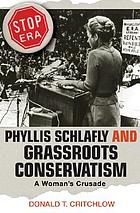
booknotes: phyllis schlafly and grassroots conservatism

I'm back in encyclopedia entry writing mode this month, and one of the subjects I volunteered to tackle was the life and work of Phyllis Schlafly in 750 words. One of the things I have gathered from Donald Critchlow's excellent Phyllis Schlafly and Grassroots Conservatism: A Woman's Crusade (Princeton, 2005) is that Schlafly herself would likely approve of this creative discipline. She has, after all, built a career out of voraciously consuming and digesting the work of conservative intellectuals -- and then translating them into a form easily communicable to the grassroots: speeches, pamphlets, articles, press releases, and runaway bestsellers.

Plus, did you know she comes from a family of lady librarians?

It is a mark of Critchlow's excellence as a biographer that he is able to humanize his subject and make her interesting and compelling to even this lefty feminist who categorically disagrees with Schlafly on almost every political and social issue she has ever engaged on. Critchlow's is an intellectual-political biography, touching on Schlafly's personal details -- family background, class status, marriage, children -- as background for the larger points he wishes to make regarding her public career. Schlafly, he argues, is both a driving force behind -- and emblematic of -- the grassroots political organizing that flourished in America's postwar years of supposedly "liberal consensus." A voracious autodidact and driven student from a lower-middle-class background (she worked night to put herself through college), Schlafly completed a Master's degree at Radcliffe in 1945 and took herself to Washington D.C. just as the Second World War was ending, landing a job at the fledgling American Enterprise Association (now Institute). By all accounts she had (and still has) a talent for digesting densely-written works of conservative political theory and translating them into vernacular, politically-motivating works. During the 1950s and '60s her focus was on anti-communism, fiscal conservatism, and national defense; in the 1970s she discovered (anti)feminism and turned from international concerns to domestic policy and cultural issues -- earning the hatred of many a committed feminist through her successful STOP ERA campaign, which killed what many had assumed was a foregone Constitutional amendment explicitly outlawing discrimination on the basis of sex.

I am too young to remember first-hand the bitter disappointment of the ERA's defeat, or the shocked sense of betrayal I think many American feminist felt when she discovered that not all women believed in feminist goals. Perhaps because of this, I have the emotional distance to appreciate the way Critchlow is not overtly partisan -- either for or against -- the Schlafly perspective. Instead, he clearly articulates how her work connected, and continues to connect, to the concerns and goals of the resurgent political and cultural right during the latter half of the twentieth century. I cannot say I share those concerns or goals, but perhaps I understand where they came from and how they came to be articulated a bit better than I did before.

My only disappointment with Phyllis Schlafly and Grassroots Conservatism is perhaps an unfair one -- that Critchlow only glosses events following the defeat of the ERA and Reagan's rise to the presidency in the early 1980s. Since Schlafly and her Eagle Forum continue at a tireless pace today, a deeper analysis of Schlafly's enduring influence would have been welcome. Too, I would have been interested in a more substantial tour of her opponents' (often muddled) rebuttals and (often failed) strategies. One comes away from Critchlow's examination with the sense that Schlafly was always effectively on-message. Surely even the most charismatic of public figures has an off day.

2014-04-07

presentation @ boston college


On March 29th I attended the Biennial Boston College Conference on History of Religion and presented a paper that tried, for the first time, to offer up some analysis regarding my current project. A big thanks to the conference coordinators for a great experience!

This project is, broadly, exploring the ways in which the Christian left negotiated sex, sexuality, and gender during the thirty year period between 1960 and 1980. Narrowly, for this paper, I looked at a ten-year period of the Methodist publication motive for clues regarding mainline Protestant conceptions of gender and sexuality. As I've mentioned before in this space, I'm particularly interested in what the magazine had to say about sexuality because after breaking with the church, the publication's final two issues focused on the topics of gay liberation and lesbian/feminism (their terminology). Rather than seeing this break as a natural, inevitable conflict between a traditionalist anti-gay church and more radical youth activists, I am asking why Christian left theology ultimately failed to provide a hospitable atmosphere for meaningful, nuanced discussion about queer sexual morality.

At least, that's what I'm fumbling my way toward asking. I'm not sure how close this one conference paper gets to that goal -- but it is a start. So for those who've been following my research this past year, I offer this work-in-progress as a reward.

Access the PDF online via Google Drive.

I'd also like to give a shout-out to my two excellent and inspiring co-panelists, Trevor Burrows (Purdue University) and Casey Bohlen (Harvard University), both of whom are working on aspects of Christian faith and political action during what we might term the "long Sixties" -- looking back into the 1950s and forward toward the 1980s.  I look forward to watching their progress as scholars and writers in the field.

2014-03-31

booknotes: the accidental diarist

The latest issue of NEHA News (PDF) arrived in the post earlier this week. Actually, four copies arrived because for some reason Hanna and I are listed on the membership rolls twice each and can't get the organization to fix the glitch.

Anyway. I have a review therein of Molly McCarthy's most entertaining new monograph The Accidental Diarist: A History of the Daily Planner in America (University of Chicago Press, 2013)*: 
For nearly two decades, I have habitually carried a day planner in which to note future tasks and appointments, track expenses, and mark the passage of time. At the end of every year, I add the used-up planner to a box in the back of my closet before opening a fresh volume and starting anew. Until reading Molly McCarthy’s The Accidental Diarist, I had never considered this habit in historical context. Now I have. 
In five thematic chapters, loosely arranged in chronological order, McCarthy (Associate Director of the UC Davis Humanities Institute) explores the development of the modern day planner from early Colonial almanacs to the advent of the Wanamaker Diary in 1900. Combing through centuries of daily records kept by American men and women in pre-printed “blank” books, McCarthy documents the way in which Americans learned to use almanacs, diaries, and planners to both reflect on the past and plan for the future. She argues convincingly that the daily planner was a training ground for modern ways of organizing life. 
Read the full review at the NEHA website.

In the interest of full disclosure, Molly McCarthy is a former MHS research fellow, although her residence at the MHS was before my time, and I assisted her on obtaining images of materials at the Society to illustrate the book. Her project is, I would argue, an excellent example of the work historians can do with the seemingly opaque objects of history that, when put in context, are much more revealing than they first appear.

2014-03-03

booknotes: for people, not for profit

A few weeks ago, I was hunting for information on the Fenway Interagency Group (FIG), a coalition of neighborhood organizations that came together during the early 1970s in the Fenway neighborhood of Boston as background for a blog post I'm writing for the MHS. Thanks to full-text searching on Google Books, that search led me to Thomas Martorelli's For People, Not For Profit: A History of Fenway Health's First Forty Years (AuthorHouse, 2012). Hanna and I have been using Fenway Health, originally Fenway Community Health Center, as our "healthcare home" since 2009. We stumbled into it on the recommendation of a friend and, from the inside out, have slowly become more aware of its national and international renown in the fields of community-based, culturally-competent healthcare -- particularly within the fields of lesbian, gay, bisexual, and more recently trans* healthcare.

For People, Not For Profit is an institutional history written from an insider's loving perspective: Martorelli is former chair of the Fenway Board of Directors. Nonetheless, he doesn't paper over the growing pains of an organization that grew from an all-volunteer collective of health activists into the established health and research center it is today. Like many activist groups that formed during the idealism of the late Sixties and early Seventies, Fenway Community Health Center initially relied on volunteer labor, with collective decision-making processes and interminable meetings. It offered walk-in clinics for target populations -- namely women, gay men, and the elderly residents of the neighborhood. As it grew into a non-profit organization with a paid staff, successive directors arrived to find finances on shakey footing and physical space in chronic shortfall.

It was the AIDS/HIV crisis during the 1980s that became the fire that forged modern Fenway Health; already positioned to serve the gay male population of Boston, Fenway staff were on the front lines of the epidemic providing innovative care and conducting ground-breaking research that helped develop treatments to extend and enhance the lives of those with HIV and AIDS. Simultaneously, Fenway was also offering education and resources to single women and women with female partners on the options for getting pregnant (alternative insemination), and working with feminist-minded area women's health organizations to reach women across the sexual orientation spectrum who might benefit from community health education and services. In the past decade, Fenway has also become a leader in providing respectful and effective care for members of the trans* community as well.

Martorelli documents each phase of Fenway's growth in a series of chronologically-arranged chapters, each of which contain a section on care, education, advocacy, and leadership. Lengthy excerpts from interviews with key players provide insights into how people involved in Fenway's various programs and projects view their work in historical and social context.

Future historians of queer experience and the history of medicine will have more work to do telling the story of Fenway Health in wider historical context; thankfully, the historical records of Fenway Community Health Center have been donated to Northeastern University's archives and special collections (where Hanna had a hand in processing them in 2010!) and are available for research. When these historians get to work -- and I hope some of them are already digging in! -- For People, Not for Profit will be a valuable starting point for more in-depth studies that focus on specific aspects of the Fenway Health project, as well as explorations of Fenway's participation in the tumultuous landscape of queer activism, AIDS/HIV politics and care, and the rich story of Boston's neighborhood-based activism.

Meanwhile, Martorelli's book has given me valuable background for my own participation in the Fenway Health project as a volunteer on the consumer/community advisory board. I'm grateful that such a resource is available -- and am developing librarian-ish plans to make it (and other Fenway publications) more visible and available to the patients who utilize Fenway's services.

2014-02-24

booknotes: new deal & american way of poverty


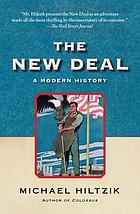
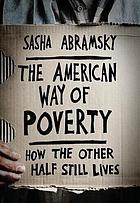
I read Michael Hiltzik'a The New Deal: A Modern History (Free Press, 2011) and Sasha Abramsky's The American Way of Poverty: How the Other Half Still Lives (Nation Books, 2013) in tandem, leading to a very strange stereovision of America's twentieth-century successes and failures in delivering basic material security to its people. Hiltzik, whose reporting I first encountered last fall around the Obamacare rollout, offers us a detailed case history of the incomplete construction of America's social safety net, while Abramsky details the ways in which even that open-weave net has been slashed and burned since the 1970s. Taken together, the two volumes chart a twentieth-century history of callous uncaring for the economically vulnerable, with a brief burst of effort during the Great Depression, and then again in the postwar era when America's affluence made it seem, temporarily, like poverty could be eradicated without asking the other other half to give up that much, if anything. Did you know that during the Great Depression, relief workers were making the case that giving cash to people in poverty, no strings attached, was the most effective way to stimulate the economy and help them put their lives back together? And we act like we've just discovered that poor people are actually the experts on their own lives. Can you imagine a world where Richard Nixon floated the idea of a guaranteed universal income for every American? Because it existed. Briefly. It's both refreshing to recover these histories of (dare I say it) socialist activism in American life, and also a real downer to realize that in every era political realists tempered their radical inclinations to better the well-being of Americans because they knew they would only be able to win lesser concessions from those who held the political power (and financial resources).

Hiltzik's New Deal is straightforward political and economic history. In a sweeping chronological narrative he charts the Roosevelt administration's efforts to resolve the crises of the Great Depression (banking, housing, jobs, food) from Roosevelt's inauguration through to the eve of WWII. The story he tells is Washington-centric, a tale of New Deal politicians, those in their employ, and their adversaries. Those looking for a more grassroots narrative of the Great Depression and the effect of New Deal policies and programs should look elsewhere -- but Hiltzik does provide a useful sense of the real politik required to push through programs such as Social Security. While those on the left wanted guaranteed pensions for all elder Americans, the program as finally designed -- as we know it today -- tied payouts to lifetime earnings:
The program's near-total dependence on enrollee contributions has been both a blessing and a curse. (Economists consider the employer's payments to be employee contributions under another guise, on the theory that if the employer tax were not levied the money would flow to the workers as wages instead.) Although the contributory element makes the program's financing regressive -- that is, wealthier Americans pay a smaller portion of their income than lower-paid workers to support a program of broad social utility -- it has also helped protect it from political attack by giving its enrollees what appears to be a concrete stake in its survival (251).
In many ways, Saul Abramsky picks up where Hiltzik's narrative leaves off, exploring American poverty and economic insecurity as it has manifested since the mid-twentieth century and the War on Poverty efforts of the ebullient 1960s and early 70s. The American Way of Poverty is a difficult book to read, in that it ruthlessly reminds us that we are all one or two or a series of three, four, five, instances of bad luck of poor decision-making away from material ruin. In a society that has only ever grudgingly supported social safety nets -- and then only for the "deserving" poor. As the rich grow richer, we talk about slashing social security benefits, refuse to extend Medicaid to our nation's poorest regions, and continue to see the socialized guarantee basic material security (health care, food, shelter, education, and work) as the flower-strewn path to slothful dependency.

As someone who believes that a life lived in basic faith that human beings seek to be creative in community with one another (recognizing there will be a few who take advantage of this trust) far outweighs the toxicity of a life lived on the premise that human beings require shock prods and chains to squeeze labor and "productivity" out of their souls, I found Abramsky's reminder of how few Americans share my values possible to read only in small doses. Particularly (ironically enough) the final sections in which he offers solutions for the various problems of endemic poverty: a guaranteed minimum income, socializing the costs of higher education, reinvestment in Social Security, national healthcare, renewed support for unionization, a laundry list of practical steps toward a society oriented toward benefiting all not just the plutocratic few. That such a simple, modest list of steps toward the lessening of human suffering seems politically impossible leaves one with a creeping sense of apathetic despair.

I won't stop at the apathy, of course (I suppose maybe not "of course", but I've imbibed enough lefty theology in my time to believe that a meaningful life involves struggling for justice even when the possibility of success is vanishingly small). But it's shocking every time to re-realize how willing we are to throw some people under the bus so the "right" sort of people can keep on hoarding the resources for themselves. And how we narrate those acts of violence as inevitable, natural, as "freedom" and "choice," as the neutral forces of the universe, simply the way things are rather than the way we've decided things will be. Reading histories like Hiltzik's are a good reminder that our present has been shaped by our past, and that the past is made up of concrete actions taken up by human beings. Human beings who could have made different decisions, taking us along different paths.

We always have choices. I do hope that, collectively, we can make ones that benefit the vulnerable, the marginalized, the trapped, and dehumanized, so that they too are free to make meaningful choices about their own lives.

2014-02-03

from the archive: reactions to women's lib


For the past several weeks I've been reading through motive magazine from 1962-1972 in preparation for a conference paper I'm delivering in March. I'm looking at the way the magazine employed gender, sex, and sexuality during the ten year period leading up to its break from the United Methodist denomination.

One of the precipitating events leading to the break was a special issue put out in March/April 1969 on what was then referred to as the women's liberation movement. The issue proved so controversial, not least because the word "fuck" appeared in one of the articles, that the May 1969 issue was embargoed and the editor, B.J. Stiles, was asked to step down. This weekend at Boston University's Mugar library I read through the letters to the editor that poured in in response to the "women's" issue, and I thought y'all would enjoy reading some of the reactions the motive staff saw fit to print in the October and November issues the following fall.

They were introduced by Joanne Cooke, staff member and guest editor of the women's liberation issue:
Response to our March-April issue on women was overwhelming. At first it seemed to reveal a great split among our readers, but on closer examination we saw as much similarity as difference.

Everyone who wrote, whether they had burned the issue or bronzed it, believed they did so as an affirmation of the same basic values: belief in and respect for human dignity, belief in individual responsibility for actions and mutual responsibility for and to one's brothers and sisters, belief in the right (and duty) to 'vote' and to make one's voice heard, belief in the right (and duty) of individuals to join together to organize and to coordinate their efforts to achieve a common goal, and rejection of the Playboy Philosophy as an attitudinal and behavioral guide.

Curiously, almost all the letters were addressed, 'Dear Sir' or 'Gentlemen,' in spite of the fact that the issue was written and edited by women. Response ran about 60-40 in our favor, but only 24% of our supporters and 11% of our detractors were subscribers. Sixty percent of those responding favorably were women, while sixty percent of those responding negatively were men.
Twenty-ear-old Jessica J. Powers (Glenside, Pennsylvania) wrote in to complain that the disgruntled feminists were ruining it for everyone else. I'm particularly fascinated with her construction of women as either mothers and "lovely, loving women" or bread-winners/fellow-workers. At the level of cultural narrative, at least, it seems women couldn't be both:
I love my femininity and womanliness and I am proud of my sex. I like to have men open doors for me, hold my chair, help me with my coat. … I find that any woman who has a valid opinion about pertinent issues will find acceptance if her opinions are, in fact, valid. … If you achieve your goals in liberating the women of this country [, our] children will no longer look to us as their ever-loving mothers but rather another bread-winner. Our husbands will no longer look upon us adoringly as feminine, lovely, loving women but rather a fellow-worker … Please, in your quest, remember those of us who love our womanhood. Don't ruin it for us.
A.J. Gunther from Dynnyrne, Hobart, Tasmania, concurred. I'm particularly impressed by Gunther's ability to suggest a solution to the problem he presents ("they both take on the home chores") in the context of completely dismissing it as a possibility for home life:
In this crazy world of computers, wars, and crass commercialism, it is up to the women to put human values first. It is the wife's job to meet her husband morning and evening, to share some things in common, and to provide beauty and comfort in herself and in the home. … If Mrs. works at being a woman of the world all day … When she comes home after a day in the world outside—unlike Mr. who can relax from his job—she goes into high gear to tackle the T.V. Dinners and household requirements. Unless they both take on the home chores, something has to give—what?

Time for relationships, time to listen, time to make a real pie. It is no coincidence that the divorce and delinquency rates are directly proportional to the freedom of the 'liberated' working wife. … It is an even wiser woman who realizes that her role in the home is the first and most important job—the cultivating of human relationships in an atmosphere of love.
And in defensive terms that would be perfectly at home on Reddit today, Harold O. Harriger from Lubbock, Texas, assures motive that his woman most certainly isn't an angry feminist lesbian ... although she might morph into one if he allowed her to read about this women's liberation stuff:
Deep, dark forebodings beset me as to what might happen if my Rebecca got hold of the issue; poor lass—four kids, 100% female, and swears she wouldn't trade me as a playmate for the best Lesbian in town. Just doesn't understand the situation, I guess.
Of course, saner voices such as those from a female seminarian, Mrs. Susan Whitledge Nevius (President, Boston University Theological Students Association), also weighed in:
Certainly the 'four-letter words used in the March-April issue were not out of place, especially with the excellent explanation given for their use on page five in the editorial. … Certainly the Methodist Church and its officials have more important things to do than hassle over 'four-letter words,' especially when male chauvinism is so rampant in The Methodist Church itself. When our denomination has been ordaining women since 1956, how can it still make recruiting films called 'It Takes a Man'? Why do most of the official forms still ask for 'wife's name' instead of 'spouse's name'; and why does the Discipline continually refer to 'the minister and his wife' rather than 'the minister and spouse'? Why is no recruiting for the parish ministry done among women? I did not even know that it was possible for a woman to be a parish minister until I got to seminary. However, seminaries are no exception, for it is my seminary experience so far that has convinced me of just how deep the prejudice against women is.
And a chaplain from Michigan State University, Keith L. Pohl, who (likely unwittingly) undercuts his praise by referring to the women who assembled the issue as "girls":
As most 'red-blooded' American males I should respond to the March-April issue of motive with resentment and indignation. However, good sense does on occasion win over the emotion of male pride, and superior journalism deserves to be recognized... Thank the girls for a job well done, and I continue to look forward to each issue as usual.
I do find particularly fascinating how even some who began their letters on a fairly even note of acceptance found that they needed to distance themselves from those women represented therein:
You presented two sides of the picture. 1) the career woman who has heard 'When are you going to get married?' once too often and 2) the Lesbian who is a human being but has had to live as something less than a whole human being because of a stereotype built out of misunderstanding and fear. “You did not present the third side of the picture: We women who are proud to be wive and mothers, who know that we have an important job to do, a job that no one else can do for us, we women who have dignity in the role that we have 'chosen.' … We are the women who were liberated long ago … liberated from envy, self pity, bitterness and guilt because we respect ourselves as human beings with an important job to be done. (Donna R. Brancy, Sparta, New Jersey)
The women's liberation issue and the letters in response to it are, actually, the very first instances since 1962 that I have seen the word "lesbian" appear in the magazine ("homosexual" is used in the few instances prior to this when same-sex desire is referred to).

Women's liberation and Lesbianism were, of course, but two nodes on a nexus of threats facing the American family during the Cold War period. Sharon R. Swenck, a student at Virginia Commonwealth University (Richmond, Virginia) raises another:
We are reminded that if the communists can destroy the structure of our homes, their job of destroying our society is well on the way to establishment. Being a wife and mother is a lovely and beautiful life and just whom do you want to 'Liberate' and for what? Shame on the Methodist Church for allowing such a publication. May God help us all is my prayer.
Still, more than the question of women's role in society, it was the use of the word "fuck" that really seemed to get under the detractors skin:
The college students of our church have brought to my attention the March-April 1969 issue of motive. They are honest, modern, exposed college and university young people. They view the current issue as being plain, raw pornography. Their question is a simple, sincere one: 'Is there any place left where we can get freedom from the trash that is spelled out in the four-letter words that little boys and girls learn to write on the toilet walls?” (Ramsey Bridges, Minister, Cross Lanes United Methodist Church, Charleston, West Virginia) 
And people were, of course, always willing to haul out the "tone" argument:
Too many of the articles in the issue of motive were angry, self-defeating, and, as B.J. Stiles suggested, 'anti-male.' To put the male ego on the defensive and to impose on the male population an abundance of guilt is to perpetuate the set-back in openness and understanding acceptence for which women have been paying the price since the feminist movement days” (Beth E. Rhode, The Hunter College Protestant Association, Inc., New York, New York)
And even though this letter was written in praise of the issue, I'm honestly uncertain what Mr. Bill Garrett of Nashville, Tennessee is talking about -- or how it relates to women's lib:
 The current issue on 'The Liberation of Women' focuses on an issue which is of growing concern to the whole younger generation. Facets of the issue include (1) the demythologizing of that language phenomenon known in the minds of many adults as 'the four-letter word,' (2) a willingness to deal openly with our society's hang-ups, perversions and misunderstandings about sex, (3) an awareness of the total-environment orientation of much of life today, and (4) the basic need for handles and/or role models to begin creating and finding meaning in the midst of conflict and ambivalence.
And finally, in December 1969, a letter which is succinct in its condemnation:
Do any of you people connected with this magazine even faintly know what it means to be born again or to be saved? … This issue looks like it was put together by a bunch of sick people and women who hate men!
I applaud Mrs. Gus Rivalto (Memphis, Tennessee) for working in the evil feminist trifecta of ungodliness, lesbianism, and man-hating in a brief two-dozen words.

Hope you've enjoyed this stroll through a thin slice of my 50+ pages of research notes! In a couple weeks more it'll be time to stop with the reading and start with the writing (gulp). If you're in Boston and interested in the history of religion, check the conference out! See you there (maybe). And I'll be posting the conference paper here after the presentation.

2013-12-11

from the archive: a new mother's diary from 1910


In honor of my friend and colleague supervisor Elaine who has just given birth to her first child, Sean Alexander, I put together a blog post over at The Beehive. It features the diary of Sophie French Valentine, who gave birth to her daughter in the summer of 1910 and chronicled their early weeks and months together in a page-a-day Standard Diary:
As the summer waned, Sophie recovered from her surgery and chronicled the comings and goings of her household, as well as the growth of her daughter (also christened Sophia). Several weeks after the birth, the family doctor paid a visit and pronounced “the little one…sound and vigorous.” Three days later, infant Sophie “went out in the bassinette in front of the house” for the first of what would be many afternoons in the fresh air with her mother. Sophie’s husband, a diplomat, appears to have been away during much of his wife’s convalescence, but a steady stream of female friends and relatives populate the pages of Sophie’s diary. On August 14th, for example, the day “the little one” was baptized Sophia French Valentine, she “had pictures taken with Harriet, Charles, Aunt Martha, Auntie May; and Elizabeth and Lucy,” as well as with her mother and Aunt Caroline (“who held her and talked to her lots”). Later she was visited by “Theodore, Mrs. Graves, and Auntie Beth.”
You can read the whole thing over at the MHS blog.

2013-11-26

from the archive: if only she had lived to see the A.C.A...

I'm working on a blog post about children's health diaries in MHS collections and I came across the following in a letter from Dr. Mary Putnam to Helen C. Morgan, 10 December 1923:
Tell me how [Carter, Helen's son] is and what you do, and don't work too hard. I don't see how Peggy gets her health insurance! Two companies turned me down, without looking at me, because I have had grippe twice! I decided to be satisfied with accident!*
Ninety years later, on 10 December 2013, a pediatrician like Mary, buying health insurance on her own, would be protected from denial of coverage based on pre-existing conditions.The Affordable Healthcare Act is far from perfect, but I'm surely glad that we're better able to provide for many more Mary Putnams of this world so that they no longer have to be "satisfied with accident."

Now let's fix the coverage gap so that everyone can access healthcare when they need it, without going bankrupt.

*Mary Putnam to Helen C. Morgan, 10 December 1923, Allen H. Morgan Papers, Massachusetts Historical Society.

2013-10-31

from the archives: anti-suffrage gossip

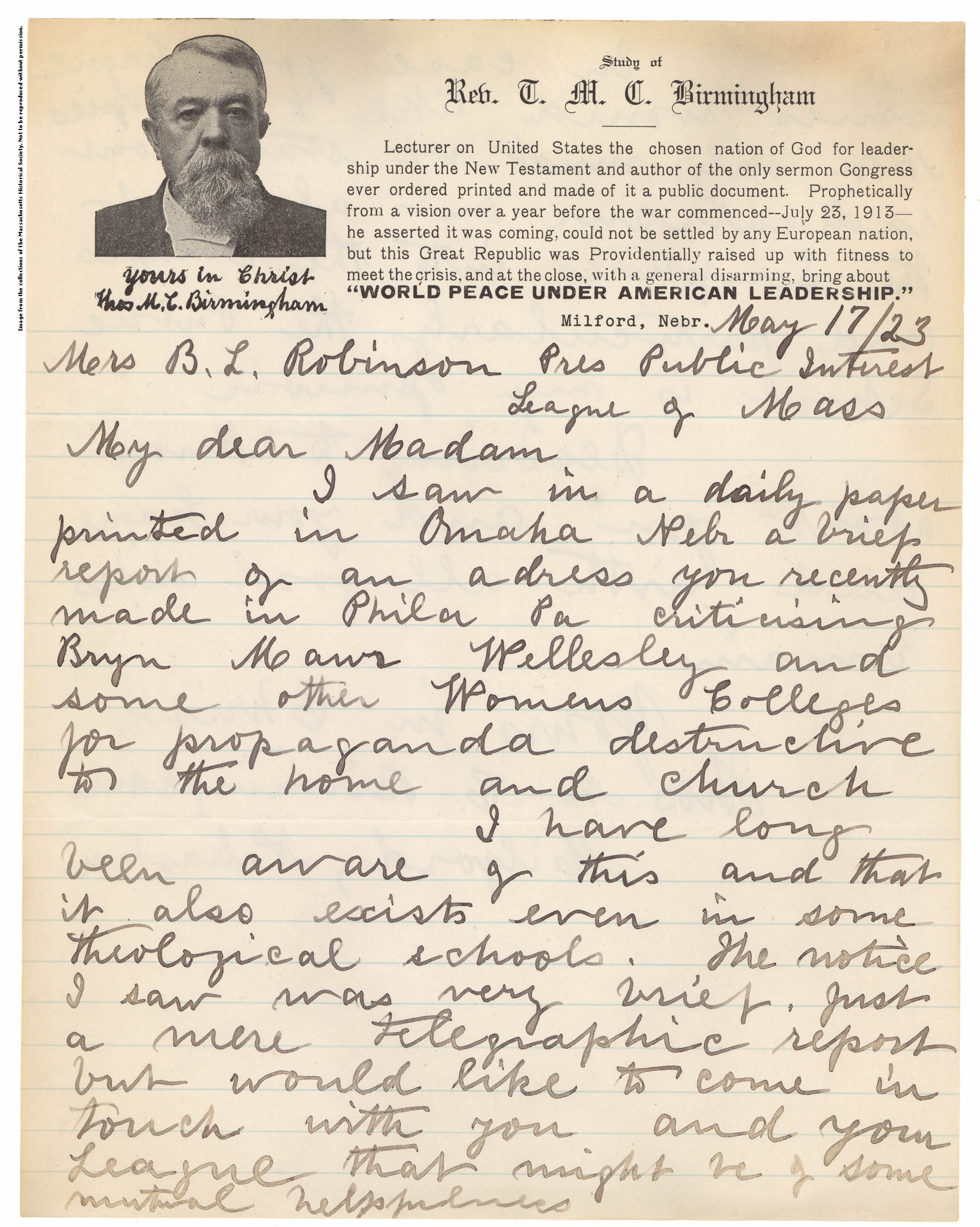
I had a blog post up yesterday at The Beehive (the Massachusetts Historical Society blog) sharing an item from our collections authored by anti-suffrage activist Margaret C. Robinson:

Margaret C. Robinson to Mary Bowditch Forbes, [1917],
Mary Bowditch Forbes Papers, Massachusetts Historical Society,
I didn't include a full transcript of the item in my final blog post, but I thought readers here might be amused. So before or after you read my post contextualizing the item, here is the full letter. Margaret Robinson's note (pictured above) reads:
[n.d.]

Dear Miss Forbes.

You may be interested in this suf. column from a Utica paper which Mrs. Maynard has just sent me. We have got them excited haven't we? Please see that anything you may publish on the subject is sent to Mrs. J.F. Maynard, Genesee St., Utlca Utica, N.Y. as she want[s] to reply to this clipping.

I had such material for this week's issue of the [Anti-Suffrage] Notes, that I have put it in the form of a small newspaper. I can hardly wait for you and Mrs. White to see it. I shall have the type left standing a couple of weeks in hope that people may use it widely and that we may need thousands more.

Emily Balch asked Ford to pay her expenses for a year in Christianin to work for peace. She got leave from Wellesley for last year and had her plans all made to go. He not only refused but told her he wanted nothing more to do with women! Emily Balch told this to the person who told me! She ^(Miss Balch) and other pupils of Rosika [Schwimmer] have started the People’s Council which is openly demanding the overthrow of our government! Isn’t that great anti-suffrage material?

In haste, with warm regards to you & Mrs. White,

M.C.R.
In addition to what I write at the Beehive, I think I particularly enjoy the image of Robinson being so excited about the latest edition of her newsletter that she's going to leave the type set to print even more copies once the initial run is fully distributed. If I ever track down a copy of that particular document I'll be sure to share it here at the feminist librarian!

2013-10-26

writer, respect thyself [rambling thoughts on undervaluing scholarly labor]

To interrupt the recent run of photo and video and cat related posts with something a bit more library-professional about the place, I've been thinking a lot this week about the tendency of many historians, both amateur and professional, to undervalue their intellectual labor.

Amateur writers do this by, well, framing their labor as "a labor of love": something they've undertaken in their own time, funded out of their own (often shallow) pockets, because of their passion for a particular historical story and their desire to share it with the world. Professional academics do this by, well, framing their work within the context of their academic careers: emphasizing the often grim realities of contracting faculty salaries, vanishing funding in the humanities, and the "non-profit" (at least for the author) structure of most academic publishing. 

Neither of these frames are factually incorrect. We are often underpaid professionals who continue to do the work we're qualified to do out of personal passion and a belief that what we research and share with the world matters in some "greater good" sort of way.

Yet practically, this attitude toward our own work erases the necessity of, well, paying rent. It also colludes with a culture that equates cost with value to erase the work that goes into our creations. By romanticizing the historian (or any other intellectual or artist) who labors with little expectation of financial solvency, let alone reward, we contribute to a culture that devalues what we do. A culture that allows the institutions that employ many of us to pay wages that leave us perpetually financially insecure.

I have a couple of good blog posts on this subject -- by people more eloquent than I -- that I'd like to share, but first let me describe the situation that sparked these reflections.

As Reference Librarian at the Massachusetts Historical Society, one of my primary responsibilities is facilitating all of the requests for images of material in our collections for use in publications and other projects like documentary films, exhibitions, websites, and so forth. It's one of my favorite parts of the job: it allows me to stay in touch with what use people are making of the resources we make available, and increasingly means (as I pass the six-year mark!) that I see researchers whom I worked with at the beginning of their project finally completing their PhDs or winning a book contract or having an article accepted for publication.

(via Massachusetts Historical Society)
Images you can pull off our website, are available to re-purpose in certain exempt contexts -- classroom lecture, conference presentation, personal blog -- free of charge. The image above is a letter I wrote about for our February 2011 object of the month series.

For made-to-order high resolution images (the file type most professional projects require) incur fees. We charge for this service along two scales. There are reproduction fees, which cover the cost of the labor in producing the image; people are required to pay this fee regardless of how they are using the image -- even if they're just going to hang it on their bedroom wall. Then there are licensing fees, which are charged based on the nature of the publication; we license the images we create that people go on use in their own creations as a way to earn some income from our own creations (the digital reproductions of material in our collections) and pay not only staff salaries, but also for the ongoing care and keeping of these valuable historical documents and artifacts. 

This can be expensive. Images cost $45-60 per file in reproduction fees, and anywhere from $0-450.00 per image in licensing fees. If you are an author seeking to use multiple images in your forthcoming book this can add up fast. I've worked with several authors in the past year who, despite small academic press print runs, have faced over $1,000 as a quote for obtaining the images they would ideally like to use. Our fees are steeper than some independent research libraries charge, but also more sensitive to the scale of individual projects than others. In short, we're balancing the desire to provide access with the need to pay our staff for the work that they do and all of the not-inconsiderable overhead of preservation, storage, and security.

While most people understand this, I do have the occasional individual who tries to haggle with me to get the prices reduced or eliminated. They cite a series of potentially mitigating factors: their relationship with the Society, the fact that they're paying out of pocket for the images, the fact that they're retirees on fixed incomes, that they're academics on tight incomes, that other institutions have offered them lower rates or waived the fees, that the author will not be making only -- sometimes, in fact, they're losing money -- on this project, and so forth. 

I'm sympathetic. I really am. I also understand completely when people decide they can't afford our prices and seek cheaper images elsewhere -- I likely would in their shoes if the cost was prohibitively high. I wish them the best and honestly mean every word that I type. 

But having had several exchanges along similar lines in the past few weeks, I've been wishing I could have slightly more meta conversations with some of these people. "If you've spent ten years writing and researching this book on your own dime," I was to ask them, "why for all that you hold holy have you signed a contract with a for-profit press that is requiring you to pay upfront for all of the production costs?" 

Or, sometimes, when they get sniffy about how steep our fees are, I want to lean a little heavier on the words labor and staff time in my replies. "Why," I want to ask them, "do you feel entitled to obtain something from us for free, even after I explain to you that creating this product takes the time and effort of half a dozen people who work at our library?" 

In these exchanges, I sometimes see an altruistic competitiveness creep in that's really unattractive: I've labored over this work for years without complaint, expecting little reward, some people seem to imply (likely not consciously), and because I'm not benefiting financially from this project -- in fact, I'm losing money! -- you should be likewise generous to the cause of History and give these images to the project for free. 

Sometimes, there's even the implication that we're somehow holding these digital photographs hostage, selfish money-grubbing institution that we are.

The librarian part of my soul certainly kens this argument. If our society was structured differently, with robust socialized funding for cultural heritage institutions and a guaranteed national income for all citizens that provided me and my family (and everyone!) with food security, housing security, and healthcare, then I would absolutely advocate we digitize and make freely available the images our scholars want to use. They are smart, articulate, energetic, diligent, and prolific people -- and the wide range of stories they come up with to tell using the rich materials in our collections are part of what make my job a daily joy. 

But we don't currently live in that world, and in the world we do live in we should not undervalue our own already culturally devalued work by setting ourselves up pre-emptively as martyrs.

Think carefully before you give your work away, particularly to others who will make a profit from it. 

Even if you decide to give your own work away, recognize that this does not give you the right to expect others to provide you goods and services for free. Factor in that even on projects you are doing for the pleasure of the work, you will need to pay people fairly for the work they contribute.

Sometimes people will charge what you feel is too much for their labor or products. It's certainly fair to decline their goods and services and go elsewhere. If they care about keeping your business, or if too many people decline what they offer because the price is too steep, they will probably decide to lower their prices. 

What you should never do is try to shame or guilt scholars or artists for earning a living doing the work that they love. 

You also shouldn't be ashamed or feel guilty for trying to earn a living doing the work that you love. 

One of the best pieces of advice I ever got as an early professional was to be sure to not undervalue my work, and to charge an hourly rate for free-lance research that, at the time, seemed scandalously high to me (used, as I was, to student stipends). But the higher hourly fee we negotiated demanded that both my employer and myself take the project seriously as a professional endeavor. In the two years since then, I have given several colleagues who asked me for free-lance advice the same nudge: "Ask for what you feel would make the job worthwhile," I tell them. Or, "Think about what you believe your time is worth, and then ask for a third again more."

I also remind them to calculate in any expenses they may incur on their way to completing the job they're being asked to do: transportation, equipment, service fees, etc.

My current free-lance rate starts at $25.00/hour, exclusive of expenses, though I do negotiate based on the nature of the project. I always advise emerging professionals who ask what to charge that they should never accept less than $15.00/hour for their research or scholarly work.

I promised you links. 

Writer John Scalzi has an excellent round-up of posts he wrote about how to spot an exploitative book contract (and why he would never sign one). If you read only one of the posts, I would recommend "New Writers, eBook Publishers, and the Power to Negotiate":
People: Unless the publisher you’re talking to is a complete scam operation, devoted only to sucking money from you for “publishing services,” then the reason that they are interested in your novel is because someone at the publisher looked at it and said, hey, this is good. I can make money off of this. Which means — surprise! Your work has value to the publisher. Which means you have leverage with the publisher.
And on a more academic note, Sarah Kendzior asks at the Chronicle of Higher Education, "Should Academics Write for Free?"
Academics entering the media world tend to move from one exploitative arena (low-wage academic work) to another (unpaid freelance writing). But writing must never be an act of charity to a corporation. Ask for what you are worth—and do not accept that you are worth nothing. Insisting on payment for your labor is not a sign of entitlement. It is a right to which you are entitled.
We all labor for free, at times. I've been writing this blog on an unpaid, voluntary basis for over six years; I won't be stopping any time soon. Yet I've just spent three hours writing this post. That's $75.00 I owe myself. I also write book reviews, for free (or in exchange for a book). This fall I'm working on a series of seriously under-paid encyclopedia articles, which I chose to take on for the experience. I will probably negotiate for better terms next time, or decline the next call for authors that comes my way.

There is nothing intrinsically bad about voluntarism. But it does not follow, therefore, that there is something intrinsically virtuous about volunteering your time (or asking another person or institution to volunteer their labor and resources) rather than asking for recompense.

Think carefully about how, why, for whom, and on what terms you will labor for free.

And respect the right of others to determine for themselves how, why, for whom, and on what terms they will do the same.

2013-08-21

subject/verdict: stuff I've been reading in two-sentence reviews [no. 3]

Life has been busy for me since June and I haven't made much progress on my reading goals for the year. GoodReads is now yelling at me about how I'm ten books (more than a month!) behind schedule. But despite that, I have actually been reading (and writing). So here are a few brief notes to that effect.

For this edition of subject/verdict, I'll review in reverse chronological order (most recent read book first). Just for kicks.

Yoshino, Kenji. Covering: The Hidden Assault on American Civil Rights (Random House, 2006). Part memoir, part legal treatise, Covering explores the nuances of discrimination through the demand that non-normative people "mute" the aspects of themselves deemed socially unacceptable -- and the willingness of our court system to give such discrimination (for example employers demanding women wear make-up or firing a woman for "flaunting" her lesbian relationship) a pass. I read this book for the first time in 2006 and it holds up incredibly well seven years later.

Jordan, Mark D. The Ethics of Sex (New dimensions in religious ethics; Blackwell, 2002). A thoughtful historian of Christianity and sexuality, Jordan explores how Christians have spoken about sexual ethics from the earliest days of the church to the present day. The takeaway from this slim little tome is the diversity and historical specificity of Christian teachings on sexuality (that and the fact that masturbation was once considered the gravest form of incest).

Japinga, Lynn. Loyalty and Loss: The Reformed Church in America, 1945-1994 (Historical series of the Reformed Church in America; W.B. Eerdman's, 2013). Denominational historian (and a former professor turned friend) Lynn Japinga traces out the tensions within and trajectory of the RCA from the postwar era through the turbulent Sixties and Seventies, into the 1990s. Since this was an era that involved much debate over the ordination of women as well as the denominational stance on homosexuality, I obviously found much of interest.

Christiansen, Erik. Channeling the Past: Politicizing History in Postwar America (Studies in American thought and culture; Univ. of Wisconsin Press, 2013). Through a series of case studies, including the History Book Club, television shows Cavalcade of America and You are There, the Freedom Train traveling exhibition, and the Smithsonian Museum of American History re-design, Christiansen explores the way Americans in the 1950s produced and consumed narratives of their past. This is a thoroughly researched and entertaining account of a particular era of American popular history that I highly recommend to fellow history nerds.

Root, Elihu. Insuring the City: The Prudential Center and the Postwar Urban Landscape (Yale Univ. Press, 2012). I've been trying to read up on twentieth-century Boston history this year, and Root's fascinating account of the politics surrounding what is now an iconic Boston landmark -- the Prudential Center -- was a swift and pleasurable read. I particularly enjoyed the many photographs included that visually document how the neighborhood where I work every day has changed so dramatically in the past seventy years.

Evans, Sara M., editor. Journeys That Opened Up the World: Women, Student Christian Movements, and Social Justice, 1955-1975 (Rutgers Univ. Press, 2003). A book I picked up for my new research project on motive magazine, this is an anthology of personal essays by women who came to social justice activism through the mid-century student Christian movements on college and university campuses. I really appreciate the way this book centers the experience of women and explores how their faith inspired them to engage in progressive social change work and also made that work materially accessible by offering educational and vocational opportunities to aspiring women leaders.

Spirn, Anne Whiston. The Granite Garden: Urban Nature and Human Design (Basic Books, 1984). This was a $1 cart find that meshed well with my self-assigned goal of learning more about Boston and urban history/politics/culture. While it feels a bit dated in some of its examples, I actually found myself feeling slightly nostalgic for a period of time when environmental activism was treated with more serious urgency and hope for meaningful change than it generally is today.

Fine, Michelle and Lois Weis. The Unknown City: Lives of Poor and Working Class Young Adults (Beacon Press, 1998). Based on extensive qualitative interviews with working-poor young adults from Generation X, sociologissts Fine and Weis use their informants voices to explore the gritty realities of gender, race, and poverty in America's eroding working class economy. One of the most striking observations they make is their white male interviewees resistance to systemic analysis (they preferred to blame women and people of color for their economic woes) -- a demographic trend that we have made little headway on in the fifteen years since publication.

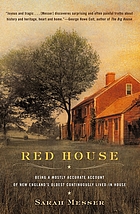
Messer, Sarah. Red House: Being a Mostly-Accurate Account of New England's Oldest Continuously Lived-in House (Viking, 2004). An historically-minded memoir, what at my college would have been termed "creative nonfiction," Messer's memoir tells the story of a house on Cape Cod her father and mother purchased and obsessed over -- and which became a family member in its own right, despite the lingering sense that the Messers were wrongful inhabitants, having purchased the property away from the descendants of the 17th-century man who first constructed the home. I particularly enjoyed the personal perspective Messer provides on the mid-20th century's revived interest in historic properties and public history.

Katz, Jonathan Ned. The Invention of Heterosexuality (Plume, 1996). Historian of gay and lesbian life, Katz turns his thoughtful eye on a sexuality we all assume is known but in fact is very rarely studied, or even defined: heterosexuality. Katz was one of the first scholars to point out that the "heterosexual" individual is a fairly recent historical invention, and his mid-90s discussion of the subject is still relevant todBuay.

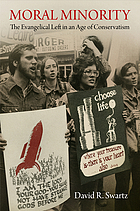
Swartz, David R. Moral Minority: The Evangelical Left in an Age of Conservatism (Politics and Culture in Modern America; University of Pennsylvania Press, 2012). First in what surely will be a long line of books to end up on my "If only this had come out before I finished my thesis...", Swartz's excellent study explores the lives and work of left-leaning Evangelicals during the mid-twentieth century and asks why their early agitation and political influence was ultimately overshadowed by the rise of the religious right. My only critique was its focus on male leadership and only passing discussions of feminism or sexuality -- but that just leaves work for the rest of us, right?

Bussel, Rachel Kramer. Best Sex Writing 2013: The State of Today's Sexual Culture (Cleis Press, 2013). Over the past half-dozen years, I've become a big fan of the Best Sex Writing series -- even more so than the myriad best erotica collections that come out every year: I like thoughtful sex journalism, which combines thinking (a turn on for me) with sex (also a turn on). What more could a sex nerd desire? Bonus third sentence: you can read my favorite piece from this year's anthology for free at The Rumpus!

This has been the third edition of subject/verdict. I hope you enjoyed it; I'm sure there will be more bookish things to come during the forth quarter of the year.

2013-08-04

the "duck and cover" gambit, circa 1969

For fun and scholarly research today, I'm reading the March/April 1969 issue of motive magazine -- a special issue dedicated to what was then called the women's liberation movement. As you might expect, it's all a bit dated in the best possible way -- and they've got some great pieces in there: on sexism in psychology, an analysis of women's magazines and consumer culture, and an article by Del Martin and Phyllis Lyon on lesbians and anti-gay discrimination. Also lovely woodcut illustrations and some passionate poetry to boot.


The final piece in the issue is an editorial by motive editor B.J. Stiles. It's a fairly defensive piece for what to my twenty-first century eye is a fairly middle-of-the-road collection of feminist texts, including one on deconstructing masculinity written from the perspective of a man. B.J. opens the piece joking at length about how this particular issue came about because motive hired a young woman onto the staff, "fresh from college--attractive, articulate, hip, our femme fatale in residence. She stimulated male fantasies, fulfilled ordered (magazine subscription ones, that is), participated in editorial conferences...and worked cheap. (In earlier times, we might have even said that she became 'one of the boys'.)"

Given that Stiles himself later came out as gay, I imagine some of this locker room humor is defensive -- not only against what he argues is the "anti-male" thrust of the issue, but also protective covering in relation to the discussion around homosexuality that appears in its pages. So I'm not (yet) ready to argue this hostility towards feminism turned out to be a pattern for Stiles.

However, what struck me was the opening lines of the piece, which read as follows:
In full knowledge that the admission of the following qualifies me for the VWLM's "Male Chauvinist-of-the-month Award" and will undoubtedly result in one more elaborate hex from guest editor Joanne Cooke [the femme fatale of above], a few musings on women's (and men's) liberation.
 Here we have, circa 1969, a beautiful specimen of what John Scalzi recently called the "I fully expect abuse" gambit, which I think of as the "duck and cover" gambit. This is when a person from a socially privileged group (in this instance, a man) offers up thoughts on a subject which they feel defensive about, generally because people from a socially disadvantaged group (in this instance, women) have raised questions about the status which make the writer/speaker uncomfortable.  Because the writer/speaker is about to say something from their position of privilege which they suspect will confirm the suspicions of their detractors or otherwise be unpopular, they preface their statement with something to the effect of, "I know you're going to [insert violent action] to me for saying this, but..." as if to imply their bravery at refusing to be silenced and voice some Important Truth anyway.

Oh the courage it takes to be .... in the majority.

With the weight of ... major social and legal institutions behind you.

As my friend Fannie wrote last year, this is an all too familiar reflex in the twenty-first century feminist blogosphere ... and apparently has a long and ignoble history going back at least half a century.

Well done, guys. Well done.

2013-06-20

stuff that may be keeping me from blogging (as much) this summer

During the past few weeks, I've been reading stories on the internets about which I have Thoughts and Feels, but for which I have very little (if any) time or energy to blog about. Non-internet stuff has been happening, in that way that takes attention and emotional-mental-logistical energy. In that way that takes up all the brainspace and physical time/space otherwise filled up with typing words that become blog posts.

canoes on the Charles River lagoons, 2008
So blogging might be a little slower around here than it has been in the past few months. Here's a run-down of some of the things I'll be doing when not seen in this space:
  • I've been getting back into some personal (not-for-work) history research in the cracks between my other obligations. I'm on what we call in the business a "fishing expedition" looking for a project that will yield something interesting and original on the crossroads of gender, sexuality, and religion within the Christian left during the 1950s-1980s (focusing on the early 1970s). My starting point is the Methodist Student Movement publication motive magazine (1941-1972), outspoken on issues such as poverty, civil rights, and cold war politics, the staff of motive experienced a decline in denominational support when they published an issue on women's liberation in 1969 through to the final two issues, published independent of the church, on gay men's liberation and lesbian/feminism. My current line of questioning circles around why Christian theology provided a robust vocabulary for speaking about some leftist issues -- but seems to have failed its young activists on feminist and queer issues. I'm keeping busy reading motive, some personal papers of its editors, and surveying the secondary literature ... a few hours a week, stolen when I can.
  • Against my better (or perhaps simply more self-centered) judgement, I've been Getting Involved at work with some advocacy issues related to organizational transparency and employee benefits restructuring. As a small non-profit cultural institution (we employ a staff of about fifty) we're facing some post-2008 financial fallout that requires reduction in benefits. Questions about how decisions have been (and will be) made, and how employees will (or will not) be involved in the process are a live concern. I've been tapped to be part of a staff advisory group, and volunteered to be on a retirement planning committee. If any of you have reading suggestions for good books or articles about worker advocacy in the non-profit, non-unionized workplace I'm happily taking suggestions!
  • General workplace busyness during the summer season, which is when many of our fellowship recipients make time to visit the library to conduct their research, and casual visitors in Boston on holiday make an appearance.
  • For the past two months, Hanna has been working her way through an allergy identification diet which has demanded particular attention to cooking and a lot of learning-on-the-fly about alternate ingredients. So far, the likely suspect is gluten intolerance, which will require a reorganization of the kitchen, our shopping & cooking patterns, and all that jazz. Do you know how hard it is to find non-preachy gluten-free cookery books?
  • I've been trying to spend more time reading offline and doing other non-internet activities, particularly on the weekend. Some of those things I've blogged about in my book review posts. I'm also enjoying such things as The London Review of Books, The Lesbian Connection, Bitch magazine, and back issues of our various professional journal subscriptions (The American Historical Review and Library Journal and Oral History Review and so forth). 
  • Biking means less time to read offline while commuting. As whingey as this sounds, biking more to and from work reduces my leisure reading time by as much as five hours per week -- a not insubstantial amount!
  • I've been seeing a wonderful uptick in personal emails over the past few months, as long-distance friendships have evolved from blog-based to email-based exchanges. This is a positive development, in my personal opinion, but also means that much of my writing and discretionary intellectual energy gets pulled in the direction of one-to-one conversations rather than blog posts sent out into the aether.
  • And yep, I'm still fiction (and fan-fiction writing)! For example, the piece of erotica I submitted last weekend, and the series I'm adding to on a weekly basis over at AO3.
And finally, as a reminder, you can generally see/catch me on Twitter (@feministlib) if you're curious about what I've been reading and thinking about in 140 characters per notion. Also, emails (feministlibrarian [at] gmail [dot] com) will usually rouse me (see second-to-last-bullet-point above) since I love correspondence.

In the meantime -- hope y'all are doing well and have kick-ass summer plans. I'm sure we'll see one another around!

2013-06-15

"not specially interesting to the eye": trollope on boston

Boston from Georges Island, 2007
Hanna and I picked up a copy of Trollope the Traveller: Selections from Anthony Trollope's Travel Writings edited by Graham Handley (Ivan R. Dee, 1993) on the $1 cart at the Brookline Booksmith this morning. While we were reading in the park, Hanna found and read aloud the following from Trollope's 1862 two-volume travelogue North America, describing his travels across the continent in 1861. The eminent Victorian author had this to say about Boston:
Boston is not in itself a fine city, but it is a very pleasant city. They say that the harbour is very grand and very beautiful. It certainly is not so fine as that of Portland [, Maine] in a nautical point of view, and as certainly it is not as beautiful. It is the entrance from the sea into Boston of which people say so much; but I did not think it quite worthy of all I had heard. In such matters, however, much depends on the peculiar light in which the scenery is seen. And evening light is generally the best for all landscapes; and I did not see the entrance to Boston harbour by an evening light. It was not the beauty of the harbour of which I thought the most; but of the tea that had been sunk there, and of all that came of that successful speculation. Few towns now standing have a right to be more proud of their antecedents than Boston.

But as I have said, [Boston] is not specially interesting to the eye -- what new town, or even what simply adult town, can be so? There is an Athenaeum, and a State Hall, and a fashionable street -- Beacon Street, very like Picadilly as it runs along the Green Park, -- and there is the Green Park opposite to this Picadilly, called Boston Common. Beacon Street and Boston Common are very pleasant. Excellent houses there are, and large churches, and enormous hotels; but of such things are these a man can write nothing that is worth the reading. The traveller who desires to tell his experience of North America must write of people rather than things.
I love how dismissive he is of the city "pish tosh," you can hear him grumbling, "hardly worth writing home about!"

Lagoon on the Charles River Esplanade, looking toward Boston, 2007

2013-05-15

marriage equality and female suffrage: step by step change

So I haven't written anything about the recent state-level victories in the push for equal marriage rights for same-sex couples. But congratulations Rhode Island, Delaware, and Minnesota! We have friends in all three states who are feeling better about their country now, because their state legislatures have chosen to be more welcoming in the face of family diversity and human sexual diversity. I can only hope this trend continues.

And of course we're all waiting on tenterhooks for the DOMA ruling to be handed down by the end of the term.

As a historian, I've been watching the concurrent process of state-level victories and the DOMA challenge mindful of the way past struggles over the expansion of citizenship and constitutional protections have similarly progressed in fits and starts across our federated landscape.

Consider these two infographics:

(via)
(via)


I don't have any Big Important Thoughts about this process at the moment, except to say that I think people who argue we should leave the process to the states ignore the important role that our national government plays protecting the rights of minority populations ... and that people who are eagerly pushing for a national right to same-sex marriage sometimes ignore the symbiotic relationship between state and federal rights campaigns.

When this is all over, there will be a PhD dissertation in a comparative treatment of the woman suffrage and marriage equality campaigns (victories?!).

Addendum: It occurred to me, on my morning commute, that another parallel between the woman suffrage campaign and the marriage equality campaign is that both are specific issue campaigns that brought a diverse coalition of people with wide-ranging agendas together on one thing they could agree to push for. They are also both comparatively narrow victories that leave some folks unprotected (African-American women in the South; trans folks in many states) and run the risk of making it seem like all inequalities for a certain class of people have been swept away in a single moment.

The 19th Amendment, as we know nearly a century later, did not erase sexism and misogyny from our national landscape; marriage equality will not erase heterocentrism and anti-gay discrimination (as E.J. Graff points out in the link above). We would do well to remember that, even as we move forward in celebration.

2013-04-11

the feminist librarian's bookshelf: five women's lives

cross-posted from the family scholars blog.

March was women's history month and this post was supposed to go up the week of March 25 ... but the last couple of weeks have gotten away from me. So here is the second installment of The Feminist Librarian's Bookshelf -- the March edition in April!

The theme this time is women's history and I chose to highlight five biographies or autobiographies by and about women whose lives and work have left an impression upon my own sense of "how to live?"

If I had to draw out some common themes from across these women's lives I would say that some of the characteristics that unite this women are: leftist-radical politics, a vision for more equality and well-being (of many kinds)  in the world, and unconventional personal and family relationships.

Sylvia Pankhurst, 1909
Sylvia Pankhurst (1882-1960). Sylvia Pankhurst: A Crusading Life by Shirley Harrison (Aurum Press, 2003). An often-overlooked member of the notorious Pankhurst family, Sylvia Pankhurst was the second daughter of women's rights activists Emmeline and Richard Pankhurst. Her elder sister Cristabel would become famous on both sides of the Atlantic for her political theater. Sylvia was deeply involved in her family's feminist activism, but eventually loosened her ties with them as Britain's entry into the First World War exacerbated their differences over tactics and priorities. Sylvia pursued her own work in London's impoverished East End, publishing a journal called the Women's Dreadnaught, providing affordable meals and health services as well as supporting efforts to organize labor unions. Further radicalized by the Great War, Sylvia became an increasingly outspoken peace activist and also a critic of British imperialism. In the 1930s she became involved in anti-colonization activism, principally in support of Ethiopian independence; she would eventually make her home in Ethiopia. 

Sylvia never married, though she sustained two long-term relationships: the first with Labour Party founder Keir Hardie (though there is no conclusive evidence the two had a physical relationship), and the second with Italian anarchist Silvio Corio. Sylvia and Silvio lived together for over thirty years (until his death) and Sylvia gave birth to their son, Richard, in 1927. Reportedly, it was Sylvia's refusal to marry Silvio which caused the final rupture with her parents and elder sister Cristabel. I am fascinated by the way the story of this particular radical Pankhurst daughter is so often eclipsed by the high-profile lives of her mother and sister who were radical on the subject of suffrage but reactionary and chauvinistic in many other ways.

Dorothy Day (1897-1980). The Long Loneliness (Harper and Row, 1952). Catholic activist Dorothy Day began her career in political struggle as a journalist  in the Lower East Side of New York City where she covered labor and feminist activism for such eminent socialist newspapers as The Liberator and The Masses. During this period Day was in a serious relationship with fellow leftist Forster Batterham, though her increasing interest in Catholicism put a strain on their relationship and by the time Day gave birth to their daughter, Tamar, she and Batterham were no longer a couple. Several years after Tamar's birth, in the depths of the Great Depression, Day met French emigre and eccentric intellectual Peter Maurin; the two formed a friendship which would become the foundation from which Dorothy Day pursued her social justice work. Together, they began publishing The Catholic Worker and eventually expanded their efforts to provide meals and shelter to the destitute in a communal setting.  The Catholic Worker Movement is still extant today, maintaining uneasy ties to the Catholic church.

Throughout the Second World War, Day and her fellow Workers maintained a commitment to pacifism, and following the war Day was arrested numerous times while on nonviolent protest against the Cold War and nuclear proliferation. They also became involved in the Civil Rights movement. There is a movement within the Catholic church to have Dorothy Day canonized as a saint, although throughout her life she resisted efforts to describe her work as somehow super-human, miraculous or otherwise noteworthy. I am a troubled admirer of Dorothy Day, whose complicated relationship with the feminist activism of her day makes her a difficult ally in many ways -- even as she dedicated her life to lessening human suffering of many kinds.

Eleanor Roosevelt (1884-1962 ). A World Made New: Eleanor Roosevelt and the Universal Declaration of Human Rights by Mary Ann Glendon (Random House, 2001). I have never been particularly interested in Eleanor Roosevelt as a public personage -- though the two-volume biography by Blanche Weisen Cook is a tour de force -- but a history professor at my undergraduate college once made me a gift of this slim historical study of Roosevelt's role in the drafting of the Universal Declaration of Human Rights. It's not a biography per se, but I include it here because I think it captures a unique historical moment in the twentieth century through the lens of one woman's involvement. The UDHR was drafted by an international committee in the "pause" between World War Two and the height of the Cold War, and represents the hubris of the West (particularly the United States) in believing they could create a truly "new" internationalist, peaceful, humanitarian world -- as well as the pragmatic reality of international politics which demanded compromise of that vision in order to produce anything of use.

Even if you are a skeptic of the United Nations, of internationalism, and/or not a fan of Eleanor Roosevelt, I think there is much to learn from this particular chapter in our political past.

Margaret Mead (1901-1978). Blackberry Winter: My Earlier Years  (William Morrow, 1972). I first encountered Mead's story in college while working on an independent study on the first generations of women college graduates. Mead was the daughter of two academics -- her father was a professor of economics and her mother a sociologist. Her childhood was spent in and out of formal schooling as her family moved around the country, and she spent a year at DePauw University in Indiana before transferring to Barnard College (then a young upstart of a women's college in cosmopolitan New York). She went on from Barnard to study under anthropologists Franz Boaz and Ruth Benedict, earning her PhD from Columbia University in 1929. Mead is best known for her study of adolescent girls in Samoa, Coming of Age in Samoa (1928), although her anthropological curiosity ranged far and wide. While some of her frameworks for understanding feel outmoded today, she was instrumental in making the lives of women and children a legitimate field of study.

In Blackberry Winter Mead suggests a connection between her wide-ranging study of human cultures and her own exploration of relationships and family life, which took a decidedly unconventional path. Married while in graduate school (she refers in Winter to her "student marriage"), she and her first husband parted apparently amicable ways before she left for her fieldwork in Samoa. Her second marriage was equally short-lived and rocky by all accounts, ending in 1935. British anthropologist Gregory Bateson was her third husband, and the only spouse with whom she had children -- a daughter, Mary, whom she gave birth to in 1939. Mead also had long-lasting, passionate relationships with Ruth Benedict and another anthropologist, Rhoda Metraux, although the extent to which either relationship was sexually intimate is up for debate.

Gerda Lerner and her husband Carl, 1966 (via)
Gerda Lerner (1920-2013). Fireweed: A Political Autobiography (Temple University, 2002). When historian Gerda Lerner passed away on January 2 of this year, her obituaries widely proclaimed her one of the founding mothers of the field of women's and gender history. Without question, it is thanks to Lerner and her pioneering cohort of historians who insisted on gender as a valid category of analysis that I am able to do what it is that I do and be taken seriously as a scholar. Yet what I think is even more intriguing is the political and social milieu that such a scholar came out of -- and it is this "pre-history," if you will, that Fireweed sets out to tell.

Gerda Lerner (nee Kronstein) was born in Austria on the eve of the Second World War, was a student activist against the Nazi party (a form of political participation that landed her in jail when she was seventeen), and escaped to the United States as a refugee in 1939. She married the boyfriend with whom she had fled to America, but the marriage did not last by the mid-1940s she was married to Carl Lerner, a director in theater and later film, and an active Communist. Husband and wife shared a common political cause and throughout the 40s and 50s they worked side by side (with their children in tow) on behalf of labor, civil rights, peace, and against McCarthyism. Lerner did not return to school until she was in her 40s, earning her PhD from Columbia University in 1966 with a dissertation examining the work of Sara and Angelina Grimke, two white Southern women who had found it in themselves to agitate against slavery. Lerner was 46 years old.

I think what I find most compelling about Lerner's biography is its testament to the human capacity for "second acts," if you will -- that a life so filled with political struggle and the daily grind of survival could change direction at the midpoint and channel that energy into scholarship that was, perhaps, quieter than high-stakes anti-Nazi activism or labor organizing (certainly involving less jail time!) but was just as revolutionary in its own way.

This list is obviously limited by my own inclinations and concerns. I am conscious that of these five women, all are white and middle class by upbringing and education if not by fiscal measures. Although only three of the five are American by birth, the other two are Western European. None lived the majority of their lives in a same-sex relationship, although at least two women (Mead and Roosevelt) appear to have "swung both ways," holding passionate attachments to both women and men during their lives.

What biographies and autobiographies of and by women have you found meaningful in your own life? What women in history speak to you?