To: abross@npr.org
From: feministlibrarian@gmail.com
Re: Chelsea Manning
Dear Ms. Bross,
I am contacting you as a lifetime listener and longtime supporter of National Public Radio. As a teenager I began contributing to Michigan Radio as soon as I began to earn my own paycheck; my wife and I are currently sustaining members of WBUR and WGBH in Boston. I usually look to National Public Radio for thoughtful and respectful in-depth reporting that is conscious of the full humanity and agency of the individuals whom its reporters speak to and about.
Your decision to ignore Chelsea Manning's explicit request that we honor her gender identity and use her chosen name as well as conventional female pronouns is an unethical one. It is a decision that robs her of what little agency she has left as she enters a military prison -- the right to personhood, and the ability to articulate who she is. Surely Pfc. Manning is the one individual in the world who can know more intimately than any of us who she is. For NPR to contradict her own explicit self-definition is a profound act of arrogance and erasure.
I hope the coming days see reversal of your initial decision, and an apology to Manning and all of the trans people out there who have had to live through yet another round of media mis-steps around a high-profile individual who happens to be transgender. I was truly sorry to see NPR complicit in this perpetuation of trans-bigotry and ignorance.
In hopes of a better, more inclusive tomorrow,
Anna J. Clutterbuck-Cook
Allston, MA
h/t to @SexOutLoudRadio for the email

2013-08-21
subject/verdict: stuff I've been reading in two-sentence reviews [no. 3]
Life has been busy for me since June and I haven't made much progress on my reading goals for the year. GoodReads is now yelling at me about how I'm ten books (more than a month!) behind schedule. But despite that, I have actually been reading (and writing). So here are a few brief notes to that effect.
For this edition of subject/verdict, I'll review in reverse chronological order (most recent read book first). Just for kicks.
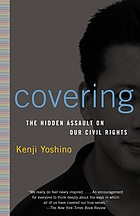 Yoshino, Kenji. Covering: The Hidden Assault on American Civil Rights (Random House, 2006). Part memoir, part legal treatise, Covering explores the nuances of discrimination through the demand that non-normative people "mute" the aspects of themselves deemed socially unacceptable -- and the willingness of our court system to give such discrimination (for example employers demanding women wear make-up or firing a woman for "flaunting" her lesbian relationship) a pass. I read this book for the first time in 2006 and it holds up incredibly well seven years later.
Jordan, Mark D. The Ethics of Sex (New dimensions in religious ethics; Blackwell, 2002). A thoughtful historian of Christianity and sexuality, Jordan explores how Christians have spoken about sexual ethics from the earliest days of the church to the present day. The takeaway from this slim little tome is the diversity and historical specificity of Christian teachings on sexuality (that and the fact that masturbation was once considered the gravest form of incest).
 Japinga, Lynn. Loyalty and Loss: The Reformed Church in America, 1945-1994 (Historical series of the Reformed Church in America; W.B. Eerdman's, 2013). Denominational historian (and a former professor turned friend) Lynn Japinga traces out the tensions within and trajectory of the RCA from the postwar era through the turbulent Sixties and Seventies, into the 1990s. Since this was an era that involved much debate over the ordination of women as well as the denominational stance on homosexuality, I obviously found much of interest.
Christiansen, Erik. Channeling the Past: Politicizing History in Postwar America (Studies in American thought and culture; Univ. of Wisconsin Press, 2013). Through a series of case studies, including the History Book Club, television shows Cavalcade of America and You are There, the Freedom Train traveling exhibition, and the Smithsonian Museum of American History re-design, Christiansen explores the way Americans in the 1950s produced and consumed narratives of their past. This is a thoroughly researched and entertaining account of a particular era of American popular history that I highly recommend to fellow history nerds.
Root, Elihu. Insuring the City: The Prudential Center and the Postwar Urban Landscape (Yale Univ. Press, 2012). I've been trying to read up on twentieth-century Boston history this year, and Root's fascinating account of the politics surrounding what is now an iconic Boston landmark -- the Prudential Center -- was a swift and pleasurable read. I particularly enjoyed the many photographs included that visually document how the neighborhood where I work every day has changed so dramatically in the past seventy years.
Evans, Sara M., editor. Journeys That Opened Up the World: Women, Student Christian Movements, and Social Justice, 1955-1975 (Rutgers Univ. Press, 2003). A book I picked up for my new research project on motive magazine, this is an anthology of personal essays by women who came to social justice activism through the mid-century student Christian movements on college and university campuses. I really appreciate the way this book centers the experience of women and explores how their faith inspired them to engage in progressive social change work and also made that work materially accessible by offering educational and vocational opportunities to aspiring women leaders.
 Spirn, Anne Whiston. The Granite Garden: Urban Nature and Human Design (Basic Books, 1984). This was a $1 cart find that meshed well with my self-assigned goal of learning more about Boston and urban history/politics/culture. While it feels a bit dated in some of its examples, I actually found myself feeling slightly nostalgic for a period of time when environmental activism was treated with more serious urgency and hope for meaningful change than it generally is today.
Fine, Michelle and Lois Weis. The Unknown City: Lives of Poor and Working Class Young Adults (Beacon Press, 1998). Based on extensive qualitative interviews with working-poor young adults from Generation X, sociologissts Fine and Weis use their informants voices to explore the gritty realities of gender, race, and poverty in America's eroding working class economy. One of the most striking observations they make is their white male interviewees resistance to systemic analysis (they preferred to blame women and people of color for their economic woes) -- a demographic trend that we have made little headway on in the fifteen years since publication.
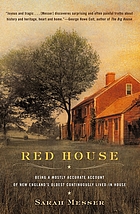 Messer, Sarah. Red House: Being a Mostly-Accurate Account of New England's Oldest Continuously Lived-in House (Viking, 2004). An historically-minded memoir, what at my college would have been termed "creative nonfiction," Messer's memoir tells the story of a house on Cape Cod her father and mother purchased and obsessed over -- and which became a family member in its own right, despite the lingering sense that the Messers were wrongful inhabitants, having purchased the property away from the descendants of the 17th-century man who first constructed the home. I particularly enjoyed the personal perspective Messer provides on the mid-20th century's revived interest in historic properties and public history.
Katz, Jonathan Ned. The Invention of Heterosexuality (Plume, 1996). Historian of gay and lesbian life, Katz turns his thoughtful eye on a sexuality we all assume is known but in fact is very rarely studied, or even defined: heterosexuality. Katz was one of the first scholars to point out that the "heterosexual" individual is a fairly recent historical invention, and his mid-90s discussion of the subject is still relevant todBuay.
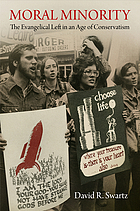 Swartz, David R. Moral Minority: The Evangelical Left in an Age of Conservatism (Politics and Culture in Modern America; University of Pennsylvania Press, 2012). First in what surely will be a long line of books to end up on my "If only this had come out before I finished my thesis...", Swartz's excellent study explores the lives and work of left-leaning Evangelicals during the mid-twentieth century and asks why their early agitation and political influence was ultimately overshadowed by the rise of the religious right. My only critique was its focus on male leadership and only passing discussions of feminism or sexuality -- but that just leaves work for the rest of us, right?
Bussel, Rachel Kramer. Best Sex Writing 2013: The State of Today's Sexual Culture (Cleis Press, 2013). Over the past half-dozen years, I've become a big fan of the Best Sex Writing series -- even more so than the myriad best erotica collections that come out every year: I like thoughtful sex journalism, which combines thinking (a turn on for me) with sex (also a turn on). What more could a sex nerd desire? Bonus third sentence: you can read my favorite piece from this year's anthology for free at The Rumpus!
This has been the third edition of subject/verdict. I hope you enjoyed it; I'm sure there will be more bookish things to come during the forth quarter of the year.
For this edition of subject/verdict, I'll review in reverse chronological order (most recent read book first). Just for kicks.
Jordan, Mark D. The Ethics of Sex (New dimensions in religious ethics; Blackwell, 2002). A thoughtful historian of Christianity and sexuality, Jordan explores how Christians have spoken about sexual ethics from the earliest days of the church to the present day. The takeaway from this slim little tome is the diversity and historical specificity of Christian teachings on sexuality (that and the fact that masturbation was once considered the gravest form of incest).
Christiansen, Erik. Channeling the Past: Politicizing History in Postwar America (Studies in American thought and culture; Univ. of Wisconsin Press, 2013). Through a series of case studies, including the History Book Club, television shows Cavalcade of America and You are There, the Freedom Train traveling exhibition, and the Smithsonian Museum of American History re-design, Christiansen explores the way Americans in the 1950s produced and consumed narratives of their past. This is a thoroughly researched and entertaining account of a particular era of American popular history that I highly recommend to fellow history nerds.
Root, Elihu. Insuring the City: The Prudential Center and the Postwar Urban Landscape (Yale Univ. Press, 2012). I've been trying to read up on twentieth-century Boston history this year, and Root's fascinating account of the politics surrounding what is now an iconic Boston landmark -- the Prudential Center -- was a swift and pleasurable read. I particularly enjoyed the many photographs included that visually document how the neighborhood where I work every day has changed so dramatically in the past seventy years.
Evans, Sara M., editor. Journeys That Opened Up the World: Women, Student Christian Movements, and Social Justice, 1955-1975 (Rutgers Univ. Press, 2003). A book I picked up for my new research project on motive magazine, this is an anthology of personal essays by women who came to social justice activism through the mid-century student Christian movements on college and university campuses. I really appreciate the way this book centers the experience of women and explores how their faith inspired them to engage in progressive social change work and also made that work materially accessible by offering educational and vocational opportunities to aspiring women leaders.
Fine, Michelle and Lois Weis. The Unknown City: Lives of Poor and Working Class Young Adults (Beacon Press, 1998). Based on extensive qualitative interviews with working-poor young adults from Generation X, sociologissts Fine and Weis use their informants voices to explore the gritty realities of gender, race, and poverty in America's eroding working class economy. One of the most striking observations they make is their white male interviewees resistance to systemic analysis (they preferred to blame women and people of color for their economic woes) -- a demographic trend that we have made little headway on in the fifteen years since publication.
Katz, Jonathan Ned. The Invention of Heterosexuality (Plume, 1996). Historian of gay and lesbian life, Katz turns his thoughtful eye on a sexuality we all assume is known but in fact is very rarely studied, or even defined: heterosexuality. Katz was one of the first scholars to point out that the "heterosexual" individual is a fairly recent historical invention, and his mid-90s discussion of the subject is still relevant todBuay.
Bussel, Rachel Kramer. Best Sex Writing 2013: The State of Today's Sexual Culture (Cleis Press, 2013). Over the past half-dozen years, I've become a big fan of the Best Sex Writing series -- even more so than the myriad best erotica collections that come out every year: I like thoughtful sex journalism, which combines thinking (a turn on for me) with sex (also a turn on). What more could a sex nerd desire? Bonus third sentence: you can read my favorite piece from this year's anthology for free at The Rumpus!
This has been the third edition of subject/verdict. I hope you enjoyed it; I'm sure there will be more bookish things to come during the forth quarter of the year.
2013-08-07
being friends with...humans
I realize writing commentary about a New York Times ladypiece is picking low-hanging fruit, but I have a sinus headache and it's too early to go to bed, so here we are.

If you missed it, Time magazine ran a story last week aboutpeople women who choose not to parent and the apparently glamorous, self-centered, satisfying lives we lead. As Tracie Egan Morrissey wryly pointed out at Jezebel, the write-up was framed in such a way as to ensure that even non-parenting women are wrapped into the narrative of the "batshit mommy war":
Meanwhile, KJ Dell'Antonia riffed off this piece at the NYT Motherload blog (tagline: "adventures in parenting," as if we needed reminding that care for children is understood to be women's work) by asking the question "can parents stay friends with the childfree?" She excerpts liberally from the Time piece, starting with:
Y'all know, if you've spent any time on this blog, that I come at this issue from the perspective of someone deeply invested in remaking the world into a place where families and family care-work is genuinely respected and incorporated into daily life, where children and their carers aren't ghettoized or put on a (false) pedestal while actually being treated like shit. This (probably radical, feminist, maybe a bit queer) political agenda informs how I think about most public discussions about parenting, not-parenting, work and family life, and how the current organization of our economy and social life constrains the choices we have in these areas.
I also come at this conversation from the perspective of someone who is currently, and will likely remain, partnered but non-parenting. I've written elsewhere about the factors going into that decision, which like any major decision is born of inner desires, practical realities, and the needs and desires of those the decision-maker is in close relationship with.
Here are my thoughts.
First, Dell'Antonia directs her question only to mothers:
I reject this false dichotomy between parents and not-parents. Yes, obviously, parenting changes you -- just like any major life experience changes you. But I reject the notion that there's something about parenting that makes it impossible to communicate with individuals who have not yet (or never plan to) cross that divide. I see a similar dichotomy set up between single and married women (and yes, it's most often women). It has a kernel of truth, but gets set up as a means to divide people and pit them against one another. To constantly re-inscribe the supposed differences between not-parents and parents suggests that we must be in competition, that our needs and desires must be set against one another, in opposition. When in reality, our needs as humans are more similar than they are different.
Which brings me to my next point: not-parents have families too. Notice how, in the Time piece, "parenting" in the first sentence turns into "family" in the second -- with the suggestion that somehow only parents struggle with the competing responsibilities of work and home life? Hanna and I, and our cats, are a family unit. We belong to a wider family circle of parents and parents-in-law, sisters and brothers and siblings-in-law, grandparents, cousins, nieces and nephews, and extended relationship.
We also, like parents, have this thing called "home" and a life therein, where shit happens. Shit like laundry and cooking (or not-cooking because you haven't had the energy to go grocery shopping). Shit like getting sick, or caring for a sick spouse, or negotiating with the vet to find an appointment time that you can make before or after work, or on the weekends. Parenting people are not the only ones who've had to cancel a dinner date at the last minute -- or would understand the necessity of doing so, to take Ms. Dell'Antonia's example from above. If parents truly are cutting off their not-parent friends because they pre-emptively imagine there's no longer anything to talk about well ... that seems a damned shame to me. I really like my parenting friends, and I gotta say we find plenty to talk about and enjoy together.
Which brings me to my final point, which is when the fuck did friendship become a matter of sameness? Again, I get that it helps to have common interests and experiences, common values and goals. But I also feel like there's something -- a big something -- to be said for curiosity, empathetic listening, and learning. I'd never heard of Doctor Who before I met Hanna, and tonight while I'm writing this blog post we're re-watching "Rose" and talking about how awesome it is as a series re-boot. We didn't meet as fellow fans, but I was open to discovering something new.
The same could be said about parenting and not-parenting people learning how to talk about their lives (and ask questions about their friends' lives) in ways that don't automatically assume that there will be no common ground, or that just because you haven't had experience Zed you can't be interested or contribute to a discussion on the topic.
It's a pretty fucked-up version of identity politics to assume the only meaningful relationships you can have are with those who've had your specific set of life experiences.
If you missed it, Time magazine ran a story last week about
Perhaps you thought that not having children left you untethered. Wrong! Time has roped you into it, with some inflammatory quotes that will get all the mothers in the world to hiss at you brazen hussies and your childfree existences.Most of us non-parenting ladies knew already we didn't get to opt out of that one, but thank you Time magazine for pointing it out once again so hysterically.
Meanwhile, KJ Dell'Antonia riffed off this piece at the NYT Motherload blog (tagline: "adventures in parenting," as if we needed reminding that care for children is understood to be women's work) by asking the question "can parents stay friends with the childfree?" She excerpts liberally from the Time piece, starting with:
Any national discussion about the struggle to reconcile womanhood with modernity tends to begin and end with one subject: parenting. Even Sheryl Sandberg’s “Lean In,” a book focused on encouraging women’s professional development, devotes a large chunk of its take-home advice to balancing work and family, presuming that, like its author, ambitious women will have both.Dell'Antonia herself then reflects:
As a parent myself, I don’t read my tendency to gravitate toward fellow mothers as judgment — I read it as practical. Fellow parents are more likely to understand if I bail on dinner because of a sudden teacher conference, and their eyes are less likely to glaze over if my preoccupation at that dinner is more temper tantrums than, say, the right way to temper chocolate (which might once have held my interest for hours). In fact, I’d argue that it’s win-win.So I have some thoughts. Obviously, or I wouldn't be writing this post.
Y'all know, if you've spent any time on this blog, that I come at this issue from the perspective of someone deeply invested in remaking the world into a place where families and family care-work is genuinely respected and incorporated into daily life, where children and their carers aren't ghettoized or put on a (false) pedestal while actually being treated like shit. This (probably radical, feminist, maybe a bit queer) political agenda informs how I think about most public discussions about parenting, not-parenting, work and family life, and how the current organization of our economy and social life constrains the choices we have in these areas.
I also come at this conversation from the perspective of someone who is currently, and will likely remain, partnered but non-parenting. I've written elsewhere about the factors going into that decision, which like any major decision is born of inner desires, practical realities, and the needs and desires of those the decision-maker is in close relationship with.
Here are my thoughts.
First, Dell'Antonia directs her question only to mothers:
Do we, as women who are also mothers, judge women who are not? And if we do, do we do it overtly or subconsciously — or just by excluding and including people in our lives based on proximity and similarity without realizing that the path of least resistance is one that, for a parent like me, includes mainly friends who are piloting similar family boats?What strikes me about this framing of the question is the notion that parents and non-parents are two different species, two different tribes, without "proximity and similarity," that only fellow parents are "piloting similar family boats." I notice this a lot in writing about work-life and work-family issues, in discussions about women's decision-making around work, relationships, reproduction.
I reject this false dichotomy between parents and not-parents. Yes, obviously, parenting changes you -- just like any major life experience changes you. But I reject the notion that there's something about parenting that makes it impossible to communicate with individuals who have not yet (or never plan to) cross that divide. I see a similar dichotomy set up between single and married women (and yes, it's most often women). It has a kernel of truth, but gets set up as a means to divide people and pit them against one another. To constantly re-inscribe the supposed differences between not-parents and parents suggests that we must be in competition, that our needs and desires must be set against one another, in opposition. When in reality, our needs as humans are more similar than they are different.
Which brings me to my next point: not-parents have families too. Notice how, in the Time piece, "parenting" in the first sentence turns into "family" in the second -- with the suggestion that somehow only parents struggle with the competing responsibilities of work and home life? Hanna and I, and our cats, are a family unit. We belong to a wider family circle of parents and parents-in-law, sisters and brothers and siblings-in-law, grandparents, cousins, nieces and nephews, and extended relationship.
We also, like parents, have this thing called "home" and a life therein, where shit happens. Shit like laundry and cooking (or not-cooking because you haven't had the energy to go grocery shopping). Shit like getting sick, or caring for a sick spouse, or negotiating with the vet to find an appointment time that you can make before or after work, or on the weekends. Parenting people are not the only ones who've had to cancel a dinner date at the last minute -- or would understand the necessity of doing so, to take Ms. Dell'Antonia's example from above. If parents truly are cutting off their not-parent friends because they pre-emptively imagine there's no longer anything to talk about well ... that seems a damned shame to me. I really like my parenting friends, and I gotta say we find plenty to talk about and enjoy together.
Which brings me to my final point, which is when the fuck did friendship become a matter of sameness? Again, I get that it helps to have common interests and experiences, common values and goals. But I also feel like there's something -- a big something -- to be said for curiosity, empathetic listening, and learning. I'd never heard of Doctor Who before I met Hanna, and tonight while I'm writing this blog post we're re-watching "Rose" and talking about how awesome it is as a series re-boot. We didn't meet as fellow fans, but I was open to discovering something new.
The same could be said about parenting and not-parenting people learning how to talk about their lives (and ask questions about their friends' lives) in ways that don't automatically assume that there will be no common ground, or that just because you haven't had experience Zed you can't be interested or contribute to a discussion on the topic.
It's a pretty fucked-up version of identity politics to assume the only meaningful relationships you can have are with those who've had your specific set of life experiences.
2013-08-04
the "duck and cover" gambit, circa 1969
For fun and scholarly research today, I'm reading the March/April 1969 issue of motive magazine -- a special issue dedicated to what was then called the women's liberation movement. As you might expect, it's all a bit dated in the best possible way -- and they've got some great pieces in there: on sexism in psychology, an analysis of women's magazines and consumer culture, and an article by Del Martin and Phyllis Lyon on lesbians and anti-gay discrimination. Also lovely woodcut illustrations and some passionate poetry to boot.

The final piece in the issue is an editorial by motive editor B.J. Stiles. It's a fairly defensive piece for what to my twenty-first century eye is a fairly middle-of-the-road collection of feminist texts, including one on deconstructing masculinity written from the perspective of a man. B.J. opens the piece joking at length about how this particular issue came about because motive hired a young woman onto the staff, "fresh from college--attractive, articulate, hip, our femme fatale in residence. She stimulated male fantasies, fulfilled ordered (magazine subscription ones, that is), participated in editorial conferences...and worked cheap. (In earlier times, we might have even said that she became 'one of the boys'.)"
Given that Stiles himself later came out as gay, I imagine some of this locker room humor is defensive -- not only against what he argues is the "anti-male" thrust of the issue, but also protective covering in relation to the discussion around homosexuality that appears in its pages. So I'm not (yet) ready to argue this hostility towards feminism turned out to be a pattern for Stiles.
However, what struck me was the opening lines of the piece, which read as follows:
Oh the courage it takes to be .... in the majority.
With the weight of ... major social and legal institutions behind you.
As my friend Fannie wrote last year, this is an all too familiar reflex in the twenty-first century feminist blogosphere ... and apparently has a long and ignoble history going back at least half a century.
Well done, guys. Well done.

The final piece in the issue is an editorial by motive editor B.J. Stiles. It's a fairly defensive piece for what to my twenty-first century eye is a fairly middle-of-the-road collection of feminist texts, including one on deconstructing masculinity written from the perspective of a man. B.J. opens the piece joking at length about how this particular issue came about because motive hired a young woman onto the staff, "fresh from college--attractive, articulate, hip, our femme fatale in residence. She stimulated male fantasies, fulfilled ordered (magazine subscription ones, that is), participated in editorial conferences...and worked cheap. (In earlier times, we might have even said that she became 'one of the boys'.)"
Given that Stiles himself later came out as gay, I imagine some of this locker room humor is defensive -- not only against what he argues is the "anti-male" thrust of the issue, but also protective covering in relation to the discussion around homosexuality that appears in its pages. So I'm not (yet) ready to argue this hostility towards feminism turned out to be a pattern for Stiles.
However, what struck me was the opening lines of the piece, which read as follows:
In full knowledge that the admission of the following qualifies me for the VWLM's "Male Chauvinist-of-the-month Award" and will undoubtedly result in one more elaborate hex from guest editor Joanne Cooke [the femme fatale of above], a few musings on women's (and men's) liberation.Here we have, circa 1969, a beautiful specimen of what John Scalzi recently called the "I fully expect abuse" gambit, which I think of as the "duck and cover" gambit. This is when a person from a socially privileged group (in this instance, a man) offers up thoughts on a subject which they feel defensive about, generally because people from a socially disadvantaged group (in this instance, women) have raised questions about the status which make the writer/speaker uncomfortable. Because the writer/speaker is about to say something from their position of privilege which they suspect will confirm the suspicions of their detractors or otherwise be unpopular, they preface their statement with something to the effect of, "I know you're going to [insert violent action] to me for saying this, but..." as if to imply their bravery at refusing to be silenced and voice some Important Truth anyway.
Oh the courage it takes to be .... in the majority.
With the weight of ... major social and legal institutions behind you.
As my friend Fannie wrote last year, this is an all too familiar reflex in the twenty-first century feminist blogosphere ... and apparently has a long and ignoble history going back at least half a century.
Well done, guys. Well done.
2013-08-02
the cat's in the bag [photo post]

Recently, Teazle has developed a thing for paper bags. She was always curious about bags and boxes, but for some reason this particular paper bag holds a real fascination for her. She sleeps on it, she sleeps in it, she pushes it around the living room floor, then falls asleep inside it again.

When she's not sleeping, she likes to get up to no good. Like shredding paper towels.

While we're posting cat photos, here are a few of Houdini I didn't put up last week!


Hope y'all have a good weekend!
2013-07-28
thanks for the liebster love; let's have some more!
Thanks to follower .breaking into blossom., I've been nominated for something called a liebster award: a sort of blog-based chain letter which encourages small bloggers to give a shout-out to/for other small bloggers.

It seems there are multiple versions of this "award" going around, but the one blossom is following instructs me to:
I don't normally do chain-letter type things, but
a) it was sweet of blossom to think of me (thank you!),So here goes.
b) I just got back from vacation and I'm bored,
c) I like that the Liebster Award shares the same first letter as Lesbian.
It seems there are multiple versions of this "award" going around, but the one blossom is following instructs me to:
a) nominate eleven blogs with under 200 followers (I honestly don't know how you'd determine that, so I'm just gonna take a stab at it by choosing from the "smallish personal blog" category in my Feedly list)My Nominees in Alphabetical Order are.... (drumroll) ...
b) notify said bloggers they've been nominated (hey bloggers! thanks for existing!)
c) provide answers to the eleven questions blossom posed in her own Liebster post, and
d) ask eleven questions of my own nominees, to answer if they so choose, along with posting their own eleven nominees (excluding the blogger who nominated you).
- The Dirty Normal
- Eat the Damn Cake
- Fannie's Room
- First the Egg
- I'm Unschooled. Yes, I Can Write
- The Lesbrary
- New Porn By Women
- Radical Doula
- The Thang Blog
- Undercover in the Suburbs
- Walk the Ridgepole
- What comforts you most when you’re sad? Touch, particularly from my wife (doesn't have to be sexual). And reading familiar books.
- What would you do on a dream day where money and travel time were no object? Enjoy leisurely meals in the good company of friends and family (who are scattered across the continent), go walking in Cumbria in ideal weather, read intellectually engaging things in books, and enjoy unhurried sexytimes with my wife.
- Favorite drink (with or without alcohol)? Summer: Elderflower gin & tonic, Winter: Goat's milk hot cocoa made with belgian chocolate.
- What character trait (of yours) do you most struggle to accept about yourself? The fact that physical activity and exercise are not second nature to me.
- How much water do you drink in a day? Typically not as much as I should.
- If you’re a parent, what has surprised you the most about the gig? If you’re not, what do you like best about not having kids (right now or at all)? I feel uncomfortable framing non-parenting in terms of what's "best" about that aspect of our family life. In part, we're non-parents because we can't picture having enough hours in the day (around work) or emotional resources to parent adequately. So I guess I'd say, "it's good having enough sleep and down-time that we can function"? But I'd rather say that what's surprised me about non-parenting is that I'm okay with it. Growing up, I assumed I would be a mother. Life hasn't turned out that way, and it's surprising me that I'm as comfortable with that as I am.
- What (if anything) makes you feel insecure about either being a parent or not being a parent? Insecurity may not be the right term...but I worry about how to maintain cross-generational connections in the absence of parenting, as that is the clearest model I know.
- Top
threefour television shows of all time? Firefly. Mr. Rogers. Torchwood. The West Wing. - Specialty dish (or baked indulgence)? Something you’ve made time and again. Moosewood brownies.
- Favorite thing about the person you’ve grown into? That I can always find something to be interested in and ask questions about.
- One simple, happy memory. Stepping off the plane in Redmond, Oregon, en route to visiting my grandparents and smelling the scent of juniper and lava rock dust.
My questions for the Leibster nominees ... (should they choose to answer them) ...
- First library?
- A favorite childhood book or movie you're now a bit cringe-y about having adored?
- Earliest memory of the internet?
- Food you disliked in childhood but appreciate now (and why)?
- Books currently on your nightstand/active reading pile?
- A might-have-been from your twenties (job not taken, relationship not pursued, trip aborted) that you find yourself wondering about?
- Favored toothpaste, toothbrush?
- Have you ever burned/shredded/junked a piece of personal history you now regret destroying (if so, what and why)?
- Have you ever burned/shredded/junked a piece of personal history you have no regrets about (if so, what and why)?
- A strong childhood memory of world events?
- A project you hope to finish some day (but has currently fallen by the wayside)?
If you (the nominees) choose to spread the liebster love, now or at some later date, please link the post you create back here in comments so others can enjoy!
Again, thank you all for thinking and writing and sharing.
2013-07-27
a week of the commuting life [thoughts]
So Hanna and I are back in Boston after a whirlwind week of California (Hanna) and Pawtucket (me, then both of us). The cats are contemplating forgiving us for our absence and the weather is gorgeous -- sun, warm-but-not-too, breezy, with low-humidity -- so in many ways it's good to be home to our urban apartment life.
Though I'll admit it was also hard to leave smaller-city life, and a week spent in a early-twentieth-century neighborhood of small apartment buildings and single-family homes, mature trees, walkable boulevards, and blessed quiet. It was really wonderful to have a table to eat meals at, a kitchen where two people could actually work comfortably, a washer and dryer you didn't have to feed quarters into (or stand in line to use), a porch with a swing ... the sort of things that feel like "grown up" life to two people in their thirties who grew up in single-family homes (even if Hanna's didn't have a washer and dryer, and mine didn't have a porch swing!).
Not that we need, necessarily, a single-family home or a very large space. After five-to-seven years in this tiny little one-bedroom we're starting to get restless for a less student-apartment feeling place. Which for us translates into maybe a two-bedroom space (one for office/guest use) with a decent-sized kitchen, a porch, maybe space for a pot garden or ground-garden. A space that has direct access to the outdoors rather than the negotiation of apartment halls.
A space that gives us a little more privacy-negotiation room when we need it. A way to use spaces to move through different daily-life activities: cooking and eating, reading, sleeping and waking, scholarship.
Of course, the conundrum in this region of the country is affordability vs. walkability. Right now, we pay to live within walking distance from work and other amenities, and in a robust (though it could be better!) public transit zone. We can live without a car, and even increasingly without monthly public transit fees (thanks Hubway!). What we pay in rent -- $1295 per month -- we save in transportation costs.
Work is in the urban center; affordable homes are on the urban periphery. I'm not even really talking suburbs or exburbs ... the neighborhood we were house-sitting in was maybe "suburban" when it was built in the 1910s but is now very much an established part of Pawtucket (bordering on Providence). There were shops and cafes walking-distance away, and grocery stores within biking distance; a crosstown bus stop at the end of the block. You would need a bike, perhaps a car for some things, but you aren't looking at a gated-community / food desert situation.
The "urban periphery" of Boston includes cities in New Hampshire and Rhode Island and Western Massachusetts where people commute daily into Boston (or closer to Boston) and then home again. These places are towns, even cities, in their own right -- but their residents have often been pushed out of Boston because although our jobs are here we can't afford, long term, to live here. And I'm not talking about
"can't afford" in the "I want a sprawling estate in the hinterlands" sense. I'm talking "can't afford" as in "current market prices for one-bedroom apartments in our neighborhood are pricing us out" despite the fact we're living in what is one of the more affordable inner-Boston neighborhoods and we're making what pass for firmly middle-class wages these days, for a family of two.
We're hardly the only people our age who are feeling financial pressure to leave urban centers -- yet still need to work at our jobs in the city. Not everyone works in a high-tech-enabled, work-from-home, work-from-anywhere position.
I had a lot of time to think about this core-to-periphery migration during the past week while sitting in traffic, or on the commuter rail, en route to Boston from Pawtucket and back again.
In Allston, our alarm goes off at 6:30, we leave the apartment shortly after 7:00, and have Hanna at work about quarter of eight. We travel by foot. As I've written elsewhere, I can get from apartment to work and back again in twenty minutes by bike; about forty-five minutes by T. This means that our evenings generally begin about 5:30-6:00pm, when we get in from work and an after-work errand or two.
Walking is free; our public transit options cost us an average of $30/each per month.
In Pawtucket, driving in by car I got up at 5:30 and left the house at 6:00. I got to work at 7:45-8:15 in the morning, after a drive that at-speed would have taken fifty-odd minutes but in rush hour took 1.5-2.5 hours. By train the time is more commensurate -- leaving the house at seven put me on the 7:22 train to Boston and I was at work by 8:30. But this, like the drive, lost me exercise (walking or biking) at both ends of the day and added time in the evening commute (I wasn't back in Pawtucket until 7:00pm).
Then there's the car, insurance, gas; and/or rail passes, plus parking -- which can be hundreds of dollars per month.
Equally unaffordable, in many ways.
Hanna and I are a year or two out from looking for our next Boston metro area home -- and probably five-to-ten years out from a major relocation. But it was useful to have this hands-on experience at the commuting life. I'm absolutely sure I don't want it.
The sad thing will be if we end up looking elsewhere not because we actively want to live elsewhere (which may be the case -- we talk about Vermont and we talk about Oregon) but because we can no longer afford to live the life we want to here.
 |
| home sweet home |
Not that we need, necessarily, a single-family home or a very large space. After five-to-seven years in this tiny little one-bedroom we're starting to get restless for a less student-apartment feeling place. Which for us translates into maybe a two-bedroom space (one for office/guest use) with a decent-sized kitchen, a porch, maybe space for a pot garden or ground-garden. A space that has direct access to the outdoors rather than the negotiation of apartment halls.
A space that gives us a little more privacy-negotiation room when we need it. A way to use spaces to move through different daily-life activities: cooking and eating, reading, sleeping and waking, scholarship.
 |
| we don't need a literal white picket fence |
Work is in the urban center; affordable homes are on the urban periphery. I'm not even really talking suburbs or exburbs ... the neighborhood we were house-sitting in was maybe "suburban" when it was built in the 1910s but is now very much an established part of Pawtucket (bordering on Providence). There were shops and cafes walking-distance away, and grocery stores within biking distance; a crosstown bus stop at the end of the block. You would need a bike, perhaps a car for some things, but you aren't looking at a gated-community / food desert situation.
The "urban periphery" of Boston includes cities in New Hampshire and Rhode Island and Western Massachusetts where people commute daily into Boston (or closer to Boston) and then home again. These places are towns, even cities, in their own right -- but their residents have often been pushed out of Boston because although our jobs are here we can't afford, long term, to live here. And I'm not talking about
"can't afford" in the "I want a sprawling estate in the hinterlands" sense. I'm talking "can't afford" as in "current market prices for one-bedroom apartments in our neighborhood are pricing us out" despite the fact we're living in what is one of the more affordable inner-Boston neighborhoods and we're making what pass for firmly middle-class wages these days, for a family of two.
We're hardly the only people our age who are feeling financial pressure to leave urban centers -- yet still need to work at our jobs in the city. Not everyone works in a high-tech-enabled, work-from-home, work-from-anywhere position.
I had a lot of time to think about this core-to-periphery migration during the past week while sitting in traffic, or on the commuter rail, en route to Boston from Pawtucket and back again.
In Allston, our alarm goes off at 6:30, we leave the apartment shortly after 7:00, and have Hanna at work about quarter of eight. We travel by foot. As I've written elsewhere, I can get from apartment to work and back again in twenty minutes by bike; about forty-five minutes by T. This means that our evenings generally begin about 5:30-6:00pm, when we get in from work and an after-work errand or two.
Walking is free; our public transit options cost us an average of $30/each per month.
In Pawtucket, driving in by car I got up at 5:30 and left the house at 6:00. I got to work at 7:45-8:15 in the morning, after a drive that at-speed would have taken fifty-odd minutes but in rush hour took 1.5-2.5 hours. By train the time is more commensurate -- leaving the house at seven put me on the 7:22 train to Boston and I was at work by 8:30. But this, like the drive, lost me exercise (walking or biking) at both ends of the day and added time in the evening commute (I wasn't back in Pawtucket until 7:00pm).
Then there's the car, insurance, gas; and/or rail passes, plus parking -- which can be hundreds of dollars per month.
Equally unaffordable, in many ways.
Hanna and I are a year or two out from looking for our next Boston metro area home -- and probably five-to-ten years out from a major relocation. But it was useful to have this hands-on experience at the commuting life. I'm absolutely sure I don't want it.
The sad thing will be if we end up looking elsewhere not because we actively want to live elsewhere (which may be the case -- we talk about Vermont and we talk about Oregon) but because we can no longer afford to live the life we want to here.
Subscribe to:
Posts (Atom)