~oOo~
Showing posts with label blogging. Show all posts

2014-08-28

after 7 years, the feminist librarian is moving!


As I noted before the August hiatus, the feminist librarian is migrating to Wordpress! It now sports its own domain name: thefeministlibrarian.com. The site is now live and you are welcome to visit, poke around, and let me know what works and doesn't.

Beginning September 1st, 2014 all future posts will appear in that space, so please update your RSS feeds, bookmarks, etc. accordingly.

I have migrated all 1,000+ posts from this space, complete with comments. I have no plans to delete this site in the short term, but annajcook.blogspot.com will become an inactive historical record rather than the home of the feminist librarian moving forward. 

2014-08-05

august blogging vacation + september migration

Brought to you by the peaceful galleries of the
Museum of Fine Arts, Boston.
I'll be taking August off from blogging here at the feminist librarian as I wrap up some other writing projects that have been too long delayed. I hope that all of you are having a peaceful and/or productive end to the summer and I will see you in September!

... Which brings me to my related announcement that the feminist librarian will finally be migrating from Blogger to Wordpress at the end of the month, and graduating to its own domain name! Details will be posted here once the new space has been designed and gone public, and the archives from 2007-2014 will remain here as well as migrating to the new site. After seven (!) years, I have decided it's time for a change.

See you on the flipside.

2014-05-29

once upon a listserv: thoughts on professionalism, privilege, and power [#thatdarnlist]

Thank you to all whose thoughts helped form this post. 

Coincidentally, this is the 1200th post to go live at the feminist librarian. I've learned a lot from this idiosyncratic labor of love. It's been great to have y'all along for the ride.


(via)
So a thing happened last week on one of the professional listservs I subscribe to. While I’m relatively new to this listserv, having been subscribed for roughly a year, I’ve been around long enough to know this is not an isolated happening in this particular online community. Similar incidents, involving many of the same players, have happened before. More importantly for this blog post, this thing that happened follows a wider pattern, one that will be familiar to most folks guilty of “blogging while female” or “blogging while queer” or “blogging while [insert marginalized identity group here].” As a veteran of the feminist blogosphere (at seven years and counting the feminist librarian is firmly middle-aged in Internet time) I’ve seen it happen before in other forums, and will no doubt see it again. It’s a worrying pattern, a pattern of unethically leveraged power and privilege, and I believe strongly that it needs to be named as such.


Thus, this post.
I’m going to tell the story of what happened without naming names or linking to specific emails in the listserv archive. Those of you interested in reading all 91 emails in the thread can find the archive here. Scattered additional responses can also be found seeded through the listserv archive from May 19 through May 23. Many of you will have already followed the exchanges in real time. Even so, I have chosen to describe what happened in archetypal terms because my goal here is not to reopen/rehash the details of specific exchanges. Rather, I hope to point out how the dynamic at play is a familiar one to many of us, particularly those of us on the receiving end of its toxic effect, and to bear witness to the way its poisonous effect ripples out under the guise of “professional” interactions.

Simply put, regardless of specific individuals’ intent, the net effect of the interactions that took place has been to reinforce the status quo of social privilege for some and marginalization of others. Because that’s how structural prejudice works. The net effect of this particular incident (as in previous iterations of the same) has been to reinforce the status quo through a discouraging pattern of behavior, one that is identifiable to us in the “blogging while…” crowd. 

And it’s a pattern that, in this community, has been repeatedly denied, ignored, minimized, and obfuscated throughout the interaction, by multiple people who should know better (or should know enough to listen to those who do know better).

I write this post from my own relative position of privilege in the world of librarians and archivists. Although I am an early career professional I have a secure, full-time position. Many of the individuals I’ve interacted with via email in the past week have expressed legitimate fear of going “on record” about the situation due to the fact that they’re currently job seeking or otherwise job-insecure. I write this post on behalf of all of them (and with their anonymous editorial guidance) because I am in a position to do so while they are not.

That acknowledged, back to our story.

There’s a professional listserv. It’s a profession in which women are the majority, yet in this online forum, an “unmoderated” email list sponsored by the national professional organization, a single mid-career, male contributor -- we’ll call him X -- dominates. In a recent quantitative analysis of the top fifty contributors by volume to the listserv, over 45% of the emails are generated by X. The majority of his contributions are what’s known colloquially as “linkspam” -- links to online content relevant to the field, offered up with little or no contextual explanation. 

(As someone who habitually tags, and religiously reads, “linkspam” lists made by my favorite bloggers, I recognize the value of curated links lists. However, there are legitimate views across the spectrum from “always love ‘em” to “always hate ‘em.” And content value can, and should, be separated here from the size and shape of one’s digital footprint.)

In addition, X also has a history of responding authoritatively and dismissively to the concerns of younger, primarily female, professionals who bring issues to the listserv for discussion. Time and time again, he positions himself as the arbiter of what is and is not accepted professional practice. So, as is often the case in online forums, this individual has become, over time, a sort of shorthand for those frustrated by both his specific behaviors and also what his continued presence exemplifies about the community in which he thrives.

Last week, as happens occasionally, a person spoke up, on the list, questioning this dynamic. 

Does anyone else find the dominance of this one individual annoying? the Dissenter asks (the Dissenter happens to have male name, though his student status marks him as an individual in the early stages of his career). Perhaps we could manage this individual’s participation such that he did not dominate the list, leaving space for others to meaningfully participate?

This opening salvo prompts three groups of listserv participants to respond:

1. The Fixers. These individuals offer individualistic solutions to the Dissenter’s problem: “If you don’t like X’s contributions, the delete button is always an option!” Regardless of tone -- condescending or supportive -- the problem with this type of response is that it places the burden of managing what is a community-wide issue on the person who has identified it, not the community as a whole. Too often, the “fix” serves to further isolate the Dissenter, and others like them, from the community rather than providing a way to increase participation.

2. The Defenders. These individuals categorically deny that the Dissenter has a point, asserting that X’s contributions bring much value to the list; over time, these assertions grow ever more fulsome. X labors tirelessly on behalf of the profession yet gets only criticism in return! X is generous with his wisdom and you ungrateful children fail to recognize its worth! 

This type of response works to turn a discussion that should be about how to share community space (recall our original request: “could we manage this person’s participation … leaving space for others to meaningfully participate?”) into a discussion about the value of X’s contributions (and, implicitly, X as an individual). This is a common dynamic in social justice circles, where raising questions about structural discrimination all too often results in defensive reactions by individuals and their protectors who make it personal (“But she doesn’t have a racist bone in her body!” “But he grew up poor!” “I couldn't possibly be anti-gay, some of my best friends are lesbians!”).

This defense of the status quo, in turn, prompts...

3. ...The Supporters of our original Dissenter to speak up, adding their voices and perspectives to the discussion. Yet they’ve already learned, by watching how the Fixers and Defenders responded, to speak up in careful and conciliatory terms: “Oh, no, we aren’t questioning the value of X’s participation -- indeed, we find much of value in his perspective! We are only asking for a little more room at the table.” This apologetic approach, while (sometimes) effective in protecting the Supporter from accusations of unprofessionalism, of personal attacks, of mean-spirited snark, unfortunately also undermines the Dissenter/Supporter position by turning what should be non-negotiable expectation of respectful, welcoming behavior that is the responsibility of all community members into an “ask” which the powerful within the group can grant or deny.

Eventually, after a period of silence, X himself steps into the fray. Notably, he chooses to do so not in response to the (male) Dissenter but in specific response to a female Supporter, a young professional. This is a woman who has articulated clearly how his dominance on the list has the effect of silencing others, and who has offered several community solutions which could potentially meet the needs of both Defenders and Supporters. In mansplainy tones, X ignores her community-based solutions and goes full-on Fixer, suggesting the issue is her (and others’) ineptness with technology rather than his manner of participation in the shared space of the online forum.

If only these children would shut up and sit down until they learned the proper skills to participate on my terms. It’s simple, really.

Another key feature of these interactions is that X has a habit of responding to criticism “off list,” via direct email. Giving him the benefit of the doubt, he may be unaware of how this action comes across to the (often young, female) recipients of his unsolicited emails. Rather than being some sort of polite follow-up, it’s a bright red flag for any woman with experience “blogging while female.”

Rule number one for many female bloggers is to never, ever let conversations move out of the public realm. For most of us, uninvited contact by men attempting to continue public debates (particularly disagreements) privately is a power play. In our experience, men who angle for private discussion are angling for the upper hand, in a space where we a) won’t be able to draw on others’ support for our position, and b) where the evidence of whatever harassment, manipulation, or abuse they engage in will be out of sight. For an older male colleague to take a disagreement with a young woman in the same field “off list” is an isolating maneuver, whether or not it’s intended as such. Most of us have learned the hard way not to engage, or to take our responses back to the public realm, rather than let backchannel condescension escalate into harassment, stalking, or worse.

(I drafted this post before the #YesAllWomen hashtag went viral on Twitter in response to the misogynist motivations of the Isla Vista shooter, but this safety-first approach to online communication with men we don’t know fits into the category of experience #YesAllWomen seeks to highlight: the ways in which we perceived-female persons negotiate the world ever-mindful of the potential of gender-motivated violence.)

Meanwhile, of course, the discussion around X and his place on the list continues. Even as the Fixer, Defender, and Supporter emails continue at a steady clip, The Feels reach new levels of intensity and spawn a second layer of response:

4. The Disaffected. The Disaffected contributors position themselves above The Feels, intermittently pointing out to the group as a whole how petty their concerns about community behavior are, suggesting that the dissenters/supporters are simply making a mountain out of a molehill.

Since some people on Twitter raised this concern, I want to explicitly acknowledge here  that walking away from a community debate/discussion/argument you are not able to participate in (for whatever reason) is a form of self care and never needs justification. You get to set boundaries for yourself, full stop.

The Disaffected, however, are not engaging in self care (or not only that). Instead, they are Making A Point by walking out in a huff. This trivializes the concerns of the Dissenter and Supporters by sending the message that their concerns are unworthy of serious consideration, or the labor (emotional or otherwise) that it will take to address them.

5. The Concern Trolls, meanwhile, similarly position themselves as the group with a more mature perspective, over and against those who are absorbed in petty or narcissistic concerns. “Why are you all wasting time on issue Y when WORLD HUNGER” goes the concern troll’s argument. “Why are you arguing amongst yourselves when federal funding for our profession is on the chopping block?!”

Such arguments will be familiar to anyone who has ever discussed modern American feminist politics, where this gambit typically takes the form of “Why are American women complaining about [equal pay, sexualization, street harassment, reproductive rights] when women in [Sudan, Iraq, China, Ukraine, Indonesia, Cuba] don’t even have [clean water, voting rights, contraceptives, are dying of AIDS].” This is a false dichotomy in which situation B is thrown up as if in competition with situation A for attention. Both A and B can be (and usually are) important. In fact, they are often interconnected. Discussing or addressing one does not equate to ignoring the other.

In this instance, how we behave toward one another as colleagues within a given professional community is intimately entangled with how we engage in growing and advocating for the profession as a whole, how effectively we are able to do our jobs, and how we mentor those who will be future leaders in the field. How we treat one another speaks volumes about how we treat those we serve professionally (or, you know, ask for funding from). It’s not a distraction from substance; it’s substantially about who and what we are as practitioners of our craft.

6. The Drama Queen. You know that guy (and yes, it’s pretty much always a guy) who stands ready to cry “censorship!” or “It’s a free country!” in any Internet context in which requests for comment moderation or policies regarding participation are under discussion? Yeah. We had that guy.

7. The Equal Opportunity Shamers. Late in the game come the Shamers, who take it upon themselves to blame and shame all participants in the debate for behaving badly. As is typical, the Shamers wait until enough mud has been slung and hurtful words exchanged that they can point to “bad” behavior on both sides and ignore the substantive issues even as they ask (or require, if they have the power) that everyone be civil.  In this instance, they invoked “professionalism” and the listserv Terms of Participation to issue general slaps on the wrist for those who, in their estimation, were contravening both.

This post facto moderation tactic does a couple of tricksy things in aid of perpetuating the status quo.

First, Shaming blurs the distinction between the Dissenter and their Supporters and the individual(s) whose behavior was initially being questioned. The Shamer slaps them collectively on the wrist for uncivil behavior, acts as the tone police, or uses a variety of other tactics to imply or even outright assert that naming the offense is as bad as -- if not worse than! -- the offense itself.

Such an approach is one I’m very familiar with engaging with anti-marriage-equality folks in the blogosphere, where identifying anti-gay speech or actions as, well, anti-gay will bring out cries of intolerance when comments calling queer folk child abusers are overlooked as normal or negligible (#YesAllQueers).

Second, this false equivalence of behavior has the effect of ensuring that the individual(s) whose actions have been questioned continue to believe in their rightness, while the individual(s) who have raised the questions are quashed. This is because, in the type of scenario I’m talking about here, X  began the day in a position of social privilege, and X’s challengers began the day in a position of relative vulnerability. Professionally vulnerable people who find their professional behavior under question will, quite sensibly, withdraw from the discussion. Professionally secure people will shrug because, I was only defending myself from my accusers, after all, and everyone knows how much value I bring to the table.

While seemingly neutral, treating all people the “same” with their admonishments, the Shamers’  tone policing that fails to engage with the dynamics of privilege and power is anything but neutral. Instead, it ends up serving the already powerful and doing nothing to protect the already vulnerable.

To put it another way, what we saw last week was a highly influential man who had his position at the center of a specific social group challenged by younger, less-influential (and mostly female) individuals who are also part of the same group. He, and perhaps more importantly his supporters, dismissed their concerns. They used the discourse of professionalism and the rules for participation in the forum to enforce the status quo rather than to address structural inequality.

An opportunity was lost, and we are all the poorer for it.

I’m telling this story because this pattern will be repeated, but it doesn’t have to be. Instead, as a professional community, we could decide that it matters to us that all of our colleagues -- no matter how young, structurally powerless, or socially vulnerable they are -- feel welcomed to participate in the listserv of our profession.

We could decide it matters to us that a single individual, no matter how well-respected and valued by members of the community, takes up as much (virtual) space as he does, and we could ask him to take a step back and listen for awhile, instead of perpetually dominating the conversation. (I offer this as a voluble talker and writer who is no stranger to being asked to step back and let others’ speak.)

We could decide to value, encourage, even demand, broad-based participation and open-ended conversation rather than instructional, condescending responses. 

We could decide to cultivate playfulness, humor, nerdiness, cooperation, encouragement, and speaking truth to power in ways that "punch up" rather than "punch down." And we could decide that these things were not incompatible with being professionals.

Yet for now, we appear to have decided that not hurting a single, powerful professional’s feelings and/or not asking him to modify his participation within the community is a more valuable goal than the goals above. 

We’ve decided that giving one person a national, sponsored platform on which to disseminate his opinions in an endless stream, and in a manner that drives some of our fellow practitioners away, is more important than fostering meaningful conversation and networking for all who serve our professional goals.

On the afternoon of the day I began drafting this post, X made a contribution to the ongoing debate that I believe brings the arc of this particular story to an all-too-familiar close. Following the intervention of the Shamers, which effectively shut down the possibility of challenges by the less powerful, X saw fit to suggest that more profoundly alienating, more profoundly “abusive,” than his own behavior, is the behavior of those who post to the listserv with too little or too much of the previous messages in the thread left at the end of their emails.


Because at the end of the day, who’s the real victim here? One way or another, apparently, it’s got to be him. 

Lesson learned, I guess.

I hope, in future, we revise the curriculum.

2014-01-15

oh yes, we're home! [a no-photo post]

Hanna and I finally made it back to Boston on an uneventful Saturday-afternoon flight through Cleveland. We sort of didn't believe it was happening until we actually hit the runway at Logan, but yay! We're home.

We think it's probably a good measure of the good fit of our lives currently that even though we both really enjoyed the extended stay with my folks in Holland, we had good feelings about being back in Boston, in our apartment, and back at our respective jobs.

We're playing catch-up this week, for obvious reasons, but my hope for the winter/spring is to have at least one book review-type post up per week, likely on Mondays. For next week, I plan to write a joint review of Shiri Eisner's Bi and the anthology A Woman Like That both of which I read while snowbound in Michigan.

More soon. Meanwhile, enjoy this videosoothing of our new humidifier, which changes colors and baffles the cats!
>

2013-09-15

west coast trip: back in Boston, more soon

Shelley the hotel cat @ Sylvia Beach (Newport, Ore.)
We're back in Boston and I'll be posting more organized photo posts and some book reviews soonish -- once we've finished doing laundry, reassuring the cats, and unpacking all those books we brought back with us...

Books on Beach (Newport, Ore.)

2013-07-28

thanks for the liebster love; let's have some more!

Thanks to follower .breaking into blossom., I've been nominated for something called a liebster award: a sort of  blog-based chain letter which encourages small bloggers to give a shout-out to/for other small bloggers.

I don't normally do chain-letter type things, but 
a) it was sweet of blossom to think of me (thank you!),
b) I just got back from vacation and I'm bored,
c) I like that the Liebster Award shares the same first letter as Lesbian.
So here goes.

It seems there are multiple versions of this "award" going around, but the one blossom is following instructs me to:
a) nominate eleven blogs with under 200 followers (I honestly don't know how you'd determine that, so I'm just gonna take a stab at it by choosing from the "smallish personal blog" category in my Feedly list)
b) notify said bloggers they've been nominated (hey bloggers! thanks for existing!)
c) provide answers to the eleven questions blossom posed in her own Liebster post, and
d) ask eleven questions of my own nominees, to answer if they so choose, along with posting their own eleven nominees (excluding the blogger who nominated you).
My Nominees in Alphabetical Order are.... (drumroll) ... 
  1. The Dirty Normal
  2. Eat the Damn Cake
  3. Fannie's Room
  4. First the Egg
  5. I'm Unschooled. Yes, I Can Write
  6. The Lesbrary
  7. New Porn By Women
  8. Radical Doula
  9. The Thang Blog
  10. Undercover in the Suburbs
  11. Walk the Ridgepole
My responses to blossom's questions...
  1. What comforts you most when you’re sad? Touch, particularly from my wife (doesn't have to be sexual). And reading familiar books.
  2. What would you do on a dream day where money and travel time were no object? Enjoy leisurely meals in the good company of friends and family (who are scattered across the continent), go walking in Cumbria in ideal weather, read intellectually engaging things in books, and enjoy unhurried sexytimes with my wife.
  3. Favorite drink (with or without alcohol)? Summer: Elderflower gin & tonic, Winter: Goat's milk hot cocoa made with belgian chocolate.
  4. What character trait (of yours) do you most struggle to accept about yourself? The fact that physical activity and exercise are not second nature to me.
  5. How much water do you drink in a day? Typically not as much as I should.
  6. If you’re a parent, what has surprised you the most about the gig? If you’re not, what do you like best about not having kids (right now or at all)? I feel uncomfortable framing non-parenting in terms of what's "best" about that aspect of our family life. In part, we're non-parents because we can't picture having enough hours in the day (around work) or emotional resources to parent adequately. So I guess I'd say, "it's good having enough sleep and down-time that we can function"? But I'd rather say that what's surprised me about non-parenting is that I'm okay with it. Growing up, I assumed I would be a mother. Life hasn't turned out that way, and it's surprising me that I'm as comfortable with that as I am.
  7. What (if anything) makes you feel insecure about either being a parent or not being a parent? Insecurity may not be the right term...but I worry about how to maintain cross-generational connections in the absence of parenting, as that is the clearest model I know.
  8. Top three four television shows of all time? Firefly. Mr. Rogers. Torchwood. The West Wing.
  9. Specialty dish (or baked indulgence)? Something you’ve made time and again. Moosewood brownies.
  10. Favorite thing about the person you’ve grown into? That I can always find something to be interested in and ask questions about.
  11. One simple, happy memory. Stepping off the plane in Redmond, Oregon, en route to visiting my grandparents and smelling the scent of juniper and lava rock dust.
My questions for the Leibster nominees ... (should they choose to answer them) ... 
  1. First library?
  2. A favorite childhood book or movie you're now a bit cringe-y about having adored?
  3. Earliest memory of the internet?
  4. Food you disliked in childhood but appreciate now (and why)?
  5. Books currently on your nightstand/active reading pile?
  6. A might-have-been from your twenties (job not taken, relationship not pursued, trip aborted) that you find yourself wondering about?
  7. Favored toothpaste, toothbrush?
  8. Have you ever burned/shredded/junked a piece of personal history you now regret destroying (if so, what and why)?
  9. Have you ever burned/shredded/junked a piece of personal history you have no regrets about (if so, what and why)?
  10. A strong childhood memory of world events?
  11. A project you hope to finish some day (but has currently fallen by the wayside)?
If you (the nominees) choose to spread the liebster love, now or at some later date, please link the post you create back here in comments so others can enjoy!

Again, thank you all for thinking and writing and sharing.

    2013-06-20

    stuff that may be keeping me from blogging (as much) this summer

    During the past few weeks, I've been reading stories on the internets about which I have Thoughts and Feels, but for which I have very little (if any) time or energy to blog about. Non-internet stuff has been happening, in that way that takes attention and emotional-mental-logistical energy. In that way that takes up all the brainspace and physical time/space otherwise filled up with typing words that become blog posts.

    canoes on the Charles River lagoons, 2008
    So blogging might be a little slower around here than it has been in the past few months. Here's a run-down of some of the things I'll be doing when not seen in this space:
    • I've been getting back into some personal (not-for-work) history research in the cracks between my other obligations. I'm on what we call in the business a "fishing expedition" looking for a project that will yield something interesting and original on the crossroads of gender, sexuality, and religion within the Christian left during the 1950s-1980s (focusing on the early 1970s). My starting point is the Methodist Student Movement publication motive magazine (1941-1972), outspoken on issues such as poverty, civil rights, and cold war politics, the staff of motive experienced a decline in denominational support when they published an issue on women's liberation in 1969 through to the final two issues, published independent of the church, on gay men's liberation and lesbian/feminism. My current line of questioning circles around why Christian theology provided a robust vocabulary for speaking about some leftist issues -- but seems to have failed its young activists on feminist and queer issues. I'm keeping busy reading motive, some personal papers of its editors, and surveying the secondary literature ... a few hours a week, stolen when I can.
    • Against my better (or perhaps simply more self-centered) judgement, I've been Getting Involved at work with some advocacy issues related to organizational transparency and employee benefits restructuring. As a small non-profit cultural institution (we employ a staff of about fifty) we're facing some post-2008 financial fallout that requires reduction in benefits. Questions about how decisions have been (and will be) made, and how employees will (or will not) be involved in the process are a live concern. I've been tapped to be part of a staff advisory group, and volunteered to be on a retirement planning committee. If any of you have reading suggestions for good books or articles about worker advocacy in the non-profit, non-unionized workplace I'm happily taking suggestions!
    • General workplace busyness during the summer season, which is when many of our fellowship recipients make time to visit the library to conduct their research, and casual visitors in Boston on holiday make an appearance.
    • For the past two months, Hanna has been working her way through an allergy identification diet which has demanded particular attention to cooking and a lot of learning-on-the-fly about alternate ingredients. So far, the likely suspect is gluten intolerance, which will require a reorganization of the kitchen, our shopping & cooking patterns, and all that jazz. Do you know how hard it is to find non-preachy gluten-free cookery books?
    • I've been trying to spend more time reading offline and doing other non-internet activities, particularly on the weekend. Some of those things I've blogged about in my book review posts. I'm also enjoying such things as The London Review of Books, The Lesbian Connection, Bitch magazine, and back issues of our various professional journal subscriptions (The American Historical Review and Library Journal and Oral History Review and so forth). 
    • Biking means less time to read offline while commuting. As whingey as this sounds, biking more to and from work reduces my leisure reading time by as much as five hours per week -- a not insubstantial amount!
    • I've been seeing a wonderful uptick in personal emails over the past few months, as long-distance friendships have evolved from blog-based to email-based exchanges. This is a positive development, in my personal opinion, but also means that much of my writing and discretionary intellectual energy gets pulled in the direction of one-to-one conversations rather than blog posts sent out into the aether.
    • And yep, I'm still fiction (and fan-fiction writing)! For example, the piece of erotica I submitted last weekend, and the series I'm adding to on a weekly basis over at AO3.
    And finally, as a reminder, you can generally see/catch me on Twitter (@feministlib) if you're curious about what I've been reading and thinking about in 140 characters per notion. Also, emails (feministlibrarian [at] gmail [dot] com) will usually rouse me (see second-to-last-bullet-point above) since I love correspondence.

    In the meantime -- hope y'all are doing well and have kick-ass summer plans. I'm sure we'll see one another around!

    2013-06-01

    post eleventy-hundred: nerd blessings

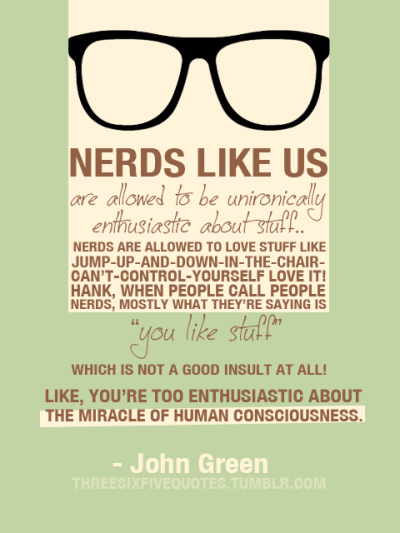
    Today, after making a trek to Harvard's library privileges office in the middle of the first heat wave of the summer to apply for spousal library privileges (what could be nerdier than that?) I finally made the time to watch Wil Wheaton's message to a baby nerd, which Hanna sent to me several weeks ago via the Mary Sue.

    I thought it was appropriate to share as my 1100th post here at the feminist librarian.


    Stay cool, everyone, and spend some time this weekend loving your favorite things as hard as you can.

    2013-05-06

    guest post @ first the egg: swallows and amazons!

    My friend Molly is running a delightful series of guest posts from her friends about their favorite books from childhood. The first part of my contribution (because I never did learn to keep it snappy) went up today:
    When I told my mother about this blogging assignment, she pointed out that of all the noteworthy books from a seriously bibliophilic childhood, there was really only one book (or, rather, series of books) that I could choose: the Swallows and Amazons novels by eccentric Englishman Arthur Ransome. ...

    ...While some later novels — particularly Pigeon Post and Great Northern? – take on more serious “adult” concerns such as the danger of drought and the importance of protecting endangered species, the stories remain child-centered and full of imaginative adventure. My only caution for parents would be that they are, as with all works of fiction, a product of their time — in this case early twentieth-century imperial Britain. The children imagine themselves as British adventurers in a world for of friendly and unfriendly “natives” (the adults), and like all children sometimes reflect the prejudices of their elders. Much like the presence of Native Americans in Laura Ingalls Wilders’ Little House books or the misogyny with which Susan Pevensie is treated in The Chronicles of Narnia, the problems with race (and to a lesser extent gender) in Ransome’s work can hopefully be treated with light parental skepticism that encourages critical thinking rather than serving as cause to dismiss the series overall. As a child for whom Swallows and Amazons fuelled literally years worth of imaginative outdoor play, I can’t but hope future generations will find as much pleasure in them as I have.
    Check out the whole post (and the rest of the series!) over at Molly's blog, first the egg.

    2013-03-03

    admin note: comments & spam

    Hi all,

    I've been getting hit increasingly with spam comments lately that aren't being caught in Blogger's spam filter. This may be a sign I need to migrate the blog to Wordpress, but I'm not quite ready for the work that would entail, so ... I've turned the captcha word verification function back on for commenting, to see if this helps clear up the problem. If you are having trouble verifying you comment, please email me feministlibrarian [at] gmail [dot] com to let me know it is an issue. And include the comment if you want me to post it for you.

    Thanks for your patience!

    Anna

    2013-02-26

    so, that happened [a new guest blogging gig]

    Ah, the strange and wondrous things that happen when you go traipsing around The Internet.

    As you know, I've been hanging around the comment threads at Family Scholars Blog for awhile now. In part because I'm interested in how the other half lives thinks.  In part because I like to argue.

    And in part because, in the very selfish, immature corner of my brain-heart-body it irks me that there are people out there who really think that I'm "depraved on account I'm deprived" (or some variation thereof). I'm fascinated and appalled that people feel so threatened by my existence as a (gay) married, sexually-active bisexual that they try to pass laws to erase my (gay) married existence, and -- when that fails -- simply say that my marriage isn't real.

    It's fascinating, as I say, and appalling.

    And not a little frightening. To know that my life excites such fear, angst, anger, and loathing.

    I like to keep all that in sight, watchfully.

    Well, then a couple of weeks ago they invited me to blog with them, as a regular guest blogger. 

    And my first reaction was absolutely not, no. But I said I'd think about the offer. Talk to some people. Sleep on it.

    What could I possibly bring to that site, as a guest blogger, that I wasn't already bringing in comments? And, more importantly, why did they want me? I admitted to myself fears that I might simply be being recruited as a Poster Lesbian: "See? She plays well with others!" they might say, and when accused of anti-gay bias the group could point to my guest blogger bio: "See?! We even have a Queer Feminist Gay-Married Bisexual writing for us!"

    Wouldn't I be risking, on some level, being their Queer Cover? The sexual-identity equivalent of the Black Friend?

    But then I started to think about what I might be able to offer in such a space, to those who were truly open to listening (and, yes, though I complain about those who revile and erase me more, the more contemplative conservatives exist).

    And this is what I thought. That much of the conversation about queerness, feminism, and other lefty-liberal modes of being at the Family Scholars Blog (FSB) takes place without reference to -- let alone centering of -- actual queer / feminist / lefty-liberal voices or experiences. Even when those voices are referenced, it's generally in the form of a sound bite we're all supposed to know is ridiculous or wrong-headed ("pfft, look at those hysterical feminists with their foolish notions about gender equality -- what do they know").

    Well, I'd like to talk about what it is we do know, and what life looks like from where we stand.

    So I've accepted the FSB offer, and I'm going to start a monthly series there (cross-posted here), "The Feminist Librarian's Bookshelf," with 3-to-5 titles per post as suggested reading on a theme ("gender and neuroscience," "teenagers and sexuality," "queer families"). My hope is that I can offer a glimpse into the literature that informs those of us who take a quite different view than many, if not most, at the FSB, with regards to family life. I'm not particularly aiming to convert, although obviously it would be nice if some of my favorite authors resonated with readers here and there. My goal is to encourage people to "walk a mile in someone else's shoes," and think about what it might be like if you were to look at the world through the eyes of a lefty lesbian teenage, a liberal Latina mama, a feminist trans* woman, an asexual anarchist, a socialist living in poverty, or hippie home-educators.

    There's talk over at the FSB about civility of discourse, about meeting people halfway and compromising, about being willing to doubt (one's own truths) and being open to having one's mind changed.

    I'm not sure how I feel about these values. I sometimes feel there is a type of privilege at work here, in which  unexamined certitude is disproportionately a problem of those whose worldviews and values are reflected back at them from mainstream culture. Those on the margins not only have the value of self-doubt shoved in their faces 24/7, they must learn to see the world through the eyes of the privileged and powerful in order to survive. Indeed: part of my fascination with the religious right comes from growing up a liberal-progressive (dare I say radical!) minority within a conservative Christian culture. I had to learn how Christian conservatives understood the world in order to survive. They didn't have to learn anything about me, if they didn't care to.

    So I'll be walking a mindful line over there, at FSB, between recognizing the true values of civil conversation, of lovingkindness and compassion, of being open to new experiences and viewpoints, of being open to the change those experiences and viewpoints will wreak within me -- and at the same time holding my own, in part by example demonstrating that it is possible for a diversity of individuals with very different lives to co-exist in a democracy without the world imploding. We don't all have to be alike, and that's okay. We don't all have to fear others who are different from us and/or those who choose a different way of life. Their different choices don't, for the most part, constrain our own freedom of choice unduly.

    You can read my self-introduction over a FSB and I'll be cross-posting Thursday's bookshelf post (five novels that influenced my adolescent perspective on love and romance) here.

    2013-01-15

    'after pornified' book giveaway! [free stuff]

    My friend Anne Sabo has given me three signed copies of her recent book, After Pornified: How Women are Transforming Pornography and Why it Really Matters (see my review here). And I would love to pass them along to you!

    The only requirement is that you read and review the book by March 1st, post the review to Amazon.com and whatever other blogging or book-themed social networking site (GoodReads, LibraryThing, etc.) you choose and send the link to me.

    Psyched to start reading? Leave a comment by midnight this coming Friday (so 12:00am 1/19/2013) on this post including an email where I can reach you and sharing, via link or description, one of your favorite pieces of erotica (can be any medium). I'll be taking all eligible entrants and randomly selecting three via the slip-of-paper-in-a-bowl method.

    On Tuesday, January 22nd, I'll contact the three winners by email for a mailing address and send out the books via first class mail.

    Let the commenting begin!

    2013-01-10

    why do I write (and read) fan fiction? [part one]

    (via)
    This topic has been kicking around in the back of my mind for awhile, in nebulous form, and then in the past couple of weeks I've (coincidentally?) found myself engaged in discussing theories of fan fiction and erotica writing with several friends via email, as well as the wonderful women of my #firstthedraft writing group. With encouragement from #ftd, here are my thoughts in blog post form.

    I actually think the question why I write erotic fan fiction has several layers, and I'm going to unpack them successively: why fan fiction, why erotic fan fiction, and why the specific fandoms and pairings that I've chosen write. I also want to emphasize, because this is the sort of thing -- both in terms of fandom and in terms of porn/erotica -- about which people have Big and Important Feelings, that I am speaking very much for myself here. This is a post (or, rather, a series of posts) about why I write the erotic fan fiction I write. I am not attempting to synthesize the phenomenon writ large or pass judgement about what are the Correct and Right ways to approach the activity. I'm only trying to respond to the question people have asked me in various ways: Why do you do this thing you do? What do you find enjoyable about it? Is there anything you find troubling about the practice?

    For all of you who have asked those questions, I'd love to continue the conversation in comments -- so please do participate if you feel so moved!

    Note: It will be unsurprising to most of you that my thoughts are lengthy. So I'm breaking this post into three sections, the first of which is below. Parts two and three will be forthcoming and will be linked from this post as they go live.

    Why write fan fiction?

    So I've only been consciously participating in online fan spaces and reading/writing fan fiction identified as such for about five years. However, retroactively I would argue that my present practice of fan fictionalizing is only the most recent manifestation of the way I have always, since early childhood, interacted with fictional narratives. Some of my earliest memories are from around the age of five or six spinning out stories about my favorite fictional characters -- at that time stories like Little House in the Big Woods and The Lion, the Witch, and the Wardrobe. My childhood psycho-temporal spaces felt ... porous. My parents never judged us in our childhood practices blurring that line in our imaginative play. (This seems important, because I did know families where the children were schooled early and often on what was and was not "real" and judged harshly for flights of fancy.)

    So I had an active imaginative (and often, with friends and siblings, collaboratively imaginative) inner life growing up. I put myself to sleep telling stories about "what happened after..." the end of my favorite books or series; my favorite characters became imaginary playmates; and in adolescence the nearest and dearest of those characters were part of my coming-of-age in intimate ways. They became active participants (as much as fictional characters can be) in my exploration of sexuality and relationships. I not only rehearsed the good and the bad (and the smutty) that actually appeared in the books that I read ... but I spun out elaborate stories incorporating my nearest and dearest (fictional) friends, and myself, building relational networks, families, and developing (hypothetical) sexual intimacies in various ways. In retrospect, I think this alternate universe I inhabited in my head helped me process a lot of the new information I was taking in -- physical changes, emotional upheavals, learnings about what it meant to be an adult in a variety of ways -- without feeling overwhelmed.

    Without boring you to tears giving the world-building details, the space I created was one where I could literally move back and forth from childhood and adulthood, exploring the confines and capabilities of each mode of being. Imaginatively living an adult life elsewhere helped me approach my teenage years as if I had the confidence and experience of an adult.

    In addition to being useful psychically and emotionally for me, I think the spinning out of private fan-fiction-like scenarios fed my insatiable desire to know more: to know about character motivation, to know what happened next, to know what the characters were thinking and feeling about events that took place, to know what might happen if event X or conversation Y took place. There's a great passage in one of E. Nesbit's Treasure Seekers books where the narrator informs the reader that lots of everyday things have happened (like eating and sleeping and going to the toilet) that he hasn't bothered to write down because those are all the boring bits that everyone does but no one wants to read about. Fiction necessarily revises for a tighter narrative, and things get left out. As a reader, I wanted them back in -- so I put them there, and molded them to my own particular specifications.

    In those years, I encountered both professional and amateur fan works (from my mother's little stories about the Pevensie children that she penned for us at Christmastime to fan art to the Star Wars sequel novels to Neil Gaiman's "The Problem of Susan") but I wasn't actively participating in fan communities. I had friends who did (for example, a friend who was active in an online forum for writing stories inspired by Anne McCaffrey's Pern novels) but didn't hear a lot that drew me into active involvement. There was lots of interpersonal drama and litigation fears and, hey, I was already writing/imagining on my own so why bother with the added complication of other fans with their own vision and agenda?

    But I got my fan community "reboot" (so to speak) when I met Hanna and she re-introduced me to the activities and pleasures of being a fan -- and this time, being a fan as part of a wider network of fans enjoying the same work(s) of whatever medium. Obviously the Internet had come along in the meantime, and as I was already involved in the feminist blogosphere I had some sense of how online communities work and what their pleasures and pitfalls are. Over time, the language of fandom bled into the language of feminism and became part of my social experience, as feminism had, both on- and offline.

    These days, I really enjoy the positive energy of the fan circles in which I run. I enjoy that fans feel license to take joyful pleasure in things and create works inspired by those things. I enjoy the way those creations are shared freely and embraced by the fellow creator-consumer audience. I enjoy the practices of "gifting" works and creating "inspired by" pieces which complement one another or build off another fan's work. I like how the currency of fandom is mutual appreciation and celebration of amateur creation. (And simultaneously I'm much better able than I was as a teenager to ignore or minimize the drama and intensity which can overtake online communities of any kind. I've learned, in other words, when to close the internet browser and walk away!)

    So I write fan fiction because I always have, and now know that this practice has a name! I write fan fiction because I'm always hungry to know more, and to make the fictional characters I love known to me in ways that go beyond the bounds of a single novel or series or television show or film. And I enjoy participating in such a positive, creative space that is outside of the economies of wage-work. I purposefully decided not to pursue a career as a writer in part because I wanted writing to be something that I could always come to voluntarily, without worrying whether or not I could pay rent. (I don't think this is a better or purer way to approach writing than writing as a job -- more power to those who do! It just wasn't for me, and I appreciate that I can continue to write and find readers in this playful alternative space.)

    Click here for part two: "Why write erotic fan fiction?"

    2012-12-22

    in praise of pen-friends [a year-end post]

    As the year 2012 draws to a close, I've found myself thinking about the value of my long-distance friendships.

    Such relationships have been a fixture of my life, beginning when I initiated my first "pen pal" correspondence at the age of three.* This was in 1984 and while computers were a thing in the world, Internet access for the commonfolk was not. (Actual paper and writing implements were used, and my personal papers will hopefully make some future historians weep with joy in that several major life relationships are documented almost entirely in analog.)

    (via)
    This year has seen the deepening of some long-distance relationships I've developed through blogging, and the initiation of a few more, and thus I'm prompted to once again give thanks for these friends with whom I experience mutual support and intellectual stimulation -- despite the fact that we rarely (in some cases have never yet) meet face to face.

    I'm a person with limited in-person social energy -- at the end of the workday I generally want to come home to my wife and my two cats and curl up on the couch with a book, a cup of hot cocoa, my laptop, my handwork, whatever, and just be.

    We get home around six and retire to bed around nine. Weekends are for chores, recuperation and for being together as a family. There's not a lot of time for social activity in our lives right now -- it was a major achievement this fall that we managed to see two of our friends on Thanksgiving, and finally have breakfast with a friend and mentor with which we'd been trying to schedule a date for three months.

    But conversation doesn't take it out of me the way getting together in person does. So email conversations are a brilliant way for me to bridge the gap between my limited energy for social interactions and my boundless energy for relational connection, for intellectual and emotional engagement and sustenance.

    Sometimes, these relationships have been long-distance by necessity: I was politically and culturally isolated in my conservative hometown and finding kindred spirits genuinely took a lot of patience and a search without geographical boundaries. Yes, I had (still have) a handful of friends who happened to live in geographical proximity -- but that was the exception rather than the rule.

    And while we generally privilege those next-door-neighbor relationships in our culture over long-distance/virtual ones, I've often found those long-distance connections just as (and at times more) meaningful than the "people in my neighborhood" ones.

    So thank you, Elise and Joseph and Molly and Anne and Stephanie and Fannie for your willingness to put energy into creating and sustaining a friendship with me across the miles and time zones. It takes mindfulness to be present with a person when they are not there before you in your day-to-day life of hectic, well, living, and I'm grateful that all of you have, over the years, been willing to commit to connecting with me.

    I look forward to years of friendship to come.

    *to be fair, at three years old my fellow correspondent and I mostly exchanged drawings and dictated random text to our parents to forward on. But that relationship developed into a sustaining friendship that lasted well into my teens, and we remain in occasional contact today.

    2012-11-28

    cartoon of the week: co-sleeping with cats [harder than you'd think!]

    It's been one of those weeks, and you probably won't see an actual post from me until next Tuesday (hopefully some book reviews!). In part because our cats have decided to be extra specially nocturnal these past few nights. Like this!  
    (via cheezburger.com)

    2012-09-29

    me --> writing elsewhere: looking back / looking forward edition

    On the shore (Falmouth, Mass.)
    Even though I took much of August and September off from regularly-scheduled blogging, I haven't done one of these posts since early summer so there's quite a bit accumulated on the interwebs to direct your attention to.

    at the corner of your eye I put up the following reviews:
    guest posts at In Our Words include:
    at The Pursuit of Harpyness I contributed:
    and a few Tumblr-length thoughts over at the feminist librarian reads:
    Just today, I put up a farewell post at Harpyness; after nearly two years of blogging at what Hanna refers to as "the orange blog" I've decided it's time to move on. In part, the break I took from blogging in the run-up to our marriage helped me see how over-extended I've become on the interwebs. I'd like to re-dedicate myself to this space (the feminist librarian) in the months to come, as well as focusing more systematically on longer-term writing projects. 

    In the immediate future, I'll be sharing more stuff about our wedding and book reviews as I am able; my new responsibilities at work are making for a hectic season and I find that I get home in the evenings with less writing energy than usual. I don't expect this to last, but please bear with me while it does -- I love meeting you in this space, and promise I will be here in the years to come. 

    Incidentally, this is my 1000th post at annajcook.blogspot.com (which began life in 2007 as "The Future Feminist Librarian-Activist" in the spring before I embarked to graduate school in Boston. 

    2012-08-14

    blogging at In Our Words: we can give them words: clearing space for children to explore gender and sexuality

    I wrote another post for In Our Words this week on how parents (and allies) can support children in their gender independence and sexual fluidity (I'm not sure why the editors lopped "sexuality" off the title I supplied).
    To begin with, don’t conflate gender expression with sexual preference. Our culture does this constantly, whether in the assumption that princess boys will grow up to be gay or that women who are butch sleep exclusively with lipstick lesbians. Some of those boys will no doubt grow up with same-sex desires, and some women who refuse to wear skirts are queer. One does not lead to the other. While grown-up queers often retroactively identify nascent gayness in childhood gender rebellion (“I was never good at sports”; “I hated playing with dolls”) and the gender police often conflate gender non-conformity with queer sexuality, they’re two different aspects of identity and experience. Children negotiate gender roles from the moment of birth, when they’re assigned a gender and adults interact with them accordingly (see Fine and Rivers & Barnett in the reading list below).

    Children are also sexual beings, it’s true, but sexuality in the adult sense is something we grow into. It’s a process. And presuming adult sexual preferences for a child — whether it’s teasing them about a playground “boyfriend” or assuming their gender non-conformity will lead to same-sex desire — is unfairly boxing them into predetermined categories. We cannot know what the gender and sexuality landscape will look like as they grow into adulthood, and we cannot know what words they will choose to describe themselves. All we can do is give them a multitude of words from which to choose.
    You can check out the whole piece -- including my "suggested reading" list (I'm a librarian after all!) over at In Our Words.

    2012-08-01

    the dog days of summer [august-september siesta]

    It's August 1st (can you believe it?)

    And I've decided it's time to give myself a quasi-vacation from the 'net.

    Teazle napping with Hanna
    Given that I'm online for eight hours daily at work, total blackout isn't really a possibility -- or something I feel is necessary. But I've been feeling pulled in a lot of different directions blogging lately, and I'd like to take some time to reflect on where I want to put my writing energy.

    (Rest assured the feminist librarian is my home on the interwebs, and will not be going anywhere anytime soon!)

    So this is all to say that -- while I'm not going to quit blogging entirely -- from now until after our honeymoon in mid-September I'll be giving myself permission to post more sporadically than usual (when and how, exactly, did I get to the point of generating 5-10 posts per week, across half a dozen blogs?!).

    I'm planning to use the offline time to read, write, nap, and enjoy non-work downtime with the future wife and kitten-kids.

    Hope y'all are staying cool(ish) and we'll see ya 'round these parts when time and inclination indicate this is where I'd like to be.

    2012-07-10

    blogging at In Our Words: to be and to have (a wife)

    lesbianweddings.tumblr.com
    This week I have a guest post up at In Our Words on why I wanted to get gay-married:
    I've learned that being public about our relationship matters to me. That naming has power. I relish naming her my girlfriend my partner my future wife in conversation with others. I want (need?) everyone to know we are a social unit, and exactly what kind of unit we are.

    It matters to me that bystanders be in no doubt that we are in each other’s pants on a regular basis, thank you very much, and they will just have to deal. Because the public sphere is mine as much as theirs, and I’m not backing down from making promises to be and to have before witnesses. By just being who we are, building a life together, we change the meaning of marriage – I believe for the better. And that's an act to be proud of.

    So as a queer feminist and historian, I see marrying my fianceé as both an intensely personal act of commitment and also a deeply political act: inventing the future we're hoping for. Becoming Future Wife's Wife is a material statement that we have the right to act on our desires, to form families that work for us, and to name our relationships with the rich weight of history behind us, if that language feels right to us.
    You can read the whole thing over at IOW. It was a surprisingly difficult piece to keep on focus with, and I'm still not entirely satisfied with the end result -- but I learned some stuff about how I think and feel writing it, which is always the ultimate goal! That, and encouraging others to reflect as well. So I hope folks find it a thought-provoking read.

    2012-06-16

    me --> writing elsewhere: summertime living edition

    view from my pillow, sunday afternoon
    It's time for the semi-regular round-up of posts written elsewhere. As a reminder, I'm now linking all blog posts, regardless of host site, at my public twitter account: @feministlib. So for those who use Twitter, it'll get you day-of updates from here and elsewhere. I realize Twitter isn't to everyone's taste, though, so I'll keep providing these link lists intermittently for those who care.

    Over at the corner of your eye I reviewed:
    We're also still posting three fan fic recs per week over at everything is gay and nothing hurts, for those who need a regular injection of slashy goodness.

    And at The Pursuit of Harpyness:

    And as I already highlighted, I participated in The Last Name Project back in May, writing about the way Hanna and I chose to combine our middle names in marriage. In July, I'll be contributing further wedding-themed posts to the "queer salon" In Our Words, which has already cross-posted my outline of our minimalist wedding plans.

    I continue to feel that the feminist librarian is my true Internet home -- and I thank you all for stopping by to visit me here! I'm glad you find it an hospitable space.