~oOo~
Showing posts with label moral panic. Show all posts

2013-03-14

booknotes: the end of sex

It's always slightly embarrassing to admit you've requested an advance review copy of a book mostly to make fun of it and/or get angry at it -- even more so when the book in question actually turns out to be much better than you suspected it was going to be at first glance. Sometimes you really can't judge a book by its cover. Or, in this case, its title.

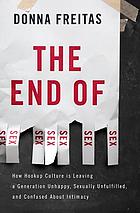
The book in question, this time, was Donna Freitas' The End of Sex: How Hookup Culture is Leaving a Generation Unhappy, Sexually Unfulfilled, and Confused About Intimacy (Basic Books, 2013). Oh, god, no, I thought. Another hand-wringing book about how Kids These Days Are Doing It Wrong. Another book blaming feminism or men or pornography or youth or [insert favorite moral panic here]. Another book where an adult spends an inordinate amount of time focused on the sex lives of teenagers: how much they're having sex, how they're having it, with whom they're having it, and how they are (or should) feel about it when they do.

Yet I was pleasantly surprised. Donna Freitas is a skillful critic who manages to avoid many of the standard pitfalls of such journalistic studies. A professor of religion and gender studies, who also has a background in student life, Freitas' previous work, Sex and the Soul (2008), examined the role of religion and spirituality in adolescent sexual decision-making. This new work centers the voices of undergraduates themselves, letting them describe in their own words how they navigate the sexual culture(s) of residential college life. Although Freitas does not discuss her research methods in detail, it sounds from the text itself that she collected written surveys, conducted face-to-face individual interviews, and asked study participants to keep a written journal documenting their reflections about sexuality and selfhood. These primary sources inform Freitas' narrative throughout and serve to make her argument stronger -- though not unassailable. I'll get to my outstanding questions and irritations below, but first let's talk about what I appreciated about The End of Sex:
  • An insistence on both female and male voices. Too often, books and articles on so-called "hook up culture" (i.e. Sessions Stepp's Unhooked) focus on women almost exclusively. They take for granted that the hook up is a situation designed by and for men (who, our narrative of masculinity goes, are always ready for no-strings-attached sexual encounters) while women are losing out. Freitas actually admits that this was a narrative she herself bought into before she began her research. But in listening to actual young men, she discovered what sociologists like Amy Schalet have pointed out to us: that young men, like young women, yearn for emotional connection and meaningful sex. Yet they have learned to bury those desires under the shell of masculine bravado.
  • Calling out the gender binary. Freitas does a good job of pointing out how the cultural expectations around male and female sexuality constrain students' ability to act on their authentic desires. Men, straight and gay, feel pressured to want sex all the time and bury their emotional-relational desires deep; to the extent they acknowledge those feelings, they're likely to feel isolated without anyone to discuss them with (because all the other men around them are similarly self-protective and silent on the subject). Women, meanwhile, are walking the tightrope of that old no-win situation, the virgin/slut double bind. They're expected to be willing (but not too willing); sexually " pure" (but not too pure). Much like the high school "slut" -- who may or may not have ever had sex -- female college students struggle to manage their reputations in a world where too much and too little are equally derided.
  • Listening to students thoughtfully, and encouraging sexual agency. Too often, books on young peoples' sexual habits end up caught in a rescue narrative, calling on us to "save the children (from themselves)." Otherwise known as concern trolling. Freitas resists condescension, writing with confidence in young peoples' ability to change hook up culture from within into something that better suits their needs. Freitas also tries, with middling success, to resist a one-size-fits-all solution to young peoples' dissatisfaction with hook up culture. While I think she could have gone further with this, that she acknowledged difference at all (including the fact that some students might thrive on casual sexual interactions) deserves a nod.
  • Distinguishing between the cultural narrative and personal reality. She points out that her study participants consistently report that "everyone else" is engaging in casual sex, while they themselves are dissatisfied with the scene and are seeking alternatives. Freitas could have interrogated this dissonance a little more closely, but, again, points for acknowledging that not all (or even most?) students are throwing themselves into a life of no-strings-attached sexual experimentation.
  • Human sexual variety. Unlike many of the writers who have looked critically at the practice of hooking up, Freitas intentionally brings queer students and queer relationships into the picture. One of the students she profiles at length -- as someone who successfully resisted engaging in sexual activities he didn't feel ready for or comfortable with -- is a young gay man now happily in a serious, sexually-active relationship. She also notes the way young people report moving in and out of the hook up scene, rather than imagining once they've fallen off the deep end there's no going back.
  • Encourages us to help young people learn good sex. And by "good sex" she doesn't mean "sex only within marriage" or simply "safer sex" practices -- but sexual intimacy that is wanted and enjoyable. Too many of the students Freitas spoke with seemed to feel caught in a cycle of sexual behavior they hadn't actively chosen to engage in, yet didn't feel able to say no to. The landscape of sex appears, in their view, to be one of "on" or "off," where once you've said yes one time you might as well keep saying yes again and again -- whether you really desire to or not. If this is an accurate depiction, it's heartbreaking -- and points toward the need sexuality relationship education that refuses to reduce the message to "abstinence only," or public health messages about STI prevention.
  • The problem of alcohol replacing communication. While I question the extent to which all students everywhere depend on alcohol to grease the sexual relationship wheels, where it does happen, I agree with Freitas that it's a worrying trend. Not only for the usual alcohol-consumption reasons but also because it isn't serving users' sexual pleasure and sexual agency well. Students report using the "I was trashed" and/or "my partner was trashed" line to explain away all manner of sexual activities in which consent was dubious at best, and mutual pleasure a distant ideal rather than a lived reality. 
So those are the good parts: This is a thoughtful, evidence-based study that centers the voices of the population Freitas is studying (male and female students of all orientations in four-year residential colleges). It resists gender stereotyping and heterocentrism. It also, for the most part, resists reactionary solutions such as calling on students to "wait until marriage," or suggesting a (female) "return to modesty." Instead, Freitas encourages educators and adult mentors to give students the cognitive and emotional tools to critically engage with their own sexual cultures, evaluate their sexual values, resist sexual activities that make them unhappy, and create sexual relationships (whether fleeting or long-term) that will bring them physical and emotional pleasure and satisfaction. There is little in this agenda that I would argue with.

Still, there are some outstanding questions I have about the way Freitas frames the problem of hook up sex and some of the solutions she has offered. In brief:
  • Blaming the usual suspects. In trying to identify where "hook up culture" comes from, Freitas relies in part on a number of usual suspects: pornography (for teaching poor sexual scripts), online social networking (for supposedly robbing young people of interpersonal skills), the pervasive use of alcohol by college students (see above), and the changing "rules" of relationship formation (without a "dating" template, and without clear gender roles, how and when to make the first move?). I find all of these unsatisfying in their explanatory power, though I'd agree that some of them are concerning in their own right. 
  • If hook up culture is a story about other students, how many young people are actually participating? I was confused by the fact that Freitas repeatedly pointed toward the way the majority of her interviewees were unhappy with the dominant campus cultural narrative of hook up sex, yet a) pointed toward everyone but themselves engaging in it, and b) even when they did report participating it, were doing so to a limited and unhappy extent. I kept wondering: if hooking-up-as-a-way-of-life is always something that someone else does, how much of a reality is it, really? To what extent is it a story we tell ourselves about college culture because we fear/envy college students and -- since at least the turn of the twentieth century -- have continually imagined their lives were sexually hedonistic? If students themselves have inherited this cultural narrative of college promiscuity -- and thus imagine everyone around them is leading a much more sexually wild life than they are themselves -- that's definitely a cause for concern. But not equivalent to students actually engaging in said behaviors.
  • If students are so unhappy, why don't they get off the merry-go-round? I admit my blind spot here: I attended college between 1998-2005 as a part-time undergraduate who only spent three semesters in on-campus housing (when studying on, paradoxically, off-campus programs). I was never steeped in student culture, generally interacting with peers in class and limited extracurricular activities. So perhaps I had greater social independence than most undergraduates to pick and choose the aspects of college culture to engage in. Living in my hometown, I still had the social networks of long-term friendships, extended family, church, and workplace to fall back on when it came to "opting out" of aspects of student culture I didn't like -- whether it was opting out of conservative evangelical chapel services or drink-fueled parties! Still, if students are truly expressing unhappiness with the college scene in such great numbers as Freitas suggests, why oh why are they not revising it? Students are, after all, the primary creators and perpetuators of student culture. 
  • The "her hands caressed" problem. I was having a conversation with a couple of fellow erotica writers recently in which we were joking about the problem of limbs with volition. You're proofing a piece and you realize you've got someone's hands or lips acting independently of the person who, in fact, controls the action. I felt like Freitas often fell into this trap with regards to hook up culture, writing about it as of this culture were an entity with independent agency. Cultural discourses, it is true, can exert powerful pressure on individuals and populations ... but, usually, they only exist because someone benefits, or thinks they benefit, from maintaining that particular cultural narrative. The discourse of gender difference, for example, has vocal proponents who believe that men and women are essentially different. They have something at stake (religiously, relationally, or otherwise) in a vision of gender difference. Who are the defenders of hook up culture? By Freitas' account, not the students themselves! And school administrators, faculty, and parents seem shocked by accounts of its existence. So what accounts for the rise of "the hook up" as something which young people feel they must engage in or at least contend with? This question went unanswered in The End of Sex.
  • What about young people not living in dorms on four-year residential college campuses? This is not really a criticism, since any research investigation has its limitations, but I found myself wondering throughout this discussion of hook up culture how generalizable it might be. I pointed out above that my own non-residential status as an undergraduate insulated me somewhat from campus culture. Surely this is true for others as well. Is the hegemony of hook up culture, as reported by Freitas' subjects, isolated to certain types of undergraduate campuses? (She acknowledges, for example, that it is not so present on evangelical Christian colleges.) What is it like at community colleges? In trade schools? Art schools? Not in college at all? Are there certain populations within large campuses more immune or resistant to hook up culture than others? (i.e. commuter students, international students, students involved in sports? drama? politically engaged? religious students? students who have previously experienced a serious relationship?) I feel like the differences among students is often lost in Freitas' narrative, subsumed under her urgent sense that all students experience the relentless pressure of hook up culture's (disembodied) demands.
  • She blames (in part) technology for young peoples' bewilderment about how to get to know potential romantic partners outside of drunken make-out session. I feel this is a simplistic cop-out. I am, admittedly, biased: my wife and I were introduced via email and spent a lot of our get-to-know-you time via chat and email. We both hate the telephone; for the six months before we moved in together (initially as roommates), I would get up extra early on workdays to catch her online before she had to leave for work; I did my homework after she went to bed, so we could talk online until she shut her computer down for the night. All of this internet connectivity supplemented and facilitated the things we did together in person: walks, movies, lunch at the campus cafeteria, sitting next to one another in class, theater and concerts, shopping excursions. In non-romantic life, I have sustained key relationships, from childhood through into adulthood, by "virtual" means: through postal correspondence, email, blogging, and other social networking tools. Thus, it is difficult for me to take seriously the argument that virtual communication somehow impedes... communication.
  • Why is "dating" the main solution offered to the problems of "hooking up"? Toward the end of The End of Sex, Freitas suggests that students might benefit from relationship education (yes! I agree!) and points toward a professor at Boston College (a Catholic university) who teaches a popular 1-credit class on relationships in which one required assignment for all students (regardless of gender and sexual orientation) is to take a romantic interest out on a date during the semester. The date assignment was, according to the professor, a terrifying and bewildering one for her students -- although they also expressed appreciation that they were forced outside their comfort zone in order to pass the class. Freitas' suggestion is that the structure of the date, however terrifying it is to initiate, provides a safe framework for getting to know a potential sexual partner without being wasted and without the pressure for instant sexual contact. I appreciate her point, but I also wonder why she overlooks the fact that more informal friendships can evolve into sexual relationships in healthy ways -- and the more problematic aspects of dating culture that we don't necessarily want to resuscitate? When I ran a draft of this blog post by my writing group, several members recoiled at the date assignment, not only because it felt intrusive to them, but also because their experience with dating wasn't so hot either. As one member observed, "My son just graduated a small residential college where going on a date was extremely normative. This not only did not stop hooking-up and/or drunken sex, it also didn't seem to improve relationships. It also really strengthened rather restrictive gender norms (who asked who, who paid, etc)." Another concurred, pointing out that her "dating" relationships had suffered from many of the same problems as more casual encounters. Perhaps, we mused together, the problem is not the hook up, per se, but rather misogyny?
  • What about "hanging out"? My wife and I were friends and roommates first, an intense relationship that evolved into courtship over a two-year period, and eventually into a sexually-active, committed partnership. We never formally "dated," yet we weren't hooking up either. Instead, we were good friends who eventually acted on the sexual possibility we both felt in our relationship. A third member of my writing group suggested that between "the date" and "the hook up" there's this thing called "hanging out" -- where you connect in the student lounge over pizza and a Walking Dead marathon and discover you fit together really well, in more ways than one.  "Hanging out," at least in my experience, also carries a lot less baggage in terms of gender-based expectations for behavior. In my informal friend survey, "hanging out" seems to be an option for straight as well as queer couples, so I wonder why it's invisible in Freitas' narrative. Particularly when it has the potential to offer the best of both worlds: getting-to-know-you time without excessive alcohol or the pressure for immediate sexual activity.
In the end, Freitas' The End of Sex is an addition to the literature on hook up culture that is better than many, despite its limitations. I devoutly hope it signals the beginning of a (dare I hope?) sea-change in the way we talk about relationship culture in the twenty-first century. As I finished this review, Tracy Clark-Flory of Salon.com offered up a lengthy interview with author Leslie Bell, who has recently published (yet another!) book on hook up culture, Hard to Get: Twenty-Something Women and the Paradox of Sexual Freedom. Clark-Flory enthuses that Hard to Get is "a nuanced look at hook up culture" that refuses to either downplay its pitfalls or deny its pleasures. That one's on order at my local public library, and I'm looking forward to reading (and reviewing) it soon.

cross-posted at the family scholars blog.

2013-02-07

comment post: unfinished thoughts on non-consensual sexualization

Regular readers of this blog may remember that over the past year or so I've been haunting the conservative Family Scholars Blog hosted by the Institute for American Values (IAV) think tank founded by David Blankenhorn, sometime high-profile opponent of same-sex marriage. In part, I follow the blog because my smart and funny friend Fannie is one of their guest bloggers. I am also deeply interested in the worldview of people whose understanding of how the world works, and what values will increase the well-being of humanity, are so different from my own.

Last week, I found myself sucked into a comment thread at the FSB wrestling with the subject of what I'll call "non-consensual sexualization." My working definition of non-consensual sexualization is public expressions which frame another person's appearance, presence, or actions in a sexual light without their participation or consent. You might also call this plain old "sexual objectification." I'm using my phrase here because I think it's important to highlight the non-consensual part of what's going on here.

(because I won't post naked pictures of myself online*,
have this lovely view from Montague Book Mill instead)
I've been thinking about non-consensual sexualization a lot recently due to feminist discussions of the internet phenomenon of revenge porn and also because of the question I got on Twitter about the ethics of real-person fan fiction (RPF), particularly RPF that is sexually-explicit (see my extended response at the end of this post). Both of these situations -- revenge porn and RPF -- involve taking people the creators know in real life (either in person or through media of some sort) and sexualizing those individuals. With revenge porn the intent is malicious and generally misogynist: to humiliate the subject by way of sexually-explicit images or sexually-explicit chatter. With RPF the intent is usually enthusiastic on the part of the creator: they're engaged in the act of fantasizing about the individuals (usually celebrities of some sort or another) engaged in generally positive sexual situations and relationships.

At the level of private thoughts, sexualization of others is something that many of us engage in every day when we take note of another person's gorgeous hands or sexy ass. When we enjoy the chemistry between actors in a television show, or admire the outfit of a passerby on the street. When we harbor a crush on our political science professor in college or wake up from a really hot dream about this kid we sat behind in first period English (or watched shyly across the room in Sunday school). I think of sexualization as the mental-emotional process of considering another individual in a sexual light. This can be actively desiring (if we imagine that person as someone we'd like to be sexually intimate with) or passively admiring (if they're either out of reach -- your favorite actress --or not someone you'd actually want to have a sexual relationship with, say someone not the gender of person you are oriented toward). This type of sexualization seems, to me, no-one elses' business. Our own interiority is a private sandbox for self- and world-exploration, the ultimate safe space.

However. Once we make private thoughts public, social responsibility comes into play. Which is where the FSB comment thread re-enters the discussion. Barry, the author of the original post, recounted an incident in which a (male) classmate at a swimming class commented to Barry in an aside on the (female) instructor's body as it appeared in a swimsuit. Barry was uncomfortable about the comment and later mentioned his discomfort to his classmate, who apologized for his remark. The point of Barry's original post was that speaking up about a comment you find troubling can sometimes be less dramatic than you fear.

Many women, myself included, thanked Barry for speaking up in this instance and holding another man accountable for the way he was sexualizing the female instructor of the class without her consent, creating a situation where the man's classmates (and potentially the instructor, if she had heard) would feel uncomfortable.

Yet several frequent (male) FSB commenters insisted that Barry -- and by extension those of us supporting him -- were basically taking all the fun out of (hetero)sexual flirtation and OMG thought police!! For example, Kevin offered:
Barry’s heart, as always, is in the right place: a public place, safe and welcoming for anyone who wants to be a part of it. And having the courage to object to someone’s unseemly behavior. But this sexy gal is also in a position of power, itself a safe space: presumably she can kick anybody out of the class she wants.
While Hector has other concerns:
If men refrained from admiring good looking women, I wonder how you think people would ever date or marry each other.
When a number of us pushed back against this reading, suggesting that there was a difference between thinking someone is sexy and saying someone is sexy in an non-appropriate context, these commenters dug in even harder, again refusing to understand the distinction between thinking and speaking:
So he’s not even allowed to THINK something about this instructor?? I’m glad the thought police have arrived! “That way” was compliment, by the way. ... Elsewhere in the pool, a woman whispered to another, “OK, I get it, this instructor chick is a babe. So she has to wear the skimpiest bathing suit around, in case we didn’t notice?!” ... Is that comment ok, or should the other woman voice her objection. ...This is hilarious! 
 Note how Kevin (above) assumes that I (the person he is responding to here) will not object to the two women sniping about the instructor's "skimpy" bathing suit, when in fact I would suggest that such body snarking is in the same class of inappropriate behavior as the presumed "compliment" of the man at the center of this discussion. Both types of speech create a social climate within the class whereby the instructor's physical appearance and bodily presence are seen as relevant to the teaching of swimming technique. Both comments sexualize and objectify the instructor in a situation where she is not authorizing that way of interacting with her.

As I said in the comment thread, we're not talking here about a request that the teacher move to a new location where all of the students can see her demonstrate a movement. That would be a comment relevant to the activity of the class. The teacher's perceived level of hotness is not relevant to her ability to teach her students how to swim. And to bring that evaluation into the class is rude. It's an example of non-consensual sexualization, and something which women and sexual minorities in particular experience every day.

While I was putting this post together, this TEDx talk on the gendered nature of sexual objectification came across my dash that explores the broader political implications of widespread, non-consensual sexual objectification:


(Yes: While it happens less frequently, straight cis white guys can also be non-consensually sexualized. For example, exhibit A: Romney/Ryan slash from the 2012 election cycle YES IT EXISTS.)

I don't have a major conclusion to this post, so I'm gonna throw it out to y'all: What are your thoughts on the ethics of sexualizing others? What does it look like to recognize our sexual interest in other people without treating them like sex objects? And -- perhaps most importantly -- how to we model a culture of sexual subjectivity and mutually-consensual pleasure for all in ways that encourage men like Kevin and Hector to re-think their notions of what constitutes wanted, sexualized attention?**

I look forward to your thoughts!


*I have some lovely photographs of my naked self which I've taken over the years in celebration of my bodily presence in the world. I've often thought of sharing them online, but I won't because of the way women who share visual images of their nakedness are punished socially and professionally for that level of self-disclosure. That self-censorship is one example of the pervasive sexual policing women (more acutely than men) face for publicly acknowledging their unapologetic corporeality.

**I mean, I managed to successfully express my sexual interest in the subject of my affection and panty-dampening desire without treating her like a hot commodity that I'm entitled to consume publicly without her active enjoyment and participation. So I'm totally a believer in the "it's possible" but I'm not sure how to help the unbelievers see the light here.

2012-06-23

first thoughts: david blankenhorn's evolving stance on marriage equality

Prominent anti-marriage-equality theorist David Blankenhorn (a key expert for the supporters of Prop 8 in California, author The Future of Marriage) has recently gone public with his decision to support same-sex marriage as a way to strengthen the institution of marriage overall. He writes in his statement at The New York Times that he hopes this decision to support the right of same-sex couples to marry will re-orient the discussion away from the morality of homosexuality per se and toward question of how society provides for dependent children, and how we can best stabilize existing love relationships. He writes, in part:
I had ... hoped that debating gay marriage might help to lead heterosexual America to a broader and more positive recommitment to marriage as an institution. But it hasn’t happened. With each passing year, we see higher and higher levels of unwed childbearing, nonmarital cohabitation and family fragmentation among heterosexuals. Perhaps some of this can be attributed to the reconceptualization of marriage as a private ordering that is so central to the idea of gay marriage. But either way, if fighting gay marriage was going to help marriage over all, I think we’d have seen some signs of it by now.

So my intention is to try something new. Instead of fighting gay marriage, I’d like to help build new coalitions bringing together gays who want to strengthen marriage with straight people who want to do the same. For example, once we accept gay marriage, might we also agree that marrying before having children is a vital cultural value that all of us should do more to embrace? Can we agree that, for all lovers who want their love to last, marriage is preferable to cohabitation? Can we discuss whether both gays and straight people should think twice before denying children born through artificial reproductive technology the right to know and be known by their biological parents?
There's a lot going on in this statement and I won't pretend my first response is comprehensive. But here are a few "first thoughts."

I've just finished reading Love the Sin: Sexual Regulation and the Limits of Religious Tolerance by Janet Jakobsen and Ann Pellegrini (review forthcoming), in which the authors argue that the notion of "tolerance" for homosexuality necessarily conceptualizes "the public" as heterosexuals who must "tolerate" the (foreign) presence of queer individuals and their queer activities. Within such a framework, the priorities and needs of heterosexual Americans are understood to take precedence over the priorities and needs of queers. It's that framework that strikes me first in Blankenhorn's statement: that he understands his opposition to marriage equality as an opportunity to "lead heterosexual America to a broader and more positive recommitment to marriage as an institution." He claims it was the "debate" over the meaning of marriage that he hoped would do this cultural work, but if it was mere discussion he hoped to spark then support for marriage equality would have served the purpose just as well.

Therefore, I would argue that in seeing activism around gay marriage as an opportunity for straight folks to "recommit" to marriage, Blankenhorn clearly shows his hand in favoring heterosexual couples as citizens and subjects while leaving queer folks out in the cold, with desires that serve the purpose of heterosexual discourse rather than simply being a call for equal freedom to practice our own sexual ethics and right to association within families of our consensual choosing.

As I wrote in a comment over at the blog Fannie's Room, I enter into the political struggle for marriage equality as a woman engaged to her partner, planning to marry in the fall in our home state of Massachusetts, where our family unit will be recognized by the state. I have symbolic, practical, and political reasons for choosing marriage with my fiancee. From that very personal perspective, I'm pleased that Blankenhorn will no longer stand in the way of my freedom to act on my convictions.

As others have said, it takes courage to publicly change your mind on a "culture war" issue, and he will lose a lot of conservative supporters -- and probably even friends -- over this change in belief. I've known several individuals, personally, who have made a similar long (and at times agonizing) spiritual and philosophical journey over the question of same-sex marriage, and the humility it takes to undertake such a re-visioning is worth a lot of kudos.

However (and this is a heavily underlined however), I am deeply ill-at-ease with the way in which Blankenhorn persists in privileging a heteronormative vision of marriage, whether enacted by two persons of the same sex or two persons who identify as male and female. "Can we agree that, for all lovers who want their love to last, marriage is preferable to cohabitation?" he asks.

Well, no, actually, we can't.

Because I don't want my own decision to marry my future wife to be politically construed as a statement against others' freedom to choose the type of relational arrangement that works for them and their partner(s). I will not agree that a married-couple headed household is the best environment for children to thrive within. As psychologist Carol Gilligan recently pointed out, research in this area suggests that three or more secure attachments with adult caregivers is the ideal situation for childhood development. Secure attachments are relationships in which children feel that they will be loved and cared for no matter what. They are not dependent on genetic relatedness or the sex/gender/sexuality of the caregivers in question.

In other words, extended family-and-friend networks, poly families, all of these things can support children as they grow into adulthood. Marriage is not a factor, except insofar as we -- on a societal level -- have decided to work against non-conforming families, and make their lives that much more difficult to sustain.

Blankenhorn's decision to support the inclusion of gay and lesbian couples in his overall  advocacy of marriage ultimately does little to re-frame our stuck-in-the-mud cultural and political discourse on sexual relationships, family ties, and commitments to care. Rather, it continues to privilege marriage (by which he means a life-long monogamous dyad, preferably with children) as an institution in which state and society should have a vested, controlling interest. And I am way of counting as a "supporter" someone who is willing to throw some queer families under the bus just so that others of us can exercise the freedom to marry -- but only when we "look normal" or we're getting married for the "right" reasons.

2012-05-31

'the act of marriage': ch 12 ( d) none of the above)

See also: introch 1ch 2-3ch 4-5, ch 6-7, ch 8-10, ch 11.


Finally! The chapter you've all been waiting for (I know!): the Christian sex survey. Convinced through anecdotal evidence and a belief that believers must do it better, the LaHayes set out to gather empirical data to support their thesis.

Why do Christians do it better? I mean, we all know why feminists do it better: the less hamstrung by notions of oppositional, binary gender roles, the more real people can be. And the more real we can be with our partners -- the less compelled we feel to follow a specific script for sex -- the better off we're gonna be. Less shame, more gain. But why would being a member of one religious community -- particularly one which, historically-speaking, has a rocky relationship with human sexuality -- lead one to better sex?

Well, the short answer is because folks like the LaHayes believe that being a Christian makes everything better. It's sort of an exercise in circular thinking: Why does Christianity make things better? Because life is better when you're a Christian.

The slightly longer answer is that they believe that they believe "a Christian's relationship with God produces a greater capacity for expressing and receiving love than is possible for the non-Christian" (195). They argue that Christians, with their greater capacity for love, do not have "an obsession with sex, they do not need dirty stories*, pornography, or artificial stimuli to motivate them toward each other" (195). Basically: God gives you the capacity to love; everyone else is faking it.

To assess the state of Christian marital relations, the LaHayes asked participants in their Family Life Seminars (sexuality education for Christian adults) to fill out and return written surveys on their sexual experiences -- think The Hite Report for Christian couples. They amassed 3, 377 responses (from 1,705 women and 1,672 men) and chapter twelve offers us a look at the results. In comparing their own results to that of a contemporary Redbook survey of 100,000 women they conclude that "Christians do enjoy the sublimities of the act of marriage more than others in our culture" (197).

I can't reproduce the survey results in full, here, but a quick word about demographics and then some of the questions and responses. The couples they surveyed (and yes, they were all married) were the average age of mid-to-late thirties, had been married 7-15 years, and had 2-3 children. forty percent of the women and sixty percent of the men were graduates of four-year colleges, and nearly forty percent of the men had attended graduate school (I suspect a high proportion of seminarians). Forty percent of the wives worked part- or full-time outside the home and over sixty percent of the men were working in "professional or managerial" positions. In short, these are middle to upper-middle-class families. The survey doesn't ask about race, but I'd say it's safe to assume a majority white demographic.

The majority of couples married after a courtship lasting 6-12 months, but fifteen percent courted for 3-5 years before marriage. Reading was the main source of sexuality education before marriage, and while the majority approached marriage with "anticipation" of sexual activity, roughly twenty percent of both men and women were "apprehensive" about sex as they headed toward tying the knot. About a third of respondents (slightly lower for women, slightly higher for men) had engaged in "occasional" premarital intercourse, though the LaHayes are quick to point out that these numbers could include people who had "not yet received Christ as their Lord and Savior" (200). Almost forty percent of couples used birth control pills as their preferred form of contraception. While only about one quarter of wives reported having reached orgasm on their first night of lovemaking, seventy-seven percent indicated that they "regularly or always" experienced orgasm making love at the time they filled out the survey.

A few example questions, and the responses:

14. Impression of parents' sex life:

Fulfilling... 36% (wives' response) 36% (husbands' response)
Casual... 28% / 34%
Cold... 28% / 20%
Other... 8% / 10%

36. Minutes from beginning of foreplay to orgasm:

Less than 10... 6% / 7%
10-20 minutes ... 51% / 55%
20-30 minutes ... 31% / 26%
30 or more ... 12% / 12%

40. How often do you have intercourse per week:

0-2 times ... 61% / 61%
3-6 times ... 36% / 37%
7-9 times ... 3% / 1%

41. How often do you desire intercourse per week:

0-2 times ... 48% / 27 %
3-6 times ... 49% / 62%
7-9 times ... 3% / 11%

The rest of the chapter is taken up by graphs comparing the sexual satisfaction of Christian couples (as reported in the survey) with the sexual satisfaction of the respondents to the Redbook survey. The LaHayes do point out that there is no way of knowing what percentage of those who responded to Redbook were also Christians**, but persist anyway in arguing that Christians do it better.

Wearing my historian's hat, I find it particularly fascinating to see certain themes emerging in these chapters which today sit front and center in the Christian arguments against non-marital sexual activities. For example, the argument that non-marital sex before marriage will be destructive to the marriage relationship: "Our survey indicates quite clearly that premarital sex is not necessary and, according to statistics, may hinder sexual adjustment" (210). They also devote a section to the notion that the practice of oral sex is on the rise, "thanks to amoral sexual education, pornography, modern sex literature, and the moral breakdown of our times" (212). While the LaHayes are not particularly censorious of oral stimulation, they take pains to encourage their readers to ensure that penis-in-vagina intercourse remains the central sexual act in their relationship. All things considered, you could set this chapter up alongside the data presented in the reactionary Premarital Sex in America and -- substituting anal for oral -- you'd have roughly the same arguments being made, fifty years apart.

IN SUM: Adequate Lady-Spouse Metric

It was a little difficult to come up with a way of grading myself on this chapter. So what I did was this: I completed the questionnaire myself, and then gave myself two points for every instance where my answers matched the top answer for the wives, one point if it was the second-place answer, and half a point for third-place or below.

Chapter 12:
1st place answers: 24 questions = 48/48 points
2nd place answers: 11 questions = 11/22 points
3rd or below: 11 questions = 5.5/22 points

TOTAL POINTS: 64.5/94 points = -29.5

Chapter 11: -35
Chapters 8-10: 0 (n/a)
Chapters 6-7: -62
Chapters 4-5: +30
Chapters 2-3: -33
Chapter 1: -50

Cumulative ALSM Score: -179.5


*So sad! No smutty fic!

**Note that "Christian" to folks like the LaHayes doesn't mean "anyone who attends a Christian church and/or reads the Bible as a sacred text," but rather anyone who has had a born-again experience and/or accepted Jesus as their Lord and Savior.

2012-05-03

booknotes: the straight state

Modern-day campaigns for civil rights and equal citizenship for queer folks tend to conjure up a progressive trajectory from exclusion to inclusion: from a dark past when the homosexual was excluded from equal citizenship (or forced to live closeted) to a not-yet-realized future in which one's sexual identity, desires, and behaviors, do not exclude one from enjoying the rights and responsibilities of the American citizenry. The ability to apply for citizenship in the first place, the responsibility to serve in the armed forces, the personhood status to form legally-recognized kinship networks and access the welfare benefits distributed through those kinship systems. In our collective memory, we look backward in time to a period during which homosexual acts were illegal and homosexual identity stigmatized; we look forward to a period during which our bodies and relationships won't ipso facto criminalize us (at worst) or shuffle us off as second-class or invisible citizens (still a precarious state of affairs).

Yet as Hanne Blank pointed out, in her recently-released Straight: The Surprisingly Short History of Heterosexuality, the notion of the heterosexual being (in opposition to the homosexual being) only developed in the late nineteenth century. While certain sexual activities (most obviously sodomy, commonly interpreted as anal penetration) were criminalized, the homosexual person was not constituted in either cultural or legal understanding until well into the twentieth century. In The Straight State: Sexuality and Citizenship in Twentieth-Century America (Princeton University Press, 2009), historian Margot Canaday argues, in fact, that the identity category of "homosexual" developed in symbiosis with the United States' state-building activities to such an extent that it was, in part, the legal conception of homosexual persons that led to the mid-century emergence of our modern-day gay or queer political identities:
An increasingly invasive state would in time also help to create rights consciousness for some queer individuals who, embracing the state's own emphasis on legal rather than medical categories, began to ask not whether they might be sick, but whether they might be citizens. They came to agree with the state's simple common sense definition of homosexuality, then, but could see less and less that was commonsensical about its placement outside national citizenship (254).
This is a fascinating argument, well-grounded in historical evidence. Canaday's footnotes exhaustively document the hours she spent in the National Archives reading through years worth of military court marshals, personnel files, proceedings from immigration hearings, congressional records, and Works Progress Administration memoranda. What this detailed historical research reveals is how much our "common sense definition of homosexuality" was created through a process of trial and error, through attempts to police the bodies and social lives of those individuals coded undesirable. In example, let me glean from Canaday's evidence a few instances of such creation that I found particularly delightful and thought-provoking.

First, in her chapter on immigration and "perverse" bodies during the first quarter of the twentieth century, Canaday discovered in reading INS records that aliens were generally turned away at the border or deported not for homosexual acts but for gender non-conformity.  This is merely the most recent book in my readings on the history and politics of sex and gender that has made me think about how much policing of our sexual lives speaks to a (larger?) fear of bodies that fail to fit our ever-changing yet stubbornly dualistic notions of appropriate gender performance. As Tanya Erzen observes in her study of ex-gay conversion therapy literature, for people and institutions concerned with gender role divisions, same-sex sexual behavior becomes a marker of gender inversion or confusion, rather than something of primary concern. That is, a woman who has sex with another woman is worrying because she is becoming masculine or enacting a "male" role. Not because she's enjoying same-sex sex in and of itself.

Along similar lines, Canaday suggests that those policing same-sex sexual acts among men in the military, particularly during the early years of the twentieth century, distinguished between men who penetrated during sex (the "male" role) and men who were -- willingly or unwillingly -- penetrated either orally or anally (the "female" role). Rather than imagining lovemaking as a more fluid series of encounters in which one might penetrate and be penetrated in turn, military police imagined that men's sexual identities were constituted and static. To some extent, they were following the lead of the men whose activities they were punishing, since barracks culture appears to have encouraged the tom/bottom hierarchical dynamic. However, Canaday's narrative suggests that the policing of same-sex sex, and the differential punishment meted out according to who fucked whom reinforced the notion that what one did somehow followed from (or led to) who one was. It made me wonder if, in these military proceedings, we were seeing the nascent beginnings of our modern-day notion (in some circles) that gay men are either "tops" or "bottoms."

While the military was fairly clear about the illegality of same-sex acts between men (though their policing of such activity was uneven), some of the most hilarious passages in the book deal with the inability of military police to agree on what exactly women do together when making love. The perplexity with which society responds to lesbian sex never fails to amuse me. Is it really that difficult to understand? Seriously? Like -- clits and tongues and fingers and natural lubricant? Hello? But apparently, for mid-century MPs, women doing it was just beyond the realm of possibility. When, in 1952, two military police on patrol happened across two women having energetic oral sex in the back of a vehicle, they were so "bewildered" by what was happening that they turned and went away in "shock." "It was just one of those things that you read about and hear about but never see," one of the MPs admitted during testimony when asked why the incident had gone unreported (191-192). Because of this mystification of female sexuality, Canaday demonstrates, the anti-gay purges of women in the military relied not on evidence of acts (as it did with men) but on extensive documentation of women's homosociality, emotional ties, and gender performance. Canaday observes that, while men and women alike were harassed during the lavender scare (see David K. Johnson), discharge files for men are typically 1/4-1/2 inch thick while women's routinely run 2-3 inches. Not a commentary on the relative suffering of men and women accused of homosexuality, this difference represents the comparable difficulty of evidence gathering when what you're trying to document is something as nebulous as tendencies and identities rather than trying to answer the question of whether so-and-so gave John Smith a blow job.

Finally, in her two chapters on the Depression-era welfare state, Canaday explores the long-term effects of structuring the social safety net in such a way as to reinforce the heteronormative family. A precursor to the destructive obsession with marriage as an alternative to unemployment and welfare benefits, federal programs targeting the unemployed and itinerant in the 1930s, and the benefits of the G.I. Bill post-WWII, became tied to an individual's ability and/or willingness to fulfill a role (mother, father, husband, wife, son, daughter) within the ideal "straight" family. While this had little per se to do with one's sexual identity, it had everything to do with domesticating individual human beings whose free-floating sexual desires were closely associated with criminality. Work programs for unemployed men, for example, often included some sort of requirement that the individual's monthly allotment be sent to a designated "dependent," usually a family member along the order of a parent, a wife, or children (118). Some "unattached" men were able to work around this requirement by designating a male friend as their dependent, but overall the government structured twentieth-century benefits schemes to encourage hetero-familial ties and discourage both sustained single-ness and unorthodox relationships. In the postwar era, this structural dis-incentive was joined by overt discrimination as those who had been discharged from the military for homosexuality were denied veterans benefits and experienced widespread stigma and economic hardship for suspected or actual same-sex attractions, behavior, and relationships.

Overall, Canaday's study is one of the most impressive examples of historical inquiry into sex and gender that I've read in recent years, and I highly recommend it to anyone interested in the historical context of our present-day notions of gender, sex, sexual orientation, and citizenship.

Cross-posted at The Pursuit of Harpyness.

2012-04-17

booknotes: not under my roof

Ever since I heard about Amy Schalet's research and her forthcoming book, Not Under My Roof: Parents, Teens, and the Culture of Sex (University of Chicago Press, 2011), I've been eagerly waiting to get my hands on a copy. Thus, when Not Under My Roof came out earlier this winter, I had ordered it from Amazon and read it before the month of February was out.

And I've been waiting ever since then for inspiration to strike vis a vis how to review the book. I'm not exactly sure why. It's got a whole host of things that usually cause an explosion of thoughts and words in my head: human sexuality, cross-cultural analysis, discussion of cross-generational family relationships, overall encouragement to re-examine our historical-cultural assumptions that a particular set of events or circumstances (in this case coming of age and emerging adult sexuality) just is a certain way. If you want me to experience the scholarly equivalent of an orgasm, throw an articulate article or book in my direction that suggests some naturalized assumptions about sex or gender are actually historically contingent. Not Under My Roof has all the above covered, in spades.

But mostly, it made me incredibly sad. Sad because the mainstream culture of the United States -- as well as the institutions and state apparatus that support/are supported by that culture -- is failing us abysmally when it comes to parent-child relationships and the incorporation of sexuality into family life and society. This isn't news, but it's still kinda hard to have a book-length reminder of how badly we fail at this. Schalet's research looks at the negotiations between parents and teenage children over sexual activity and relationships in the United States and the Netherlands. My marginalia, particularly in the U.S. sections, consisted of a lot of "so sad!" and "key disconnect" and sad faced emoticons.

Schalet, a professor of sociology at the University of Massachusetts, Amherst, conducted her research in the U.S. and the Netherlands (where she had spent part of her childhood) during the mid-to-late 1990s. She conducted qualitative interviews parents and their adolescent children in a number of different suburban and urban locations in both countries, focusing on white, middle-class families as her research sample. While she acknowledges the limitations of her research population, she argues that these middle-class families are also a key demographic in the development and maintenance of cultural norms. What she discovered is that, in the Netherlands, adolescent sexuality -- particularly in serious relationships -- is normalized by both parents and the wider society (culturally and institutionally). As a result, even when conflicts or anxieties around teenage sexual behavior emerge, families negotiate solutions that tend to integrate the children's sexual relationships and emerging adult life into the fabric of the family and society as a whole. In the United States, by contrast, adolescent sexuality is dramatized as a dangerously out-of-control physical and emotional experience that will signify a break from the family of origin. It is simultaneously a facet of independent adulthood and an activity which threatens a teenager's ability to reach successful middle-class adult independence.

Schalet broadens her examination of adolescent sexuality to look at how these differing concepts of teenage sexual desires and behaviors both reflect and inform our divergent understandings of adolescent development and adulthood cross-culturally. In the Netherlands, Schalet argues, adulthood -- particularly young adulthood -- is not understood to constitute economic self-sufficiency or emotional distance from one's family of origin. Dutch teenagers are expected to develop a self-determination within emotionally close family and social circles, rather than in opposition to them. While American teenagers are expected to be rebellious, incommunicative, out of control, hormone-driven beings, Dutch teenagers are assumed to be self-regulating individuals who will gradually assume responsibility over their social and sexual lives as they are able.

The Dutch framework is not without its troubling aspects, as Schalet points out, specifically the lack of language with which to articulate and grapple with unequal power within relationships (parent-child, a couple of differing ages or class standing, sexism within dating relationships). However, overall health indicators suggest that the Netherlands is modeling a much more successful way of supporting teenagers' development than is the United States. One of the most fascinating aspects of Schalet's interviews, I thought, was the widespread helplessness expressed by American parents and children when it came to cultural views of adolescent sexuality and parent-child relationships. Parents and children alike often expressed unhappiness with the status quo, yet were equally at a loss when it came to effecting meaningful change in their own family lives or in society at large. By conceptualizing American teenagers as hormone-crazed beings incapable of rational thought, parents either threw up their hands or resorted to an authoritarian rules-based approach which they acknowledged their child would likely evade or otherwise thwart. Children, in turn, expressed a desperate desire for adult support, but could not picture integrating their sexual selves into family life either through conversation about sexuality or by bringing a partner to their parents' house.

The title, Not Under My Roof, refers to the scenario Schalet presented to each of her interviewees: "Would you (or your parents) allow your child's significant other to sleep over?" Across the board, Dutch parents answered in the affirmative, though with some qualifications concerning age and nature of the relationship -- older teenagers and "steady" boyfriends/girlfriends were much more acceptable than were sleepovers requested by younger adolescents and relationships deemed more casual. Dutch boys were also more likely to report being comfortable with bringing a significant other to stay overnight than were Dutch girls (who generally preferred going to the house of their partner).* However, every single American parent rejected the idea of "the sleepover," conceptualizing the economic dependency of adolescence as mutually exclusive of (acknowledged) sexual activity -- even as they articulated a certain fatalism that their children were likely engaging in sexual activity elsewhere. Teenagers in the States were, likewise, unable to imagine being openly sexually active or to communicate with parents about their lives as sexual beings.

I feel like I should put some of my personal cards on the table here and acknowledge that my upbringing was much more like that of the Dutch teenagers than the American ones. I never brought a partner home to stay overnight as a teenager quite simply because I wasn't sexually active at that point in my life. My siblings romantic and sexual relationships were integrated into our family life in various ways, and my parents were always vocal about the fact that if any of us were to need a private space for sexual exploration, our bedrooms were available -- and preferable -- to more public, clandestine locales. Unlike many of the American parents Schalet interviewed, my siblings and I are welcome to bring our partners home and to share a bedroom with them. In contrast, Schalet's interviewees often persisted in rejecting their children's sexual selfhood up to the point of marriage and/or simply believing that a child's sexual relationships, even as adults, belonged outside of the family home. This seems to mirror the reflexive disgust many adolescent and adult children express when asked to contemplate the sexual lives of their parents -- something I find at best puzzling and at worst disturbing (surely we should be invested in supporting our parents' sexual well-being just as we ask them to support ours?).

Which is where the sadness of this book comes in for me: The entrenched helplessness of Americans across the generations when it comes to communicating more effectively and positively about our sexual hopes and fears, about the quality of our relationships, about what we need to foster health and well-being in our sexual lives. The Dutch families don't have everything it all worked out, certainly, but through Schalet's eyes they certainly seem to be light-years ahead of our dysfunction. I really wish Americans would start to take the lessons of other Western nations to heart and do better by our youth. Instead, as a society, we seem determined to move by inches into ever-increasing moral panic, non-communication, and policing.

I very much hope that Schalet's book will make its way into the hands of policymakers, parents, and sexual health professionals and that it will encourage us collectively to re-examine our assumptions about adolescence, sexual well-being, family relationships, and our conception of successful adult development. I can't say I'm very hopeful about large-scale change, but perhaps Not Under My Roof will -- if nothing else -- encourage individual parents and their children to assert their independence from normative cultural pressures and create more functional, integrative, patterns of family communication and togetherness.


*As a side-note, this book was frustratingly heterocentric, though that seems to have been the "fault" of the families interviewed rather than Schalet's process. She deliberately asked all questions in a way that left the sex/gender of the child's partner undetermined -- and virtually all parents, with the exception of a couple of Dutch parents, presumed straightness in their children. Virtually all of the youths Schalet interviewed, likewise, were either paired with an other-sex partner or identified future partners in other-sex language.

I'd love to see a follow-up study that deliberately sought out families with youth of wide-ranging sex and gender identities and experiences. I'd be really interested to see how or if parent-child interactions change when queer sexuality enters the picture. How do parents conceptualize their queer childrens' sexual lives? How do parental fears about youth sexuality shift when pregnancy prevention is no longer a concern? Are young people more or less likely to bring same-sex partners home? We may think we know the answers to these questions ... but I'd be really interested in the results of a deliberate cross-cultural study.

2012-03-20

booknotes: theorizing twilight

Theorizing Twilight: Critical Essays on What's at Stake in a Post-Vampire World, edited by Maggie Parke and Natalie Wilson (McFarland, 2011), is the latest addition to the growing body of work analyzing Stephanie Meyer's Twilight franchise from a broad range of literary, cultural, psychological, sociological, and political perspectives. To put my own cards on the table up-front, I have read the first three books of the series, as well as skimming Breaking Dawn (once the vampire pregnancy thing entered the picture, I lost patience). In the beginning, I wanted to like these books. At least a little. I'm not totally opposed to the paranormal romance genre, however cliche it can so often be -- think Laurel K. Hamilton for reference; more about that series in a minute -- and I, like many readers, found the front-and-center treatment of Bella's sexual desire a initially compelling alternative to the preponderance of sexually passive/dormant female characters in YA fiction. But stepping back and looking at the series as a whole, many disturbing patterns appear in terms of gender roles, sexuality, romance, family relationships, and more. If you're interested in my previous reflections, see hereherehere, and here. Below I'm going to talk specifically about the newer questions and concerns that came up for me as I was reading Theorizing

As with any anthology (me: broken record) there are highlights and lowlights depending on your own personal interest in the Twilight phenomenon. I found myself skimming over the several essays that used psychoanalytic and literary critical frameworks, for example, in favor of pieces that chose to consider the interaction of fans with the books and films, or the political messages embedded in the book concerning gender and sexuality. Pieces that hit a particularly high note in my own estimation were Tanya Erzen's "The Vampire Capital of the World," Ananya Mukherjea's "Team Bella," Ashley Benning's "How Old Are You?" and Hila Shachar's "A Post-Feminist Romance."  Erzen travels to the real-world town of Forks, Washington, to explore the way in which Twilight tourism has affected the town's economy, identity, and created internal social tension as the residents react in differing ways to the influx of fans. Mukherjea considers "the interpretive work that Twilight fans do with the text," with particular attention to those fans whom we might think would feel alienated from the texts: self-identified feminists, queer, and non-white readers. Benning's "How Old Are You?" de-naturalizes the assumptions the series makes regarding age (for example, that ageing and death are something to be feared and combated). She also considers the cultural and political import of classifying the books as "children's literature" for adolescents, despite the fact the series has a large following among those over twenty-one. And Schachar suggests that Twilight could be fruitfully considered as part of the backlash against feminist interrogations of feminist analysis of gender relationships, and political challenges to male dominance.

I particularly appreciated, throughout this book, the recognition and engagement with the agency of Twilight's fans. For the most part, the authors in Theorizing recognize that readers are not passive receptacles for the conscious and unconscious messages of the books, but rather actively engaged in the project of interpreting, analyzing, and appropriating the narratives for their own ends. Those ends are, of course, constrained and influenced, in part, by the culture through which we all move. Our affinities and desires are hardly established in a vacuum. But much of the coverage of Twilight among its detractors has, troublingly, figured its fans as frivolous, foolish, and dangerously susceptible to the troubling messages about gender, sexuality, race, mortality, religion, and more which we see embedded in narrative. Given that the fan base is overwhelmingly made up of women and girls, I worry about how the construction of Twilight's fans feeds into our "common sense" assumption that anything coded feminine is inherently inferior. Add to this our similar assumption that anything coded as juvenile/childish is inherently inferior and it's all too easy to dismiss Twilight fans in some truly unfortunate ways (I've been guilty of this myself in the past, and likely will again). I was glad to see relatively little of that in the pages of Theorizing

The one aspect of Twilight enthusiasm that I was disappointed to see completely missing from Theorizing's pages was any serious treatment of the depictions of violent sex that looked deeper than the obvious problem of consent. As my friend Minerva pointed out, when we were talking about this recently, the Twilight saga reads like a "four book 'dub-con' fan fic," since the series is saturated with sexual narratives which depend on dubious consent, if not out-right non-consensual sex and relationships. As a number of Theorizing's authors point out, despite the fact that Bella is scripted as a heroine who, through her own strength of will, creates the life she desires, what the language and symbolism of the series makes clear is that Bella's "choices" are supernaturally pre-determined. She never could have "chosen" any other path, and therefore the choices she makes are not true choices at all, or a Vampire-esque version of Calvinist predestination.  

The problem I see in a lot of critical analysis of this dubious consent problem is that it slips into equating the consent issues with the depiction of sexual intimacy as violent, particularly in the context of Bella and Edward's infamous wedding-night initiation into an active sexual relationship, which leaves the bed destroyed and Bella's body bruised. Bella insists the rough sex was desired; Edward is appalled by his behavior and backs away from the implications of his aggression. Such a scene would be a perfect opportunity to introduce readers of the series to enthusiastic negotiation and consent in the context of rough sex and BDSM scenarios. Instead, criticism of the scene usually takes an appalled stance on sex that would leave bruises and broken furniture. I can't help worrying that girls and women who find fantasizing about such scenarios a turn-on will feel shamed for their "wrong" desires, when instead critics could offer them ways of incorporating those fantasizes into non-abusive, consensual sexual intimacy. It could be fruitful, for example, to contrast Meyer's depiction of violent sex with other supernatural romance authors who explicitly incorporate notions of negotiation and consent into their narratives. Laurel K. Hamilton, for example, whose Anita Blake series contains many similar elements to Meyer's Twilight -- including a vamp-human-were love triangle -- yet offers much more radical solutions to the heroine's potentially dangerous desires. This isn't to say Hamilton's series offers to completely positive alternative to Twilight -- there's a lot one could critique in terms of its depictions of gender, sexuality, relationships, etc., and even simple construction of a plot. But in contrast to Twilight the Anita Blake series does suggest that non-normative sexual desires and relationship constellations can be healthy and nourishing. 

I would also have been interested in more sustained analysis of Bella's monstrous vampire pregnancy, and how one might place it within the gothic/horror tradition, rather than the romance genre (which most critics draw on most heavily in analyzing the narrative elements of the franchise). I'm intrigued by the fact that the novels figure marriage and motherhood as the source of Bella's ultimate fulfillment and the key to her immortality (*coughcough*Mormon theology*coughcough*), yet present pregnancy and parenthood as a monstrous, body-destroying enterprise. Put together with the horror of ageing and mortality in the series, I think Bella's experience of pregnancy could be a potentially fruitful gateway into an examination of our culture's fears of the process of child-bearing, and our fears of women's reproductive capacity -- particularly the changes it wreaks upon women's bodies.

Theorizing Twilight will be a worthwhile read for anyone interested in the Twilight phenomenon, in fan culture, and in current iterations of gothic, horror, romance literature. 

2012-03-11

observations IV

1) We're home on the couch with the cat curled up between us. Geraldine was two parts grateful we were back and one part super-pissed we left. My left index finger is bandaged, making typing difficult. On th agenda: trim cat's claws.

2) New York state goes on forever. The sixteen-hour drive we did yesterday (5am to 9pm) took us from Holland (Mich.) to Brattleboro (Vt.) via I-90. Thank the star whale for audio books and National Public Radio.

2a) One thing I really miss about regular driving is NPR-time. Between couple-time and work in a library I simply don't listen to the radio as much as I used to, and it's a delight to have the luxury once in a while.

3) On my observations III post in which I wrote about how comparatively simple the logistics of life back in Holland feel, FluffyCat observed that "anywhere I travel seems less hectic than my regular life does." Fluffy's right, of course ... there are the responsibilities in daily life I no longer have when I visit my parents. At the same time, I did live in Holland as an adult with a job, a household, other responsibilities. And it still seemed less endless than life here in Boston does. Hanna suspects it's something to do with the plethora of options (which way/how to travel home from work, where to do the shopping, etc.). Sometimes just deciding can feel overwhelming.

3a) When we drove into Brattleboro (Vt.) yesterday, along Route 9, I thought -- as I always do -- how much that part of the country reminds me of Southern Oregon and my time at the O.E. I like to imagine part of my instinctive connection with Hanna comes from the fact she went to a college (Marlboro) that sounds so like the Oregon Extension, and is located in a similar geographical setting. I thought how lovely it would be if driving along route nine was arriving home. I like so much of our lives in Boston (our apartment, our work, the walkable city), but nearly five years in part of my soul remains irreconcilable to urban life. Hanna and I remain unsure what to do about that -- but any big changes for the future.

4) Having read Hanna Rosin's opinion piece and this Guardian article about E.L. James's fan-fiction novel turned published erotica, Fifty Shades of Grey, I feel like I should write something about the reaction to the reaction of this book ... if you get what I mean. But I'm kinda overwhelmed by the way the coverage betrays peoples' preconceptions about fan-created fiction (written poorly, written well), about BDSM (written poorly, written well), about erotica generally, and about women who read erotica specifically that ... well. I feel rather tongue-tied. Three things I do know:
a) Rosin's discussion of the dom/sub relationship suggests she didn't bother to do any kind of background research in BDSM culture before reviewing a porn novel with BDSM themes ... which seems like irresponsible reporting;

b) the origins of this novel in fan-fiction intrigue me; and

c) I'm really really irritated by the implicit suggestion in both pieces that women reading erotica = women unhappy with their actual sex lives, and/or is some new "trend" ... hello? When are we going to get over the fact that women are sexual beings who enjoy sexually-explicit material throughout their lives?
5) There are over 100 emails in my Outlook inbox (work email); I am steadfastly ignoring them until 8:45am tomorrow morning, but am really hoping the majority of them are staff circulars that will have become irrelevant or scan-able by the time I'm back on the job. Tomorrow will be a catch-up day for sure. Ah, adult responsibility: I did long for thee.

6) Hanna said to me last night as we were falling asleep at the Super 8, "I think next year we should plan to stay for two weeks, so that we have more time to relax and to see the people we care about." Which seems like a pretty strong vote for the in-laws to me! I'm so lucky to have a partner who gets along with my family, and likes the place where I grew up (while sharing my dislike for the area's conservative politics).

6a) Having previously exchanged an engagement cookie (fig) and engagement mustard (cheddar ale), we found ourselves discussing the possibility of engagement tattoos while driving along Route 2 this afternoon. Something symbolic that could then be worked into slightly larger wedding tattoos when we finally get around to eloping (my mother says we should head for Ireland). If anyone out there has working knowledge of Gallifreyan and would be willing to help us work up designs using our initials let me know!

2012-02-28

booknotes: delirium


After hearing Nancy L. Cohen interviewed by Amanda Marcotte recently on the RhRealityCheck podcast, I requested her most recent book, Delirium: How the Sexual Counterrevolution is Polarizing America (Counterpoint, 2012), from our local library and spent a day reading through it. Cohen is an historian and journalist whose previous research also took as its topic political history in the twentieth century. Delirium looks at what are popularly termed "the culture wars," beginning with the advent of the birth control pill and rolling up to the current election cycle -- with a particular focus on the politicization of sexuality -- both behavior and identity -- and gender roles. You can read an excerpt of the opening chapter over at AlterNet.

Cohen's narrative of sexual politics from 1960 to the present seeks, in some measure, to revise our understanding of the conservative revolution of the late 1970s as one led by white male reactionaries like Jerry Falwell and Pat Robertson. Instead, she argues, some of the first -- and most successful -- sexual counterrevolutionaries were women like Phyllis Schlafly, Lottie Beth Hobbs, and Anita Bryant. These women, like their male counterparts, were opposed to the advancements in gender equality, the changes in (hetero)sexual mores, and the growing visibility of human sexual variety that the feminist and gay liberation movements of the 60s and 70s fought for. In sometimes overwhelming detail, Cohen recounts how political activists and career politicians successfully stopped the Equal Rights Amendment, pushed back advancements made in civil rights for queer citizens, generated moral panics around sexual variation, and stymied the post-Roe landscape of women's access to sexual health services, especially abortion.

Overall, I felt like Delirium bogged in a blow-by-blow recounting and analysis of presidential campaigns and administrations, from the fall of President Nixon to Barack Obama's first term. Cohen draws much of her evidence from quantitative polling data and political commentary, which left me wondering how much the understanding of individual Americans support her thesis about who sexual conservatives are and why they support the policies they do. To her credit, Cohen does acknowledge that sexual conservatism, as sociologist Kristin Luker has shown, appears on both sides of the aisle. Moral panic over teenage sexuality and concern-trolling about women's ability to meaningfully consent to an abortion are equal-opportunity topics for Democrats and Republicans alike. Her narrative, however, mostly charts the sexual conservatism and politicking of Republicans. I waited in vain, for example, for her to talk about feminist anti-porn activism, which often paralleled and intersected with -- at least on a policy level -- with the work of people with otherwise diametrically opposing political views.

Cohen's work will be particularly interesting to those who enjoy thinking about strategy of electoral politics and policy negotiations, as well as those who may want a better grip on the broad sweep of sexual politics since the 1960s. However, for scholars and activists well-versed in much of this history, Cohen's narrative fails to add much of significance to what we already know about our sexual selves in relation to formal politics. That is, that our sex, sexuality, and gender identities and experiences are presently over-determined, or constrained, by the decisions of our elected representatives at the local, state, and federal level.

2012-02-23

the porn debate: further thoughts

whipping girl?
Note: This is part three of my series of posts related to a screening of The Price of Pleasure and discussion about pornography that took place at the Boston University School of Public Health on Friday, 10 February 2012. Part one can be found here and my review of the film itself was published last Thursday. Today we wrap up* with a more thorough analysis of the post-screening discussion.

On my first thoughts post, I received an anonymous comment in which the reader observed, "That any institute of advanced learning was able to arrange to have a Dworkinite to have a conversation with someone like Dr. Queen is a major step in communication. In almost every case over the last 30 years the sex-negative academics will not allow any other female voice to be heard." I'm too young to remember first-hand the feminist "porn wars" of the late 1970s and early 80s -- times of deep division that, as both Gail Dines and Carol Queen made clear in their stories of relating to pornography, are with us still in a multitude of ways. In Gayle Rubin's Deviations, she recalls the protests and personal harassment that followed her to various speaking engagements, the fury and fear that met her research into the subcultures of S/m sexuality, and her openness about being a person who enjoyed kink. That the BU School of Public Heath was open to hosting an event in which pornography was openly debated deserves congratulations all 'round -- to the faculty who organized the evening, to the invited speakers, and to the students and guests who attended.

There's no question that exchanges grew heated at times, and opinions were certainly partisan. As a queer woman who creates and enjoys erotic material that would certainly be seen as beyond the pale by Dines, I experienced a profound sense of erasure sitting in that room. And I know from post-event conversations that my experience was not an isolated one. I'll talk more about that below. But despite that (pretty glaring) marginalization of non-normative sexualities, there were no guests whose object was to bring the evening to an end, there was little interruption or shouting-down of opinions with which some disagreed, and I'd like to hope, from my own pro-erotica perspective, that some of the students that night who went in thinking of porn as something monolithic, evil, and shameful, might at least be aware that there are other interpretations of sexually explicit materials out there, and that not all of those interpretations are talking points from the Porn Industry. I have it on good authority that at least one class last week was given my first blog post as recommended reading (hi everyone, and thanks for stopping by!). So there are signs that an actual respectful communication may eventually be possible.

Yup. Sometimes, you find yourself setting the bar that fucking low. 

And now, to the debate itself.

Following the screening of The Price of Pleasure (review here) Drs. Gail Dines and Carol Queen got up on stage, each with their own podium and mic, and the conversation began with a question from Emily Rothman, who asked:
So I'll start with this very general question, and this is from Caitlin Masters who's in my sexual violence class. Caitlin asks, “What past experiences shaped your views of porn? What do you think were the biggest influences on your opinions? Have your views changed from when you first began learning about porn to now?”
Here's how they both responded. I'm going to reproduce these answers in full because I think each person's response set the overall tone for the discussion that followed.** Carol Queen got things rolling:
That's such a terrific question. I was thinking about this earlier today when I was sort of making some notes for myself and thinking about stuff and I actually want to say that I – I didn't start out with the identity of “anti-porn feminist” but in my late teens and early twenties I definitely would have called myself that. It was the 70s. It was a period of time when that identity was sort of coming forward. I'd begun to see porn when I was in Junior High and High School, but not very much of it. Not in moving pictures – we barely had those in those days! [general laughter] But I did see Penthouse and Playboy and things like that. And I started to see movies with my girlfriend Ellen when I went to college and we were interested in checking out porn. And in those days you came to a theatre with this many people or more and looked at the movie together. The advent of video had not yet happened. And I used to huff that porn insulted my intelligence, my sense of the erotic, and my politics – at least one if not all three. And I'll be very honest with you, there are days when it still does? I'm pro-porn anyway, in a particular way, or at least I wanna be anti-censorship and I wanna talk more about that as I'm sure the questions are going to bring that up.

Thething that was probably the most important to me as far as porn was concerned, and watching porn, was when I started doing my PhD program at the Institute for Advanced Study of Human Sexuality, which is the sexology grad school in San Francisco that I attended, and I started in the late 80s at a time when I was gearing up to do AIDS work and other kinds of sort of – really sort of public health type stuff. And I got derailed in sexology proper – or improper, depending on how you think about it. And part of that program – I'm going to use this work because it was its real title – was called the “Fuck-o-Rama.” And Fuck-o-Rama is a dozen to twenty-five or so porn images showing on all three walls around you, all at the same time. And it used to be that you couldn't do this with a video camera, computer, so you can just imagine how many little old machines there were making this happen. All kinds of porn. The kinds of diversity we saw in Price of Pleasure plus other things that weren't depicted there – 'cause Price of Pleasure decides to show only certain kinds of porn to you – and all kinds of stuff. And I realized the first time I saw the Fuck-o-Rama that I had never really looked at porn, that I had been afraid of it, that it had not only made me feel sort of overwhelmed in terms of the sexual feelings that I had, but I also didn't know what to do with feeling those in the context of not sex – or not in a sexual relationship. So it gave me a lot to think about, and I watched – you saw some of the young academics working on that study coding porn. I did that. None of my tic marks said “gender victim” on them but I did a lot of porn coding. And watched a lot and still watch – porn has changed a lot in twenty years but is also very much the same in other respects. So. I'm gonna end it right there and turn to Gail.
And this is Gail Dines' response:
So I have to wonder, what's a nice Jewish girl from England doing as one of the most well-known anti-porn activists in the world? And I'm sure everyone in my family, also, who tries to run away from me, also thinks that. [laughter] So I wasn't destined to do this, I was actually destined to be a radical Marxist, that was my introduction to radical politics, was reading Marx at sixteen and thinking, “This makes absolute sense!” The idea that you have a bourgeoisie and a proletariat and that the bourgeoisie control the means of production – and especially, as Marx said, the means of mental production. So this all made sense to me, and I wasn't that into looking at pornography. I was into feminism.

And then I got a job at the rape crisis center, my first job out of college, to do the research. And I was reading all these police reports and they kept saying that serial rapists were found with tons of pornography in their home. And this was the first time I'd really thought about pornography. And then one day somebody said to me – I was living in Israel at the time – and somebody said to me, “There's a feminist from America doing a feminist anti-porn slide show, do you want to come?” And I never really thought about it that much, I said “Why not?” And that night my life forever changed. I could not believe the images I was seeing. I couldn't believe that a) men made these images, or that b) that other men found them arousing. Now, this is what pornography was for me. It's like, I had studied patriarchy but nothing delivers patriarchy to you like a bullet between the eyes as when you look at pornography. There it is crisp, clean, succinct. And I, in a way, got an introduction to patriarchy in a way that no book, no Andrea Dworkin, no Catherine MacKinnon, had ever given me.

So what happened was, I was doing my Doctorate at the time on media and I changed my thesis topic to actually do a Marxist theory of culture as applied to pornography. Because my argument was: If capitalism requires a propaganda system to reproduce inequality, then surely patriarchy is the same. And what better propaganda system of patriarchy than pornography? So for me it was such a profound awakening, that moment. Now, had somebody said to me, twenty years ago when I started this, that today mainstream pornography would be as violent and as cruel as it is I would have said, “Absolutely not. There's no way people are going to sit by and let the culture be taken over like that!” And I would have been wrong. So I have to say, how has my views changed on this? Well, I always make a joke about how good an activist I am. When I started this work, pornography was five billion. Today, it's ninety-seven billion. So that really speaks volumes about how good my activism is. [general laughter] So, how have my views changed? I think nothing, nothing can ever change from that first day ever when I saw pornography. It was an awakening of a type I've never had before.
What strikes me first and foremost about these two responses is that Carol Queen's narrative is one of change and Gail Dines' narrative is one of stasis. On the one hand we have openness and curiosity, a sense of self-determined exploration; on the other we have a clear sense of threat and subjection to something unwanted, and the determination from that point forward to make that unwanted thing go away. If you want a thumbnail sketch of the two parallel understandings of pornography running through the evening's debate, you could do a lot worse than reference these two opening statements.

love me some vintage poly
Queen describes how she began as a young woman who would have identified, in some measure, with anti-porn activism in the feminist movement: "I used to huff that porn insulted my intelligence, my sense of the erotic, and my politics – at least one if not all three. And I'll be very honest with you, there are days when it still does?" She then describes having to revisit her understanding of what pornography is, in the context of her graduate studies. She describes discovering the "diversity" of pornography, and how she was overwhelmed by the visual images and her response to them -- and how this prompted her to go away and think about pornography some more, and to gather further information about it. Throughout the debate that followed, I felt like Queen maintained this dual sense of speaking both for her own subjectivity (her experience of finding pornography both overwhelming and meaningful to sexual exploration) and from her more objective perspective as a sexologist and a sex educator ever-mindful of sexual diversity. She spoke with the voice of a researcher who finds human sexuality -- and cultures of sex -- complicated and endlessly interesting. As she observed toward the end of the evening:
I think the answer to problematic cultural discourse is always more cultural discourse. We talk about it, we make different kinds of material, we make different things available to people, and we call out what is problematic in the context when we see it's problematic. I think that's what we do.
Dines, by contrast, tells a story of political awakening in which there is a single defining moment, a call to action: "So, how have my views changed? I think nothing, nothing can ever change from that first day ever when I saw pornography. It was an awakening of a type I've never had before." Whereas Queen describes her introduction to pornography in the context of mid-century men's magazines and porn films watched with college friends at the theater, Dines' introduction to pornography came in a much different form. Her introduction came as part of an anti-pornography slide show at a feminist event in Israel. These slide shows were assembled and sent around on tour as political messages, not as tools for personal sexual exploration or as cultural evidence of human sexual diversity. And if the creators of the slide shows were doing their jobs, the selection of images were assembled purposefully to evoke a negative emotional response. These anti-porn activists were employing the politics of disgust to spur feminists into action. At a time when pornography was far less available to the average consumer than it is now, people who viewed the slide-show would have had fewer previous encounters with pornographic material to measure the slide-show against. There was also a lot less information out there about specific sexual subcultures, so that folks were comparatively more likely to view BDSM scenes as violent non-consensual assault than as a negotiated scenario. Even today, as a general public, we're woefully illiterate when it comes to human sexual diversity and therefore highly likely to react to stuff we don't like as if it were stuff that no one would ever like.

I've heard some troubling stories about post-debate class discussions in which students and professors both openly suggested that stuff we don't like shouldn't be allowed as part of our cultural body of sexual materials (basically because "think of the children!"). This argument erases teenagers who might find non-normative sexual fantasy and experience erotic in positive ways. And I speak as someone who at the age of twelve or thirteen knew I liked certain things which were situated as icky and wrong by Dines & Co. I'm angry that people who think the way Dines does made me feel shamed and guilty for knowing what turned me on and for wanting to find healthy ways to act on those desires. And I've been growing increasingly angry on behalf of anyone else in the room that night who was overtly shamed by Dines from her position of authority for experiencing pleasure in ways she finds icky. Such reflexive invocations of a politics of disgust ignores how much we can learn, safely, about what we do and don't want in our personal sexual lives by reviewing and digesting a wide variety of sexual material.

But back to Dines' own narrative. She understands herself as a feminist who draws upon the framework of Marxism to understand the culture and political realm in which she lives. She uses Marxism to analyze pornography as work (which, to some extent, I'm cool with -- I'm all for workers not alienated from the means of production), and also as propaganda produced by those in power (men) in order to maintain their position of power over the masses (women). This second porn-as-propaganda bit I'm less persuaded by. I'm definitely on board with the notion of media literacy and of encouraging people to think about what messages different types of pornography are conveying. I'm just not willing to accept Dines' thesis that pornography as a genre is inherently exploitative and inherently patriarchal. Sexually explicit material is just that: sexually explicit material. What we choose to say with that material, and how we choose to respond to it, is our decision both individually and collectively. Porn isn't the enemy -- pornography is merely a cultural medium.
cuddles + sexytime reading = for the win!
But Dines sees pornography as inherently patriarchal, and as a tool of sexual (and racial) inequality. And she approaches it not in an exploratory way, but in a political way. Throughout the debate she responded to questions with rabble-rousing calls to action -- although like with The Price of Pleasure I was never quite sure what she wanted us, as an audience, to do. At the end of the evening she challenged the audience in this way:
I would like to think that hopefully you're going to live your life as activists. And if you believe in gender equality, if you believe in any type of equality, then we simply cannot have this with this juggernaut breathing down our necks. This is destroying women's lives, it's destroying children's lives, it's telling men that they have a right to fuck women both in and out of the bedroom ... If this is the world you want to live in, if this is what you think you can navigate, your children want to navigate, then fine. But I for one feel that we deserve better than this. That we are better than the pornographers, that we have the ability to create a more life-loving sexuality and that these predatory capitalists do not have the right to rob that which is rightfully and authentically ours.
The problem I have with this rabble-rousing call to arms is that Dines doesn't make clear what she wants if not Queen's argument that "we make different kinds of material, we make different things available to people, and we call out what is problematic in the context when we see it's problematic." As a queer feminist who moves in circles with other queer women, and some men, of various inclinations, I'd argue that we're already working to create that world Dines says she wants. Except she refuses to acknowledge that work we're doing because for her, pornography is only created by the evil overload capitalists for use by straight men who see women as objects to fuck. By defining pornography in this way -- and ignoring all sexually explicit materials (or producers and consumers of this material) that don't fit her pre-conceived notion of what porn looks like -- she's actively creating a world in which nothing we do to create alternate forms of sexuality counts.

Seriously: The more I've thought about it over the past two weeks, the more frustrated angry I've become. Dines and I are never going to see eye-to-eye about what is and is not acceptable sexual fantasy. At one point during the evening, Carol Queen observed, "part of my responsibility [is] to talk about the degree to which, in these kind of discussions, violence and sexualities like BDSM get conflated and mixed up, and to be able to say they're not always talked about in ways that are clear enough for my comfort." And I heard Dines making a lot of judgments about other peoples' consensual sex lives interchangeably with judgments about violence and non-consensuality. Non-consensual sex is a form of violence that we should all be able to agree is not okay, but Dines' insistence on conflating non-normative sexual material and activities with violence just puts us that much further back in terms of addressing sexual violence in a meaningful way. She's rendering sexual violence within non-normative communities invisible by insisting that membership in the community itself (basically engaging in sexual activity she finds gross) is itself an act of violence. It renders everyone in that community either a perpetrator or a victim -- an act of erasure so angry-making to me, as a queer person involved in several of Dines' victim/perpetrator subgroups, that I really don't know how to begin picking apart the problems.

And not even queer sexuality -- let's talk about the poisonous effect of figuring hetero men as predatory addicts. Dines argues that part of the reason she's on a crusade against pornography is that she refuses to see all men as rapists. Yet in virtually the same breath, she argues that "men very quickly get desensitized to pornography" and need more and more "extreme" scenarios in order to become aroused. This argument subsumes sexually graphic material under the category of violent material, assuming that sex is something morally objectionable or distasteful we need to become desensitized to in order to tolerate. Setting aside the sketchy correlation of exposure to fantastical violence with carrying out actual acts of violence, can we talk about the problem of framing sexual activity as violence? Speaking as someone who enjoys sexually explicit material and discusses the pleasure of erotic material with friends, I'd like to suggest that rather than becoming desensitized to erotic content, exploring sexually explicit materials leads to discovering what you like and seeking out more of it. This the endless well of hurt/comfort, established relationship, first time, or "aliens made them do it" fan fiction on the 'net. Not to say that what you're interested in exploring sexually never shifts throughout your life. But those shifts are going to be due to all manner of things, rather than over-exposure to erotica.

these genies don't belong in bottles
In the two weeks that have passed since the debate, I've found myself circling back to the question of why Dines doesn't include the full diversity of sexually explicit materials in her analysis, or seek to complicate her understanding of how we humans interact with erotica. Is it because she just doesn't know where to look for (oh let's just take something at random) fan-created m/m first-time 'making love' erotica? Do her students at Wheelock College not point out that there's ethical porn on demand available Smitten Kitten's website? Wouldn't it be way more fun (and less overwhelming) to create the world of erotica we want to have, rather than spend so much time and energy trying to take down "the porn industry"? Dines herself seems pessimistic about the effectiveness of her approach when she observes in her opening statement, "When I started this work, pornography was five billion. Today, it's ninety-seven billion. So that really speaks volumes about how good my activism is." So why not try a different approach? The cynical part of my brain suggest that Dines is a reactionary who isn't actually interested in changing our discourse about human sexuality. In her own words, "you can't put this genie back in the bottle outside of a national organization and a movement of outraged citizens who think the pornographers should not decide our sexuality, outside of that there's no going genie back in the bottle." So in her ideal world, we'd be shoving all this sexual diversity -- and the difficult conversations around identity, ethics, and politics that come with acknowledging it -- "back in the bottle."

While she's allowed to have her own opinion (and is given a pretty big soapbox from which to broadcast it), I was struck at the debate by the degree to which Gail Dines refused to engage in good-faith discussion about these complicated issues. She was using the stage to rally her troops and (attempt to) humiliate the opposition. She was a poor listener, responding to questions with sound-bites, and her body language when Carol Queen was speaking telegraphed her simultaneous disinterest and displeasure. When she herself wasn't speaking, she was checked out. She also repeatedly credential-dropped and hip-checked with identity words and phrases like "as a Marxist feminist" or "as someone who teaches media studies" as a way to discredit Carol Queen's perspective, despite the fact that no one in the room was actively challenging Dines' authority to speak or her professional-political identity. At one particularly low point in the evening, Gail Dines took it upon herself to speak for all "impoverished feminists" and challenge Carol Queen (as if she wasn't also a self-identified feminist doing non-profit educational work) to basically agree to tow Dines' line when it came to the harm pornography supposedly causes society as a whole. Queen called her on it immediately, but I find it a creepy and toxic move for Dines to have pulled in an academic forum where mutual respect should really be the baseline expectation for conversation.

time out for kissing. because these boys win all the things every time.
From my point of view, Dines behaved in an unprofessional manner and while Queen remained civil and refused to play the game of political point-scoring, Dines' unwillingness to be a genuine participant in a two-way conversation was bullying behavior. I hope that if Boston University holds similar events in future they will look for guest speakers who will participate in full good faith. It's disgraceful that any students or audience members walked away from the event with the feeling that their sexual selves are somehow fundamentally complicit in the world of violence against women which Gail Dines believes pornography to be. Despite the fact that this debate was a baby step in the right direction, there are much bigger steps we as a culture could be taking toward having a meaningful discussion about human sexual variety and the creative expression we generate around our sexual selves.


*I'm actually working on a forth post (I know! I know!) about how I think porn can be positive. So look for that to go live on Saturday.

**On a brief technical note, all direct quotations from the debate are transcribed from a digital recording I made for personal note-taking purposes. I'm hoping to make the audio and full transcript available eventually, but haven't gotten the go-ahead from the event coordinator yet. Keep your fingers crossed!