~oOo~
Showing posts with label feminism. Show all posts

2014-06-20

on gaining weight

Photograph by Laura Wulf
I had my annual physical last week, and for the first time in a couple of years I actually looked at the reading on the scale when they did all the usual readings. Typically, I stand on the scale facing away from the screen and the nurses at our awesome community health center don't offer the information unless I ask.

I'd gained about ten pounds since the last time I'd bothered to check.

I was (surprising even myself) pretty unconcerned about this state of affairs.

I'm not going to share the exact number or the number(s) I'm comparing it to. The minute I did so virtually every woman reading this post would do the calculation and contrast and compare. Either I'd be smaller, and some part of them would feel jealous, or I'd be larger, and some part of them would feel virtuous. They might judge themselves for feeling that way (I do when I catch myself doing it), but for most of us it's an involuntary reflex.

There's a reason I don't own a scale, and weigh myself at the doctor's office blind.

As photographs on this blog demonstrate, I'm a 5' 10" woman who falls within the median weight range for American women -- which is to say that my clothing sizes are usually available in many styles in most stores. This is a form of privilege, one I've become even more acutely aware of married to a woman whose body is actively marginalized by our fatphobic, sizest culture.

But, like virtually every women and many a man will tell you, being a body of normative size in a culture "at war" against fat (and people we judge for their size) is no proof against a disordered relationship with one's physical self. While never diagnosed with a formal eating disorder, I spent most of my teens obsessing over food and weight, counting calories, bingeing, eating until my stomach hurt and falling asleep each night (yes: every night for nearly a decade) wishing I could just purge and have done with it.

I ended every day -- every day -- from age sixteen to twenty-four feeling some measure of failure for what I had eaten, and what I had done, with my body.

My own struggle with disordered eating was complicated by the fact that my thyroid condition, managed with medication until age twenty-five, meant I was almost always hungry. My appetite was not a reliable measure of what my body actually needed as fuel -- my hormones were telling me I was hungry. I could (and did) eat gallons of ice cream at a sitting and my body would still tell me I was hungry.

When I finally received medical treatment that treated my condition more effectively, I got my libido back and learned what it was like to have an appetite: to eat and feel full. And not think about food every waking moment of every day.

While I was never diagnosed with an eating disorder, I was at my thinnest -- received the most praise from acquaintances for having "lost weight!" -- when my hyperactive thyroid was raging out of control. Did I glow with "pride" at the praise? Some part of me did. The other part of me recognized how fucked up our culture is congratulating a young woman for thinness -- as if body size is some sort of merit metric. When instead, in my case, it was actually a pathological symptom.

One I knew even at the time part of me would miss, because being "effortlessly" thin (while, as I said above, obsessing about my weight and food intake on an hourly basis) was something society rewarded me for.

I was scared, when I chose the treatment that would help me heal -- that would give me my sex drive back (though no doctors thought to mention this as a perk) -- that would allow me to experience appetites and satisfaction -- when I chose the treatment that would give me these things, I was scared that I'd just become "fat."

Because of course, that's what we're taught to fear most of all.

So it was remarkable to me, last week, when I walked into the doctor's office and discovered that I now weigh about thirty pounds more than I weighed at the point when I was the sickest (and most obsessive -- and most frequently praised). It was remarkable that I didn't much care.

I'm growing into myself. That's what I thought. I'm growing older. And my mind meant that in a positive way. I'm thirty-three now; nearly ten years older than I was then. Bodies change. As I grow into my middle age, I may continue to gain weight slowly, incrementally. If family size and shape is any guide, I've likely settled more or less at the point where I will probably stay as I grow older.

And even if I grow larger, become more, I resist the notion that this is something I should categorically fear, manically avoid, judge myself in relation to. I've got other things to focus on, thank you very much. I refuse to spend my energy struggling to control my body size when there's overwhelming evidence to suggest that such efforts are both futile and unrelated to one's overall health outcomes.

I refuse to fear in myself what I embrace in others: embodiment in the selves we have.

I'm grateful for how little the number mattered. It's been a long journey to this point, but well worth the climb.

2014-06-09

booknotes: otherhood

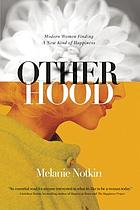
It's been awhile, what with one thing and another, since I actually did a book review post. I'm hoping to get at least one per week posted during the summer, so to kick us off here's this week's title: Otherhood: Modern Women Finding a New Kind of Happiness by Melanie Notkin (Seal Press, 2014).

I ordered Otherhood through inter-library loan after seeing it mentioned in positive terms in a piece on how the media fuels women's panic and self-judgement around pregnancy and fertility. From the gloss in the essay, I expected a study of women who found themselves single and/or childless as they reached the end of their fertility, and how they made peace with that circumstance. Perhaps it was poor or wishful reading on my part, because this book is not that book. Instead, this book is a hybrid personal memoir longform journalism piece in which Notkin seeks to connect her personal experience, and the experiences of her single, childless (but child-wanting) friends, to broader social and cultural narratives and trends about this demographic.

Apart from it not being the book I expected (which is hardly grounds for critique of the book it actually is), I had three major problems with Otherhood: its solipsism, its heterocentrism, and the way it embraced notions of gender complementarity and retrograde gender roles. All of these problems interconnect, because when one is writing about personal experience as universal experience, then obviously one's own wants and needs eclipse the diversity of human desire. There's nothing particularly wrong with Notkin yearning for a man willing to treat her to lavish dates, for example, but there is something very wrong about her making the argument that "we women" want a man who knows what kind of high-priced alcohol to order for every occasion. In Notkin's world of high-powered New York businesswomen in their late thirties and early forties, all women are straight, looking for male booty, looking for a man interested in a long-term relationship and kids, expecting that man to fit a very specific type of masculinity, and unwilling to revisit those expectations when the world doesn't deliver.

It's not that I think Notkin and company are "too picky" or "desperate" and that's what makes them unappealing. As someone who didn't date at all for the first twenty-seven years of my life, because no one I met piqued my interest enough, I hardly have a leg to stand on. It's just that I find Notkin's list of priorities for a partner kind of obnoxious, and I find it even more obnoxious that she assumes we all (as "women") share them.

Otherhood is also at war with its own thesis, which is that older single women (like Notkin) aren't waiting around for Mr. Right but are instead focused on living otherwise fulfilling lives, even in the absence of the partner and/or children they have always desired. Most of the narrative is, in fact, taken up with stories about she and her friends working their asses off dating one guy after another -- each of whom proves a disappointment -- and obsessing about their decreasing fertility. I finished the book feeling more than a little whip-lashed.

At its best Otherhood argues that, in the fullness of any single life situation, sometimes the price just isn't worth it. Even if you always imagined, and continue to desire, having children of your own. Notkin is trying to push back against the cultural narrative (of her elite circle) that single women nearing the end of their fertile years should just go it alone and get pregnant solo -- or else they're somehow less dedicated to their vocation as women than the ladies who freeze their eggs at twenty-five and start IVF at thirty-five whether they have a partner or not. There's some really interesting stuff to unpack there, in the cultural pressure of women to become mothers at any cost because somehow it is our ladylike destiny. But Notkin doesn't push her inquiry to the level where I would find it most interesting or pertinent -- the level where the gendered framework of dating and parenthood is, itself, called into critical question.

In the end, I felt sorry for Notkin and her circle of friends for the way in which their narrow view of "male" and "female" gender performance seemed to be limiting their ability to build authentic relationships that went beyond judging themselves and their partners in relation to socialized gender expectations. The dating dance they describe is one I never participated in with men -- or women for that matter -- and it doesn't sound like a very fun way to get to know someone. Notkin and her friends deride some of their potential dates for wanting casual hang-out time, or an evening in enjoying sex and a pizza -- the sort of get-togethers that sound pretty awesome to me. I finished the book wishing I could just get all the people therein (women and men alike) to just relax around one another a little more.

Reading Otherhood I felt a flood of gratitude for queer visibility. For all the talk of a "gayby boom," and the increasing normality of same-sex parenting, queer couples have a long and storied history of not parenting. Perhaps because our sexual intimacy doesn't bring with it the expectation of pregnancy -- because parenting must be deliberately pursued, often at a high price, and with legal and social roadblocks in our way -- queer culture doesn't demand that we make the pursuit of children a primary objective in life. Even before I felt able to identify as queer, I drifted toward lesbian and queer spaces for the alternate visions of family they offer up for consideration. These are visions I found world-expanding and life-affirming when I was "straight," and I wish that more women like Notkin (and perhaps the men she is struggling to connect with) would turn to these examples for a renewed sense of possibility.

In short? If you're interested in thinking about a life unpartnered and/or not parenting, ditch Notkin's side-swipes at "spinsters" and women who don't "keep up appearances" and go read some queer history instead. There's lots of inspiration out there, if you know where to look.

2014-02-03

from the archive: reactions to women's lib


For the past several weeks I've been reading through motive magazine from 1962-1972 in preparation for a conference paper I'm delivering in March. I'm looking at the way the magazine employed gender, sex, and sexuality during the ten year period leading up to its break from the United Methodist denomination.

One of the precipitating events leading to the break was a special issue put out in March/April 1969 on what was then referred to as the women's liberation movement. The issue proved so controversial, not least because the word "fuck" appeared in one of the articles, that the May 1969 issue was embargoed and the editor, B.J. Stiles, was asked to step down. This weekend at Boston University's Mugar library I read through the letters to the editor that poured in in response to the "women's" issue, and I thought y'all would enjoy reading some of the reactions the motive staff saw fit to print in the October and November issues the following fall.

They were introduced by Joanne Cooke, staff member and guest editor of the women's liberation issue:
Response to our March-April issue on women was overwhelming. At first it seemed to reveal a great split among our readers, but on closer examination we saw as much similarity as difference.

Everyone who wrote, whether they had burned the issue or bronzed it, believed they did so as an affirmation of the same basic values: belief in and respect for human dignity, belief in individual responsibility for actions and mutual responsibility for and to one's brothers and sisters, belief in the right (and duty) to 'vote' and to make one's voice heard, belief in the right (and duty) of individuals to join together to organize and to coordinate their efforts to achieve a common goal, and rejection of the Playboy Philosophy as an attitudinal and behavioral guide.

Curiously, almost all the letters were addressed, 'Dear Sir' or 'Gentlemen,' in spite of the fact that the issue was written and edited by women. Response ran about 60-40 in our favor, but only 24% of our supporters and 11% of our detractors were subscribers. Sixty percent of those responding favorably were women, while sixty percent of those responding negatively were men.
Twenty-ear-old Jessica J. Powers (Glenside, Pennsylvania) wrote in to complain that the disgruntled feminists were ruining it for everyone else. I'm particularly fascinated with her construction of women as either mothers and "lovely, loving women" or bread-winners/fellow-workers. At the level of cultural narrative, at least, it seems women couldn't be both:
I love my femininity and womanliness and I am proud of my sex. I like to have men open doors for me, hold my chair, help me with my coat. … I find that any woman who has a valid opinion about pertinent issues will find acceptance if her opinions are, in fact, valid. … If you achieve your goals in liberating the women of this country [, our] children will no longer look to us as their ever-loving mothers but rather another bread-winner. Our husbands will no longer look upon us adoringly as feminine, lovely, loving women but rather a fellow-worker … Please, in your quest, remember those of us who love our womanhood. Don't ruin it for us.
A.J. Gunther from Dynnyrne, Hobart, Tasmania, concurred. I'm particularly impressed by Gunther's ability to suggest a solution to the problem he presents ("they both take on the home chores") in the context of completely dismissing it as a possibility for home life:
In this crazy world of computers, wars, and crass commercialism, it is up to the women to put human values first. It is the wife's job to meet her husband morning and evening, to share some things in common, and to provide beauty and comfort in herself and in the home. … If Mrs. works at being a woman of the world all day … When she comes home after a day in the world outside—unlike Mr. who can relax from his job—she goes into high gear to tackle the T.V. Dinners and household requirements. Unless they both take on the home chores, something has to give—what?

Time for relationships, time to listen, time to make a real pie. It is no coincidence that the divorce and delinquency rates are directly proportional to the freedom of the 'liberated' working wife. … It is an even wiser woman who realizes that her role in the home is the first and most important job—the cultivating of human relationships in an atmosphere of love.
And in defensive terms that would be perfectly at home on Reddit today, Harold O. Harriger from Lubbock, Texas, assures motive that his woman most certainly isn't an angry feminist lesbian ... although she might morph into one if he allowed her to read about this women's liberation stuff:
Deep, dark forebodings beset me as to what might happen if my Rebecca got hold of the issue; poor lass—four kids, 100% female, and swears she wouldn't trade me as a playmate for the best Lesbian in town. Just doesn't understand the situation, I guess.
Of course, saner voices such as those from a female seminarian, Mrs. Susan Whitledge Nevius (President, Boston University Theological Students Association), also weighed in:
Certainly the 'four-letter words used in the March-April issue were not out of place, especially with the excellent explanation given for their use on page five in the editorial. … Certainly the Methodist Church and its officials have more important things to do than hassle over 'four-letter words,' especially when male chauvinism is so rampant in The Methodist Church itself. When our denomination has been ordaining women since 1956, how can it still make recruiting films called 'It Takes a Man'? Why do most of the official forms still ask for 'wife's name' instead of 'spouse's name'; and why does the Discipline continually refer to 'the minister and his wife' rather than 'the minister and spouse'? Why is no recruiting for the parish ministry done among women? I did not even know that it was possible for a woman to be a parish minister until I got to seminary. However, seminaries are no exception, for it is my seminary experience so far that has convinced me of just how deep the prejudice against women is.
And a chaplain from Michigan State University, Keith L. Pohl, who (likely unwittingly) undercuts his praise by referring to the women who assembled the issue as "girls":
As most 'red-blooded' American males I should respond to the March-April issue of motive with resentment and indignation. However, good sense does on occasion win over the emotion of male pride, and superior journalism deserves to be recognized... Thank the girls for a job well done, and I continue to look forward to each issue as usual.
I do find particularly fascinating how even some who began their letters on a fairly even note of acceptance found that they needed to distance themselves from those women represented therein:
You presented two sides of the picture. 1) the career woman who has heard 'When are you going to get married?' once too often and 2) the Lesbian who is a human being but has had to live as something less than a whole human being because of a stereotype built out of misunderstanding and fear. “You did not present the third side of the picture: We women who are proud to be wive and mothers, who know that we have an important job to do, a job that no one else can do for us, we women who have dignity in the role that we have 'chosen.' … We are the women who were liberated long ago … liberated from envy, self pity, bitterness and guilt because we respect ourselves as human beings with an important job to be done. (Donna R. Brancy, Sparta, New Jersey)
The women's liberation issue and the letters in response to it are, actually, the very first instances since 1962 that I have seen the word "lesbian" appear in the magazine ("homosexual" is used in the few instances prior to this when same-sex desire is referred to).

Women's liberation and Lesbianism were, of course, but two nodes on a nexus of threats facing the American family during the Cold War period. Sharon R. Swenck, a student at Virginia Commonwealth University (Richmond, Virginia) raises another:
We are reminded that if the communists can destroy the structure of our homes, their job of destroying our society is well on the way to establishment. Being a wife and mother is a lovely and beautiful life and just whom do you want to 'Liberate' and for what? Shame on the Methodist Church for allowing such a publication. May God help us all is my prayer.
Still, more than the question of women's role in society, it was the use of the word "fuck" that really seemed to get under the detractors skin:
The college students of our church have brought to my attention the March-April 1969 issue of motive. They are honest, modern, exposed college and university young people. They view the current issue as being plain, raw pornography. Their question is a simple, sincere one: 'Is there any place left where we can get freedom from the trash that is spelled out in the four-letter words that little boys and girls learn to write on the toilet walls?” (Ramsey Bridges, Minister, Cross Lanes United Methodist Church, Charleston, West Virginia) 
And people were, of course, always willing to haul out the "tone" argument:
Too many of the articles in the issue of motive were angry, self-defeating, and, as B.J. Stiles suggested, 'anti-male.' To put the male ego on the defensive and to impose on the male population an abundance of guilt is to perpetuate the set-back in openness and understanding acceptence for which women have been paying the price since the feminist movement days” (Beth E. Rhode, The Hunter College Protestant Association, Inc., New York, New York)
And even though this letter was written in praise of the issue, I'm honestly uncertain what Mr. Bill Garrett of Nashville, Tennessee is talking about -- or how it relates to women's lib:
 The current issue on 'The Liberation of Women' focuses on an issue which is of growing concern to the whole younger generation. Facets of the issue include (1) the demythologizing of that language phenomenon known in the minds of many adults as 'the four-letter word,' (2) a willingness to deal openly with our society's hang-ups, perversions and misunderstandings about sex, (3) an awareness of the total-environment orientation of much of life today, and (4) the basic need for handles and/or role models to begin creating and finding meaning in the midst of conflict and ambivalence.
And finally, in December 1969, a letter which is succinct in its condemnation:
Do any of you people connected with this magazine even faintly know what it means to be born again or to be saved? … This issue looks like it was put together by a bunch of sick people and women who hate men!
I applaud Mrs. Gus Rivalto (Memphis, Tennessee) for working in the evil feminist trifecta of ungodliness, lesbianism, and man-hating in a brief two-dozen words.

Hope you've enjoyed this stroll through a thin slice of my 50+ pages of research notes! In a couple weeks more it'll be time to stop with the reading and start with the writing (gulp). If you're in Boston and interested in the history of religion, check the conference out! See you there (maybe). And I'll be posting the conference paper here after the presentation.

2013-12-02

booknotes: the new soft war on women

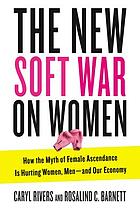
A few weeks ago, I was sent a review copy of Caryl Rivers and Rosalind Barnett's latest collaboration, The New Soft War on Women: How the Myth of Female Ascendance is Hurting Women, Men - and Our Economy (Tarcher Penguin, 2013). I have read and appreciated the work of Rivers and Barnett before: their previous work has drawn on the latest in social science and psychological research to refute cultural narratives of gender difference that hurt us as children and as adults. This latest work treads little new ground. Rather, The New Soft War reminds us what we know (thanks to the research) about the continuing, pernicious discrimination against women in the high-powered workplace.

Such quantitative and qualitative research data run counter to recent anecdotal narratives (e.g. Hanna Rosin's The End of Men) that predict in near-hysterical terms a present or future of gender imbalance in which domineering women run the world while emasculated men creep away into the shadows to nurse their wounds. Instead of "female ascendance," Rivers and Burnett argue, female white-collar workers (virtually all of their examples come from the fields of business, finance, law, and corporate media, with a smattering of academics thrown in for good measure) continue to face gender stereotypes that impede their ability to succeed in their careers -- while the gender stereotypes their male counterparts experience often boost their success out of proportion to their proven abilities. Individual mentoring programs and other exhortations for women to self-advocate (the "lean in" approach) fail, the authors argue, because placing the burden for change on professional women themselves ignores cultural biases and structural disadvantages that conspire to make many individual opportunities a no-win situation if the individual in question is a woman rather than a man.

The book was a useful review of what the research tells us -- as far as it went. However, I found its overall narrative to be lacking in broader analysis and its ultimate conclusions (a reiteration of the need for systemic change, coupled with suggestions for how women can work within or game the current system) to be tepid. For two authors who have just spent over three hundred pages detailing how endemic sexism is in the white collar workplace, to have the final chapters focus largely on individual strategies would seem to undercut their argument for policy-level change.

I was also irritated by the focus on white collar professional women, most of whom were navigating a corporate culture I have little experience with and struggled to relate to. I would have appreciated a more class-inclusive approach: women working in less high-powered professions, including my own world of library science -- not to mention women working in the service and retail industries -- were barely mentioned. The focus was on women in traditionally male-dominated professions. Some of that data can no doubt be generalized to women in the workplace more generally, but I am wary of casually assuming that the experience of highly-educated (largely cis, het, white) professional-class women pulling down six-figure salaries can stand in for all of us.

Given, for example, the way recent scare stories about women dominating the new labor market often focus on working-class and poor women who are heads of household, it seems particularly important to push back against the notion that a first-generation female college graduate who earns a living wage as a pharmacist is "empowered" to the extent that she is immune from exploitation as a worker, sex discrimination as a woman, race discrimination if she is non-white, and ageism if this is a second career -- the list could go on and on. Rivers and Burnett rarely complicate their picture of the ideal worker with any of these intersectional concerns ... their analysis generally presumes a high-powered businesswoman who has learned (and is able) to play the corporate game, yet still finds herself passed over for a promotion, or condescended to after the birth of her first child.

In other words, a woman frustrated that all of her (acknowledged and unacknowledged) social privilege and personal gumption haven't rewarded her as lavishly as they have rewarded the men in her graduating class at Harvard Business School. This woman's concerns are not invalid ones -- it is fair to ask why our society rewards some groups of people more lavishly than others -- but the "new soft war on women" does not only affect her and her peers. It is part of an aggressive neo-capitalist campaign to dehumanize and disenfranchise employees and grant ever-more power to the plutocrat employers. Within this broader struggle between the (relatively) powerful and the (relatively) disempowered, gender discrimination is often but one of many battlegrounds. That Rivers and Burnett ignore this larger framework ultimately weakens their closing arguments for political and social change.

The kind of feminist analysis I appreciate most is the kind that does not ignore the complex differences that exist between women, but rather engages with them (even if only to say in one's introduction that a given study out of necessity will narrow its focus to X and Y group). The New Soft War would have been a better book, in my estimation, if it had at the very least acknowledged that its study population (and intended audience) was but one specific group of upper-middle-class professional women -- rather than women generally. And that its agenda for social change was one of limited reforms within the pre-existing system, rather than a more ambitious questioning of the economic status quo.

2013-10-31

from the archives: anti-suffrage gossip

I had a blog post up yesterday at The Beehive (the Massachusetts Historical Society blog) sharing an item from our collections authored by anti-suffrage activist Margaret C. Robinson:

Margaret C. Robinson to Mary Bowditch Forbes, [1917],
Mary Bowditch Forbes Papers, Massachusetts Historical Society,
I didn't include a full transcript of the item in my final blog post, but I thought readers here might be amused. So before or after you read my post contextualizing the item, here is the full letter. Margaret Robinson's note (pictured above) reads:
[n.d.]

Dear Miss Forbes.

You may be interested in this suf. column from a Utica paper which Mrs. Maynard has just sent me. We have got them excited haven't we? Please see that anything you may publish on the subject is sent to Mrs. J.F. Maynard, Genesee St., Utlca Utica, N.Y. as she want[s] to reply to this clipping.

I had such material for this week's issue of the [Anti-Suffrage] Notes, that I have put it in the form of a small newspaper. I can hardly wait for you and Mrs. White to see it. I shall have the type left standing a couple of weeks in hope that people may use it widely and that we may need thousands more.

Emily Balch asked Ford to pay her expenses for a year in Christianin to work for peace. She got leave from Wellesley for last year and had her plans all made to go. He not only refused but told her he wanted nothing more to do with women! Emily Balch told this to the person who told me! She ^(Miss Balch) and other pupils of Rosika [Schwimmer] have started the People’s Council which is openly demanding the overthrow of our government! Isn’t that great anti-suffrage material?

In haste, with warm regards to you & Mrs. White,

M.C.R.
In addition to what I write at the Beehive, I think I particularly enjoy the image of Robinson being so excited about the latest edition of her newsletter that she's going to leave the type set to print even more copies once the initial run is fully distributed. If I ever track down a copy of that particular document I'll be sure to share it here at the feminist librarian!

2013-10-28

comment post: erotic expression and vulnerability

You may have heard about the teaching assistant who recently accidentally sent a nude photograph of herself to her students in lieu of the attachment she meant to send.

I'll let you all cringe in sympathy for a minute, because let's admit we've all been there -- maybe not in the nude photo sense, but in the "impolitic electronic communication" sense.

Done? Okay, good. Now the larger conversation in this instance is what lesson we might take away from these types of mistakes. That's what Claire Potter of the Tenured Radical and I have been discussing in comments over the past few days. My original comment was prompted by this passage in Claire's piece:
Herein lies a lesson for all of us: accidents happen to the best of people, so caution in the matter of nude selfies is advised. Things like this, and revenge porn, wouldn’t happen if people didn’t take nude pictures of themselves, and either give them away to boyfriends who they think are going to love them forever, or keep them on their computers. 
In response, I wrote:
I get where you're coming from on the "don't take nude pictures" line. However, I think a better approach would be to recommend more exacting privacy practices when it comes to erotic images and text you wish to keep between yourself and your intimate partners. Good practice: Not keeping nude photographs of yourself on your workplace computer. (Unless your work involves creating/disseminating nude photographs of yourself, obviously.) Bad practice: Keeping your naked photos in the same "Downloads" folder as the cat pictures you want to send to mom (and not labeling each set clearly, and double-checking all attachments before hitting "send").

Sure, the accidental sending off of the wrong photograph was inappropriate. Probably the TA's supervisor needs to have a conversation with her about working in less haste and keeping her private images private. But the real problems here in my opinion are a) a culture that shames women who leave evidence of their erotic lives that others accidentally or purposefully discover, and b) the students and administrators who see the sexual content of the accidental file transfer as grounds to blow this incident out of proportion.
Claire pushed back, writing in part:
But like the rule on secrets (information is no longer secret when two people know it), it is really unwise to give a photograph of yourself to *any*one that will shame you if it exceeds its intended audience. One person's erotic gift is another person's har-de-har-har or porn/revenge fantasy.
 To which I responded:
Thanks for the response. Again, I take your point in that caution is generally good advice.

I think where we (might?) differ in weighing the tricky balance is that I believe it is misplaced to offer advice like " it is really unwise to give a photograph of yourself to *any*one that will shame you if it exceeds its intended audience." We aren't prescient beings. We can't read the future. Sometimes we date asses who don't overtly advertise themselves as such. Sometimes a breakup is unintentionally messy and in a moment of pique the angry ex posts something they shouldn't.

I would argue that, as a society, we should not then turn around and blame the person who shared the image in a moment of private pleasure in the first place. We should blame the individual who shared that image of their ex without that person's consent.

In the balance, I think pushing individuals to err on the side of super-uber-never-share caution when it comes to erotic expression ends up reinforcing a culture of silence around pleasure. I can see it reinforcing women's sense that their sexual expressions and pleasures are invalid, shameful, and something not to share -- even with those whom they are sexually intimate with! That seems like a recipe for sexual mis-communication, as it fosters a climate of self-censorship rather than self-expression of desire.

Again, I realize you are NOT advocating for women (particularly) to stop speaking, writing, or enacting sex across the board. I think what I am observing is that such advice as you give above might unintentionally contribute to a culture-wide, persistent shaming of individual people daring to claim a sexuality that is personal and authentic to themselves through creating (among other things) images that speak of that desire, and sharing them with the people they wish to communicate that desire to.
Claire was gracious enough to continue the conversation, writing among other points:
I honestly don't think we are helping women by either saying they don't have to think about this, or that they should not distrust the capacity of other people to do them harm. It's not a moral issue from my perspective: it's a question of maintaining control if and when that is important to a person. I'm also a little curious about how it is that sharing a nude selfie is authentic and desiring in a different way than showing up in person and removing one's clothes, but that's another conversation, and this may be a generational distinction more than anything else.
To which I responded:
Thanks again for your thoughts.

I think to the extent we disagree it's a matter of emphasis rather than a more substantial philosophical divide. Like you, I would certainly counsel mindfulness about how, where, when, and with whom we share our most intimate selves. At the same time, none of us are omniscient and none of us are responsible (or can control) the actions of people who mishandle those parts of ourselves. If we withhold those parts of ourselves out of fear that we will get hurt ... chances are we won't get hurt, but we also won't have had that chance to share either.

Re: "I'm also a little curious about how it is that sharing a nude selfie is authentic and desiring in a different way than showing up in person and removing one's clothes, but that's another conversation, and this may be a generational distinction more than anything else."

I hesitate to attribute things too reflexively to a generational divide. There are likely people in your age cohort who have (or will) share erotic images of themselves; there are likely many my age (mid-30s) and younger who would recoil from that impulse.

I didn't mean to make it sound like the "nude selfie" is somehow a sacrosanct category of erotic expression -- but I think historically speaking we could probably find the rough equivalent of "the nude selfie" in virtually any generation. In the 1920s perhaps you and I would have been discussing the advisability of college girls going to dance halls, in the 1890s perhaps the advisability of girls sending erotically-charged letters to their beaus for fear they would fall into the wrong hands. I think that erotic self-expression is often a razor-thin balancing act of (on the one hand) sharing one's self with enough vulnerability with one's lovers for a successful, mutual relationship and (on the other hand) policing the boundaries of that intimacy against unwanted intrusion.

So yeah, I think we could haggle endlessly in this situation (or any other situation X) whether in the balance responsibility for breaching those boundaries falls more heavily with the individual or society (and what the consequences of that breach should be). But I don't think our readings are wholly incommensurate.
Any thoughts, readers?

2013-09-25

booknotes: my brother, my sister

Molly Haskell at a book signing for
My Brother, My Sister (via)
Just before leaving on vacation, I was asked to review the new memoir My Brother, My Sister: A Story of Transformation by Molly Haskell (Houghton Mifflin, 2013). I spent the flight from Boston to PDX reading ... and taking increasingly irritated notes. While I didn't actively seek out this book to review, I had slightly higher hopes for a memoir that promised in its ad copy to be a "candid" and self-critical memoir by a "feminist academic" who not only seeks to describe her own journey to understanding but also to "chart the cultural map ... of gender roles and transsexualism." I had hopes for a memoir that evidenced both better understanding of the trans issues its author attempts to outline for readers -- one that hadn't fallen into some of the most basic traps of our problematic cultural narratives about trans lives.

Part of my disappointment comes from the fact that cis* family members and friends of trans individuals often struggle to get up to speed on trans issues after a loved one opens up about their experience -- and there is a need for personal narratives by individuals who have struggled through ignorance and misconception into better understanding. Such stories don't need to paper over the messy reality of feeling that often accompanies such a journey. I have a friend whose spouse came to the realization of their transness within the last two years, and as a partner my friend struggled with many of the same feelings a major life change will bring: grief over the loss of "before," fear about what the future will bring, uncertainty about what this change meant for their relationship and family life, sometimes anger at their spouse for being at the epicenter of this upheaval -- and for mostly not sharing in the grieving process. Like many trans individuals, the partner was mostly elated and relieved to be finally bringing their self-presentation into alignment with their interior self: to no longer be living a dissonant life. To my friend, whose emotions were much more ambivalent, it often felt like there was no safe or sanctioned place to process their complexity of feeling. With economic barriers to therapy and other social supports often prohibitively high, books like Transitions of the Heart (written by parents of trans and gender-nonconforming children) can help mitigate what could otherwise be intense isolation.

My Brother, My Sister could have been an addition to this small but growing literary offerings. In my estimation, it was not.

Let's begin with the most basic trap of all, the way the memoir's narrative is structured around and saturated in the physical aspects of transition, most particularly fixated on gender confirmation surgery and Haskell's assessment of how well or appropriately she believes her sister is presenting as a woman. While acknowledging that authors sometimes have little control over book jacket design, the plain red cover with a youthful photograph of Ellen "before" and a current "after" photograph invites the reader to center Ellen's appearance and physical transition rather than Haskell's experience as the cisgendered sister having to assimilate her sibling's late-in-life changes. A set of photographs at the center of the volume likewise foreground the "before" and "after" images.

As authors like Julia Serano and S. Bear Bergman have pointed out, the narrative of "passing" places the onus on a trans person to conform to the world's high expectations of gendered behavior rather than demanding that the world accept a person's self identification regardless of presentation. A trans person -- just like any of us -- may be a butch or lipstick lesbian, a twink or a jock, a sorority girl or tomboy. Bodies come in all shapes and sizes, and sartorial taste ranges across a field of more-gendered and less-gendered style choices. Historically, we (the public) have required a high level of stereotypical gender performance from trans women -- at the same time as we (feminists) blame trans people for perpetuating sexism through that same exploration of femininity.**  Haskell perpetuates this scrutiny by making physical transformation the benchmark of transition, and by dwelling on the surgeries, the clothing choices, the gender-coded vocal and physical mannerisms, and other aspects of her sister's self-presentation.

While her sister's pleasures and anxieties around offering up her newly-visible self to the world are understandably preoccupying, Haskell's perspective is more often one of harsh judgment than it is attempt to follow where her sister leads. She frets that her sister will be unattractive, considers her clothing choices to slutty, and considers anyone who can't or is unwilling to fit into her neat categories of gender to be somehow at fault. For example, she writes of a trans woman her sister knows, "One man, though convinced he's a she, refuses to do anything to alter his rough male appearance" (158). As if this "refusal" to care about her appearance somehow invalidates the woman's self-articulated gender identity. She also offers unsolicited opinions on the femininity of other high-profile trans women:
From photographs, Jennifer [Finney Boylan], being younger and more typically feminine, seems to have made an attractive looking female, while [Jan] Morris by most accounts, before settling into dignified-dowdy, went through a grotesquely awkward wannabe-girl period (122). 
I scribbled in the margins “seriously. out. of. line. judgy.”

When Ellen visits Haskell after a period of cloistered transformation, Haskell nervously invites friends over and then grills them afterward on Ellen's ability to perform femininity: "The verdict ... she's very convincing. I said the hair's too blond, and Lily and Patty agree, the hair is too blond, but they're surprised at how good she looks" (146).

I think possibly a large part of my irritation is that I couldn't find Molly Haskell very likable, as a sister or as a feminist. She's critical of other women's appearances, ageist towards both the old (women who might be unable to catch a man) and the young (who are too slutty in appearance and too casual about identity), and hews close to gender expectations. One of her first reactions to her sister's coming out as trans is to fear that the tech- and number-savvy brother she relied on will no longer be good at computer repair or math. While she sidles up to the notion that this first reaction was unfounded, she never demonstrates for her readers that she has since come to revise her binary thinking when it comes to girl brains and boy brains.

At what might be a low point of the book, she even suggests that Brandon Teena, the trans man who was the subject of the biopic Boys Don’t Cry somehow “asked for it” by dressing in clothing appropriate to his gender and not disclosing his trans status:
Yes, the yahoos were uptight and murderous, but she in some sense invited the violence by taunting their manhood, pulling the wool over their eyes, and acting in bad faith (106). 
Yes, she willfully mis-genders him. To fall back on the trope of the deceptive transsexual (who supposedly invites violence through the act of passing) in a throwaway comment, in a book pitching itself as one about understanding trans lives, seems to me a fairly basic mis-step that, again, both Ms. Haskell and her editor should have caught before the manuscript went to press. That they did not suggests neither understood how problematic it was.

Which in turn calls the entire project into question, at least as far as its worth as a positive contribution to trans literature goes.

At the end of the day, I am glad that Molly and her sister have remained in good relationship, and I am glad that Molly gained more understanding of trans experience and trans history than she had when her sister first came out to Molly and her husband. I imagine that, at the end of the day, there are far worse reactions to have had from one’s family upon coming out trans (see: transgender remembrance day). Yet I also wish that Haskell had let her own learning process cook a bit longer before publishing a book on the subject. As it stands, My Brother, My Sister is a tepid-at-best, damaging-at-worst popular memoir that does little to invite a more complex understanding of trans people or sex and gender identity more broadly. I expected better from a self-identified feminist author, although I’m sure trans feminists would laugh at my (cis-privileged) wishful thinking.

For those interested in learning more about trans lives, I would recommend The Lives of Transgender People by Genny Beemyn and Susan Rankin, Whipping Girl by Julia Serano -- who has also just published a book on trans-inclusive feminism that I can't wait to get my hands on -- and also Anne Fausto-Sterling's excellent Sexing the Body.

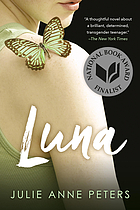
Luna, a young adult novel by Julie Ann Peters, is also an intimate fictional portrait of a sister coming to terms with her siblings trans identity.


*Cis or cissexual refers to individuals whose gender assigned at birth (usually based on external sex characteristics) matches their internal sense of their own physiological sex and gender identity.

 **Trans men have, historically, had a very different socio-political experience within both mainstream culture (where they are often rendered invisible) and mainstream feminism (where they are more often embraced while trans women are actively marginalized).

2013-09-18

the statement on trans-inclusive feminsm and womanism [signed!]

I've been seeing this statement coming through on my RSS and Twitter feed for the last few days, and have finally had a moment to sit down and sign it. 

It should be upsetting to us all that the need to specify trans-inclusive feminism and womanism exists, but it does so I want to spell out my support. I also want to take this opportunity to thank the trans people and allies who have pushed me -- in person and in print -- over the past ten years to learn about trans issues and un-learn toxic myths and stereotypes. You have immeasurably enriched my life and my feminism. I will do my best to live up to the vision all you have challenged us to fulfill.

[text via feministsfightingtransphobia]

We, the undersigned trans* and cis scholars, writers, artists, and educators, want to publicly and openly affirm our commitment to a trans*-inclusive feminism and womanism.

There has been a noticeable increase in transphobic feminist activity this summer: the forthcoming book by Sheila Jeffreys from Routledge; the hostile and threatening anonymous letter sent to Dallas Denny after she and Dr. Jamison Green wrote to Routledge regarding their concerns about that book; and the recent widely circulated statement entitled “Forbidden Discourse: The Silencing of Feminist Critique of ‘Gender,’” signed by a number of prominent, and we regret to say, misguided, feminists have been particularly noticeable.  And all this is taking place in the climate of virulent mainstream transphobia that has emerged following the coverage of Chelsea Manning’s trial and subsequent statement regarding her gender identity, and the recent murders of young trans women of color, including Islan Nettles and Domonique Newburn, the latest targets in a long history of violence against trans women of color.  Given these events, it is important that we speak out in support of feminism and womanism that support trans* people.

We are committed to recognizing and respecting the complex construction of sexual/gender identity; to recognizing trans* women as women and including them in all women’s spaces; to recognizing trans* men as men and rejecting accounts of manhood that exclude them; to recognizing the existence of genderqueer, non-binary identifying people and accepting their humanity; to rigorous, thoughtful, nuanced research and analysis of gender, sex, and sexuality that accept trans* people as authorities on their own experiences and understands that the legitimacy of their lives is not up for debate; and to fighting the twin ideologies of transphobia and patriarchy in all their guises.

Transphobic feminism ignores the identification of many trans* and genderqueer people as feminists or womanists and many cis feminists/womanists with their trans* sisters, brothers, friends, and lovers; it is feminism that has too often rejected them, and not the reverse. It ignores the historical pressures placed by the medical profession on trans* people to conform to rigid gender stereotypes in order to be “gifted” the medical aid to which they as human beings are entitled.  By positing “woman” as a coherent, stable identity whose boundaries they are authorized to police, transphobic feminists reject the insights of intersectional analysis, subordinating all other identities to womanhood and all other oppressions to patriarchy.  They are refusing to acknowledge their own power and privilege.

We recognize that transphobic feminists have used violence and threats of violence against trans* people and their partners and we condemn such behavior.  We recognize that transphobic rhetoric has deeply harmful effects on trans* people’s real lives; witness CeCe MacDonald’s imprisonment in a facility for men.  We further recognize the particular harm transphobia causes to trans* people of color when it combines with racism, and the violence it encourages.

When feminists exclude trans* women from women’s shelters, trans* women are left vulnerable to the worst kinds of violent, abusive misogyny, whether in men’s shelters, on the streets, or in abusive homes.  When feminists demand that trans* women be excluded from women’s bathrooms and that genderqueer people choose a binary-marked bathroom, they make participation in the public sphere near-impossible, collaborate with a rigidity of gender identities that feminism has historically fought against, and erect yet another barrier to employment.  When feminists teach transphobia, they drive trans* students away from education and the opportunities it provides.

We also reject the notion that trans* activists’ critiques of transphobic bigotry “silence” anybody.  Criticism is not the same as silencing. We recognize that the recent emphasis on the so-called violent rhetoric and threats that transphobic feminists claim are coming from trans* women online ignores the 40+ – year history of violent and eliminationist rhetoric directed by prominent feminists against trans* women, trans* men, and genderqueer people.  It ignores the deliberate strategy of certain well-known anti-trans* feminists of engaging in gleeful and persistent harassment, baiting, and provocation of trans* people, particularly trans* women, in the hope of inciting angry responses, which are then utilized to paint a false portrayal of trans* women as oppressors and cis feminist women as victims. It ignores the public outing of trans* women that certain transphobic feminists have engaged in regardless of the damage it does to women’s lives and the danger in which it puts them.  And it relies upon the pernicious rhetoric of collective guilt, using any example of such violent rhetoric, no matter the source — and, just as much, the justified anger of any one trans* woman — to condemn all trans* women, and to justify their continued exclusion and the continued denial of their civil rights.

Whether we are cis, trans*, binary-identified, or genderqueer, we will not let feminist or womanist discourse regress or stagnate; we will push forward in our understandings of gender, sex, and sexuality across disciplines.  While we respect the great achievements and hard battles fought by activists in the 1960s and 1970s, we know that those activists are not infallible and that progress cannot stop with them if we hope to remain intellectually honest, moral, and politically effective.  Most importantly, we recognize that theories are not more important than real people’s real lives; we reject any theory of gender, sex, or sexuality that calls on us to sacrifice the needs of any subjugated or marginalized group.  People are more important than theory.

We are committed to making our classrooms, our writing, and our research inclusive of trans* people’s lives.

Signed,

Anna J. Clutterbuck-Cook (librarian, historian, writer)
Allston, Massachusetts
USA

[click through for the full list of signatories]

2013-08-23

in which I write letters: NPR, I'm disappointed in you

To: abross@npr.org
From: feministlibrarian@gmail.com
Re: Chelsea Manning

Dear Ms. Bross,

I am contacting you as a lifetime listener and longtime supporter of National Public Radio. As a teenager I began contributing to Michigan Radio as soon as I began to earn my own paycheck; my wife and I are currently sustaining members of WBUR and WGBH in Boston. I usually look to National Public Radio for thoughtful and respectful in-depth reporting that is conscious of the full humanity and agency of the individuals whom its reporters speak to and about.

Your decision to ignore Chelsea Manning's explicit request that we honor her gender identity and use her chosen name as well as conventional female pronouns is an unethical one. It is a decision that robs her of what little agency she has left as she enters a military prison -- the right to personhood, and the ability to articulate who she is. Surely Pfc. Manning is the one individual in the world who can know more intimately than any of us who she is. For NPR to contradict her own explicit self-definition is a profound act of arrogance and erasure.

I hope the coming days see reversal of your initial decision, and an apology to Manning and all of the trans people out there who have had to live through yet another round of media mis-steps around a high-profile individual who happens to be transgender. I was truly sorry to see NPR complicit in this perpetuation of trans-bigotry and ignorance.

In hopes of a better, more inclusive tomorrow,
Anna J. Clutterbuck-Cook
Allston, MA

h/t to @SexOutLoudRadio for the email

2013-08-07

being friends with...humans

I realize writing commentary about a New York Times ladypiece is picking low-hanging fruit, but I have a sinus headache and it's too early to go to bed, so here we are.


If you missed it, Time magazine ran a story last week about people women who choose not to parent and the apparently glamorous, self-centered, satisfying lives we lead. As Tracie Egan Morrissey wryly pointed out at Jezebel, the write-up was framed in such a way as to ensure that even non-parenting women are wrapped into the narrative of the "batshit mommy war":
Perhaps you thought that not having children left you untethered. Wrong! Time has roped you into it, with some inflammatory quotes that will get all the mothers in the world to hiss at you brazen hussies and your childfree existences.
Most of us non-parenting ladies knew already we didn't get to opt out of that one, but thank you Time magazine for pointing it out once again so hysterically.

Meanwhile, KJ Dell'Antonia riffed off this piece at the NYT Motherload blog (tagline: "adventures in parenting," as if we needed reminding that care for children is understood to be women's work) by asking the question "can parents stay friends with the childfree?" She excerpts liberally from the Time piece, starting with:
Any national discussion about the struggle to reconcile womanhood with modernity tends to begin and end with one subject: parenting. Even Sheryl Sandberg’s “Lean In,” a book focused on encouraging women’s professional development, devotes a large chunk of its take-home advice to balancing work and family, presuming that, like its author, ambitious women will have both.
Dell'Antonia herself then reflects:
As a parent myself, I don’t read my tendency to gravitate toward fellow mothers as judgment — I read it as practical. Fellow parents are more likely to understand if I bail on dinner because of a sudden teacher conference, and their eyes are less likely to glaze over if my preoccupation at that dinner is more temper tantrums than, say, the right way to temper chocolate (which might once have held my interest for hours). In fact, I’d argue that it’s win-win.
So I have some thoughts. Obviously, or I wouldn't be writing this post.

Y'all know, if you've spent any time on this blog, that I come at this issue from the perspective of someone deeply invested in remaking the world into a place where families and family care-work is genuinely respected and incorporated into daily life, where children and their carers aren't ghettoized or put on a (false) pedestal while actually being treated like shit. This (probably radical, feminist, maybe a bit queer) political agenda informs how I think about most public discussions about parenting, not-parenting, work and family life, and how the current organization of our economy and social life constrains the choices we have in these areas.

I also come at this conversation from the perspective of someone who is currently, and will likely remain, partnered but non-parenting. I've written elsewhere about the factors going into that decision, which like any major decision is born of inner desires, practical realities, and the needs and desires of those the decision-maker is in close relationship with.

Here are my thoughts.

First, Dell'Antonia directs her question only to mothers:
Do we, as women who are also mothers, judge women who are not? And if we do, do we do it overtly or subconsciously — or just by excluding and including people in our lives based on proximity and similarity without realizing that the path of least resistance is one that, for a parent like me, includes mainly friends who are piloting similar family boats?
What strikes me about this framing of the question is the notion that parents and non-parents are two different species, two different tribes, without "proximity and similarity," that only fellow parents are "piloting similar family boats." I notice this a lot in writing about work-life and work-family issues, in discussions about women's decision-making around work, relationships, reproduction.

I reject this false dichotomy between parents and not-parents. Yes, obviously, parenting changes you -- just like any major life experience changes you. But I reject the notion that there's something about parenting that makes it impossible to communicate with individuals who have not yet (or never plan to) cross that divide. I see a similar dichotomy set up between single and married women (and yes, it's most often women). It has a kernel of truth, but gets set up as a means to divide people and pit them against one another. To constantly re-inscribe the supposed differences between not-parents and parents suggests that we must be in competition, that our needs and desires must be set against one another, in opposition. When in reality, our needs as humans are more similar than they are different.

Which brings me to my next point: not-parents have families too. Notice how, in the Time piece, "parenting" in the first sentence turns into "family" in the second -- with the suggestion that somehow only parents struggle with the competing responsibilities of work and home life? Hanna and I, and our cats, are a family unit. We belong to a wider family circle of parents and parents-in-law, sisters and brothers and siblings-in-law, grandparents, cousins, nieces and nephews, and extended relationship.

We also, like parents, have this thing called "home" and a life therein, where shit happens. Shit like laundry and cooking (or not-cooking because you haven't had the energy to go grocery shopping). Shit like getting sick, or caring for a sick spouse, or negotiating with the vet to find an appointment time that you can make before or after work, or on the weekends. Parenting people are not the only ones who've had to cancel a dinner date at the last minute -- or would understand the necessity of doing so, to take Ms. Dell'Antonia's example from above. If parents truly are cutting off their not-parent friends because they pre-emptively imagine there's no longer anything to talk about well ... that seems a damned shame to me. I really like my parenting friends, and I gotta say we find plenty to talk about and enjoy together.

Which brings me to my final point, which is when the fuck did friendship become a matter of sameness? Again, I get that it helps to have common interests and experiences, common values and goals. But I also feel like there's something -- a big something -- to be said for curiosity, empathetic listening, and learning. I'd never heard of Doctor Who before I met Hanna, and tonight while I'm writing this blog post we're re-watching "Rose" and talking about how awesome it is as a series re-boot. We didn't meet as fellow fans, but I was open to discovering something new.

The same could be said about parenting and not-parenting people learning how to talk about their lives (and ask questions about their friends' lives) in ways that don't automatically assume that there will be no common ground, or that just because you haven't had experience Zed you can't be interested or contribute to a discussion on the topic.

It's a pretty fucked-up version of identity politics to assume the only meaningful relationships you can have are with those who've had your specific set of life experiences.

2013-08-04

the "duck and cover" gambit, circa 1969

For fun and scholarly research today, I'm reading the March/April 1969 issue of motive magazine -- a special issue dedicated to what was then called the women's liberation movement. As you might expect, it's all a bit dated in the best possible way -- and they've got some great pieces in there: on sexism in psychology, an analysis of women's magazines and consumer culture, and an article by Del Martin and Phyllis Lyon on lesbians and anti-gay discrimination. Also lovely woodcut illustrations and some passionate poetry to boot.


The final piece in the issue is an editorial by motive editor B.J. Stiles. It's a fairly defensive piece for what to my twenty-first century eye is a fairly middle-of-the-road collection of feminist texts, including one on deconstructing masculinity written from the perspective of a man. B.J. opens the piece joking at length about how this particular issue came about because motive hired a young woman onto the staff, "fresh from college--attractive, articulate, hip, our femme fatale in residence. She stimulated male fantasies, fulfilled ordered (magazine subscription ones, that is), participated in editorial conferences...and worked cheap. (In earlier times, we might have even said that she became 'one of the boys'.)"

Given that Stiles himself later came out as gay, I imagine some of this locker room humor is defensive -- not only against what he argues is the "anti-male" thrust of the issue, but also protective covering in relation to the discussion around homosexuality that appears in its pages. So I'm not (yet) ready to argue this hostility towards feminism turned out to be a pattern for Stiles.

However, what struck me was the opening lines of the piece, which read as follows:
In full knowledge that the admission of the following qualifies me for the VWLM's "Male Chauvinist-of-the-month Award" and will undoubtedly result in one more elaborate hex from guest editor Joanne Cooke [the femme fatale of above], a few musings on women's (and men's) liberation.
 Here we have, circa 1969, a beautiful specimen of what John Scalzi recently called the "I fully expect abuse" gambit, which I think of as the "duck and cover" gambit. This is when a person from a socially privileged group (in this instance, a man) offers up thoughts on a subject which they feel defensive about, generally because people from a socially disadvantaged group (in this instance, women) have raised questions about the status which make the writer/speaker uncomfortable.  Because the writer/speaker is about to say something from their position of privilege which they suspect will confirm the suspicions of their detractors or otherwise be unpopular, they preface their statement with something to the effect of, "I know you're going to [insert violent action] to me for saying this, but..." as if to imply their bravery at refusing to be silenced and voice some Important Truth anyway.

Oh the courage it takes to be .... in the majority.

With the weight of ... major social and legal institutions behind you.

As my friend Fannie wrote last year, this is an all too familiar reflex in the twenty-first century feminist blogosphere ... and apparently has a long and ignoble history going back at least half a century.

Well done, guys. Well done.

2013-07-06

married naming, nine months later

In the months before we got married, Hanna and I decided we were going to combine our middle names upon marriage:
  • Elisabeth + Jane = Elisabethjane
We even had our rings engraved with the word: a design we created ourselves by each writing the others' "maiden" middle name:


I even wrote a guest blog post about our process for The Last Name Project, which I still think accurately captures our reasoning and the symbolism we saw in taking this approach.

But then some things happened.

First, when we went to fill out the forms at the town hall in Brookline, pursuant to obtaining a marriage license, there was no way to change your middle name upon marriage. The clerk didn't care. The bureaucracy only cares if you're going to change your last name(s). Which, practically speaking, means you can only change your last names if you want to change your names without additional cost and seamlessly with the marriage paperwork.

"That's okay," I said while we were standing in the office. "We'll just take care of it later, separately." 

We were going to have to file for two legal name changes, at $165.00 per person, in Probate and Family Court. With all of the other wedding-related details and expenses, it seemed like a detail we could follow up on later.

Then, on the night before our wedding, Hanna suddenly realized it was important to her that we share a last name. "What if something happens?" She asked, into the dark as we lay in bed talking about it. "How will people know we were ever married? How will they know you belong to me?" 

We had previously discarded the notion of hyphenated last names as unwieldy, though neither of us -- historians to the core -- wanted to walk away from our family of origin names altogether. So at the eleventh hour, we revisited the hyphen option and have settled on Clutterbuck-Cook as the shared last name we will eventually take.

Eventually being the key word here, since nine months later we've yet to file the paperwork and pay the $330 in fees to get it all taken care of. Expense is a barrier, as is the lingering question of whether we'll move forward with our shared middle name plan, in addition to the last name change, or whether that's just too extensive for any one person to bear: Anna Elisabeth Jane Clutterbuck-Cook? I mean, it'll basically never fit on a form. Ever. Again. Not even the forms for effecting the change!

And then DOMA was an excuse for not deciding. "We'll do it when DOMA falls," I said, eventually. It seemed like a good way to mark the expansion of marriage equality. And practically it seemed like the sensible thing to do. Why change our names when the federal government would refuse to acknowledge we were legally pledged to one another anyway.

But now DOMA is no more (yay!). Plus, our passports are up for renewal, making a natural time to get everything formalized. 

So I've been starting to just kind of play around with this new last name of ours. When I sign up for new accounts online. When I fill in a return address on an envelope. On Twitter. On my blog. Probably soon in the signature line of my work email:
  • Anna E. J. Cook?
  • Anna J. Clutterbuck-Cook?
  • Anna E. Clutterbuck-Cook?
  • Anna E. Cook?
  • Hanna and Anna Cook-Clutterbuck
  • Anna and Hanna Clutterbuck-Cook
Right now I have a handful of variations on this theme rattling around the Internet. Slowly, I think Anna J. Clutterbuck-Cook is winning out, although part of me still wants to add the Elisabeth too. 

I admit, part of the reason I'm reluctant to let go of the intertwined middle names is that it seems like an elegant and egalitarian solution. Everyone we told the middle-name plan to thought it was awesome and radical and why-had-no-one-thought-of-this-before? At the same time, like Hanna, I feel the undeniable pull of social legitimacy -- that thing same-sex couples, particularly, are both applauded and shamed for desiring. Like Hanna, I want us to be unmistakably married. And in modern, Western culture sharing a last name or names with one's spouse is a fairly unmistakable linguistic act: We two, together.

(Or "we three," perhaps, for some -- though not us.)

I don't think it's queer, or feminist, failure to want recognition or legibility for who we are. And the society (and legal paperwork) through which our lives are filtered shape our choices. 

If the marriage certificate forms had allowed us to change our middle names, it would be done.

But they didn't; because that's not how it's done.

(That's not "how it's done" for straight men, either, in many states. Massachusetts law treats both spouses equally but in many states husbands who change their last names upon marriage incur additional fees or outright refusal.) 

The Internet is strange, too. Do I just grandfather in my Twitter handle? Email address? Even my most widely-used internet handle, annajcook doesn't acknowledge my marriage linguistically. Do I ditch it and start afresh? It seems untidy, somehow, lacking in efficiency, either way. 

Why can't everything magically switch over, like when you change your profile picture on Google and suddenly every platform shows the new you?

But on the other hand, I like to think this period of messy uncertainty gives historians of the future a trail of breadcrumbs for us all as we move through the virtual and analog universe: Here we are, tangled together. Somehow. We're still working out exactly how. 

But one way or another, we're going to make sure people know it's We two, together.

photograph by Laura Wulf (2012)

2013-06-16

yep, I'm pro-porn. like I'm pro-fiction and pro-food.

Having just submitted my first work of original erotica for consideration for a Cleis Press anthology, I decided it was apropos to work out the writerly shakes by posting a bit of a rant about the recurring moral panic around pornography.

This is what a pornographer looks like.
Last night as I was going through my RSS feeds, I noticed that The Guardian has discovered that some scholars study porn and that others object to the idea that porn can be studied as one studies, say, English poetry, American history, or cellular biology.

That is, the idea that a body of work (sexually-explicit material created with at least a partial intention to arouse the consumer) might be studied using diverse methods of data collection and analysis, a wide range of primary source material within the genre, and theoretical lenses, adding to our body of knowledge about the human condition or the world we inhabit.

And they've discovered that some of those scholars who study porn have decided to start a journal dedicated to the subject (PDF), to be published by Routledge starting in 2014, and that anti-porn activists have accused these journal editors of being "biased" and "pro-porn":
The journal, which announced its call for papers a month ago, and will be published by Routledge next year, marks a turning point in the academic study and treatment of pornography. It is the first peer-reviewed journal dedicated to the subject and its editors – Feona Attwood, professor of cultural studies at Middlesex University, and Clarissa Smith, a reader in sexual cultures at Sunderland University – say it will offer a fresh cross-disciplinary approach and provide a focus for researchers working on porn.

However, a petition accusing journal of bias, and demanding that Routledge either change its editorial board or rename it "Pro-Porn Studies" has attracted 888 signatures, including from senior academics in North America and Europe, people working with the victims of sexual and domestic violence and health professionals.

Gail Dines, a British professor of sociology at Wheelock College, Boston, and the author of Pornland, said that, while it was vital that pornography was studied and research published, she had grave concerns about the editorial direction of the journal.
Some of you may remember Gail Dines from my 2012 series on her Boston University appearance along with Carol Queen at a screening of The Price of Pleasure. It's my personal opinion that she does nothing to enhance the discussion around the ethics of sexually explicit material because her own position has become so dogmatic that she is uninterested in genuine conversation with those who think about pornography in more nuanced ways.

I'm honestly kind of creeped out that she teaches and lives here in the same city I do. But that's life.

I want to offer two inter-related thoughts about the anti-porn faction's framing of Porn Studies as biased because it's "pro porn."

1) Pornography is a genre, nothing more. "Pornography" is the word we use to describe sexually-explicit materials, most often visual materials, created or used at least partially for the purpose of arousal. Pornography is a genre, just like fiction or poetry is a genre. We can talk about porn being unethically or shoddily made, or we can talk about porn that didn't do it for us -- I'm honestly not that into Longfellow's epic poems or anything by Ian McEwan. I think Phillip Pullman let his atheist agenda impede good storytelling toward the end of His Dark Materials and after reading a couple of reviews of Lionel Shriver's latest it sounds to me like she's given in to unacceptable fat hatred.

But that doesn't mean I'm "anti-poetry" or "anti-fiction," and I certainly wouldn't accuse my father-in-law who loves Ian McEwan of "pro-fiction" bias because he loves an author whose characters give me hives.

This is the sort of nuance that Feona Attwood, Clarissa Smith, Tristan Taormino, Violet Blue, and the others involved in Porn Studies, scholarship on pornography, and creating porn are advocating. There's crap porn out there, I don't think anyone is denying that -- though like with fiction we're all going to disagree on what constitutes "crap." (As librarian Nancy Pearl once reminded her readers, one reader's bad sex award-worthy scene is another person's hottest fantasy.) There is also unethical porn, which "pro-porn" feminists have been vigorously discussing and working to advocate for decades -- for the most recent discussions, check out The Feminist Porn Book and associated website.

If I had to sum up what I see as the "pro-porn" feminist stance on bad and exploitative porn, it would be the following: make better porn, and empower workers in the porn industry (including your own, if you're a porn creator) to demand (and achieve) non-exploitative working conditions.

Dines and company, on the other hand -- apparently over eight hundred people! -- don't see porn as a genre. They see porn as a single, monochromatic thing which in its entirety is harmful. They see pornography as a public health harm much like smoking while the Porn Studies folks see it more like pastry or even alcohol. Inhalation of smoke increases your risk of cancer; there's nothing you can really do to make smoking healthy. Eating a brioche, on the other hand, or enjoying a glass of wine at dinner or a cocktail at a party is not per se a self-destructive activity. It's all about how individuals relate to the food or drink. Do you eat compulsively? Do you shop at a bakery that sells stale rolls? Pays its employees under the counter with no benefits? Are you using whiskey to mask your depression? Has the chardonnay you opened last week gone off in the interim? Wine tastings and French pastry-making classes abound in our neighborhood, testament to the fact that people see alcohol and baked goods as two classes of foodstuffs that can be made well or poorly on a number of levels.

Which brings me to point number two...

2) Scholars are nerds, and we're generally passionate about our subjects of study. You say "pro-porn" like it's a bad thing. If pornography is a genre, like poetry or fiction, then it stands to reason that the people who  choose to study it -- to build a scholarly career out of studying it -- and/or are creating it are "pro" the genre. Don't we want them to be? Accusing a pornographer or porn scholar of being "pro-porn" is like complaining Seanan McGuire is "pro-fantasy fiction" or the people on "America's Test Kitchen" are "pro-food."

Uh ... yes? You're point being...?

Back in the 18th century, there was, in fact, a moral panic about the effects of reading fiction -- particularly its effects on girls and women (we're flightly like that). Fiction, of any sort, inflamed the imagination and the imagination turned to sex. Reading fiction, in other words, led straight to masturbation and other lewd behaviors.

When I listen very long to those who protest against the production of porn, any porn, regardless of the context of creation, quality of production, or content, I admit that they sound about as shrill as the eighteenth-century moralizers with their warnings about how reading fiction leads to depravity.

It's disappointing to me that so many people continue to take them seriously, instead of re-framing pornography as a genre like any other ... one which we can choose to shape and reshape as we please. And study endlessly, like we study Shakespeare's corpus or Buffy or the human genome.

2013-04-30

booknotes: hard to get

note: this post was originally written to be cross-posted at the family scholars blog. since I drafted it, the family scholars blog has gone abruptly on hiatus, so this review will only appear here at the feminist librarian.

Several weeks ago, when I reviewed Donna Freitas' book, The End of Sex, I linked out to an interview with Leslie C. Bell, author of the newly-released study Hard to Get: Twenty-Something Women and the Paradox of Sexual Freedom (University of California Press, 2013). Like Freitas, Bell studies the sexual habits of humans. A sociologist and psychoanalyst,  Bell became interested in modern relationship dynamics while working with clients in private practice in the Bay Area. Driven by a desire to better serve the women she counseled, Bell set out to explore how today's twenty-something women navigate sexual relationships -- from casual sexual encounters to long-term partnerships. Through extensive and multiple qualitative interviews with a diverse group of women*, Bell sought to understand how and why women made the choices they did about forming, maintaining, and ending sexual relationships.

Hard to Get is, overall, diagnostic rather than prescriptive. It seeks to identify the interviewees common struggles and strategies for addressing those struggles -- both strategies that increase her subjects' well-being and strategies that seem ultimately counterproductive. She sorts her interviewees by three relationship strategy types: the "sexual woman," who has prioritized sexual self-knowledge and pleasure, but resisted forming interpersonal attachments; the "relational woman," who seeks to maintain her intimate relationships, at times even at the expense of her sexual satisfaction; and finally "the desiring woman," who has (sometimes after one of the first two strategies failed) arrived in a place where she feels able to be an independent, sexually-assertive being and capable of intimate relationships without loss of individual identity or desires. 
One of the most interesting aspects of Hard to Get is that Bell's "desiring women" are, for the most part, women with queer sexual histories or identities.  She suggests, in her concluding chapter, that part of the reason queer women in her sample expressed a greater sense of well-being and relationship satisfaction was that their intimate relationships were less freighted with gender-based assumptions about what each partner wanted or needed. She makes a passionate plea for straight couples, as well, to pull away from gender-based assumptions about what "women" and "men" want in a partner, and instead approach one another as individual humans.
I actually noticed another commonality among the "desiring women" that had little to do with their adult sexual identities: many of them came from homes in which parents and/or step-parents modeled a great deal of gender independence -- that is, the ability to draw on human capacities, whether "feminine" or "masculine," which best served them in the situation to hand. Single fathers, for example, who knew their way around the kitchen and nurtured their daughters, and mothers who worked in gender-atypical employment. I suspect that this modeling, perhaps even more than the individuals sexual flexibility, might account for the "desiring" women's resilience and adaptability -- their willingness to meet a relationship partner on individual, rather than rigidly gendered, terms. 
One of my fears about this book was (and remains) that it perpetuates the pervasive and sexist assumption that relationship creation and maintenance is "women's work," that women suffer disproportionately in the absence of relationships, and that we should focus on women when asking questions about relationship success and failure. 
On the one hand, I can't fault Bell for choosing to focus her energies on women; we all have to create boundaries around our research topics in order to say anything meaningful about the data we collect. I think she does an excellent job of centering women without blaming or victimizing them. Bell's subjects actively create and narrate their own lives, even maintaining agency in situations where their choices are severely constrained (such as when they experience sexual assault). This saves the volume from being yet another hand-wringing polemic about "girls these days." Indeed, I really appreciated Hard to Get's feminist sensibility. Bell identifies as a feminist in her introduction, and refuses -- unlike many others who have explores this subject -- to play the "let's blame feminism!" game even when she is looking at the ways changing gender role expectations and sexual opportunities create new challenges. 
On the other hand, time and time again these women seem very much alone in their quest for mutuality. The men (in the lives of those who make connections with men) don't appear to be aware of their partner's struggles, engaged in finding solutions, or even. At the end of Hard to Get we aren't left a whole lot wiser about where these women, at least the hetero-minded among them, might find men with whom they could successfully connect. I find myself wondering, once again, about the emotional and relational lives of men -- and how their experiences fit within this puzzle. As long as straight men remain (by their own volition and/or by neglect) outside of the relationship discussions, it seems doubtful that much progress will be made resolving hetero relationship struggles.
In my last book review, folks at FSB appreciated my question, "Who would I recommend this book to?" So here is my response for Hard to Get: Bell's study should be required reading for anyone who has a scholarly or personal interest in how modern Americans are forming sexually-intimate relationships (and how we might do so more successfully). Bell's urge for us to move forward instead of backward in search of solutions to our relationship struggles is an important counterpoint to more conservative voices. Even if you end up disagreeing with her conclusions, her participants offer us valuable insights into how adult (not college-age) women think and feel about, and how they do, sexual relational intimacy.


*While all from roughly the same age cohort, and largely professional-class women in the Bay Area when they are interviewed by Bell, the participants are about half white and half non-white, half straight and half non-straight, and grew up in a range of different geographical and socioeconomic circumstances. This mix was a deliberate decision on Bell's part and, I think, strengthens her study immeasurably.